

Mercury vs Brex for Startups in 2026
Choosing between Mercury ($250 credit on a $10k deposit) and Brex ($1,000 bonus + rewards) for your startup? This side-by-side comparison covers features, startup deals, pricing, and which tool fits your stack, with verified deals you can claim through SaaSOffers.
Quick Answer
Mercury: $250 credit on a $10k deposit (US-incorporated startup). Brex: $1,000 bonus + rewards (Funded or revenue-generating startup).

Mercury
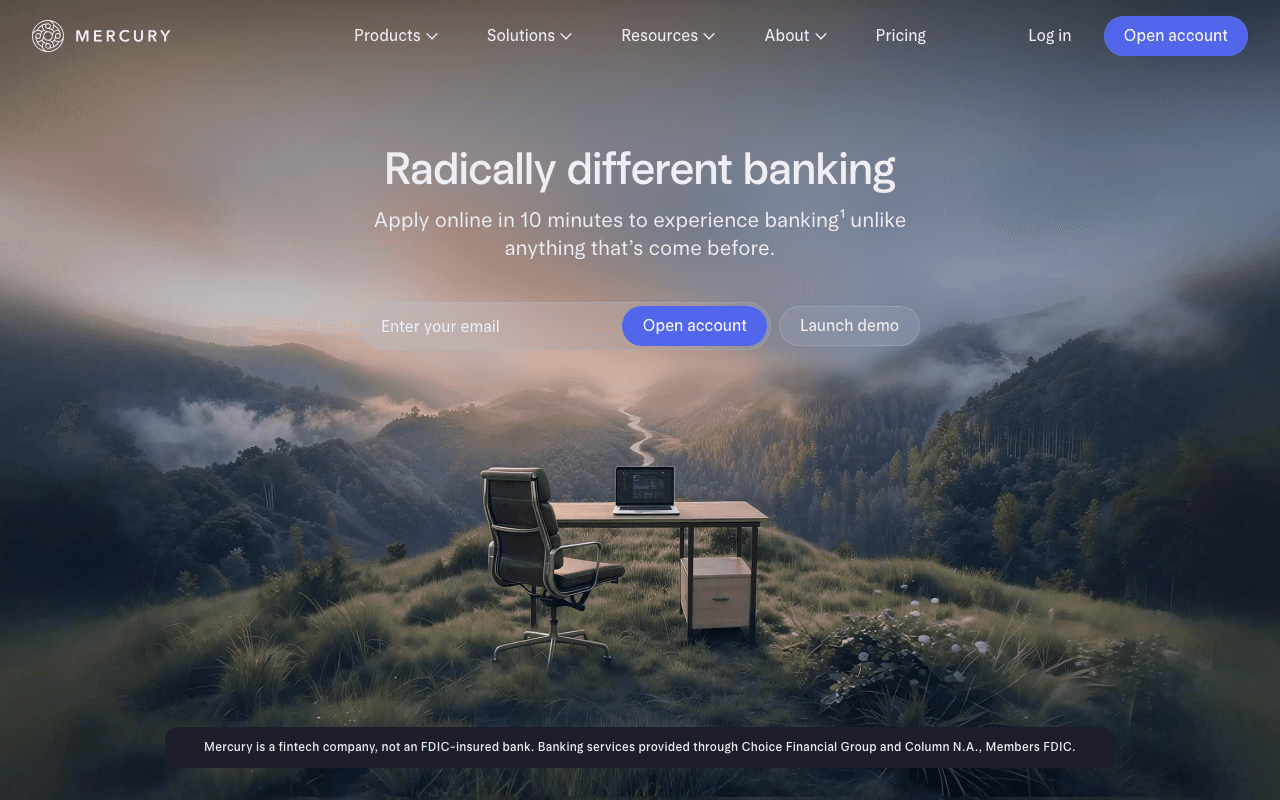
The banking platform built for startups. FDIC-insured accounts, powerful tools, and integrations with your accounting stack.

Brex
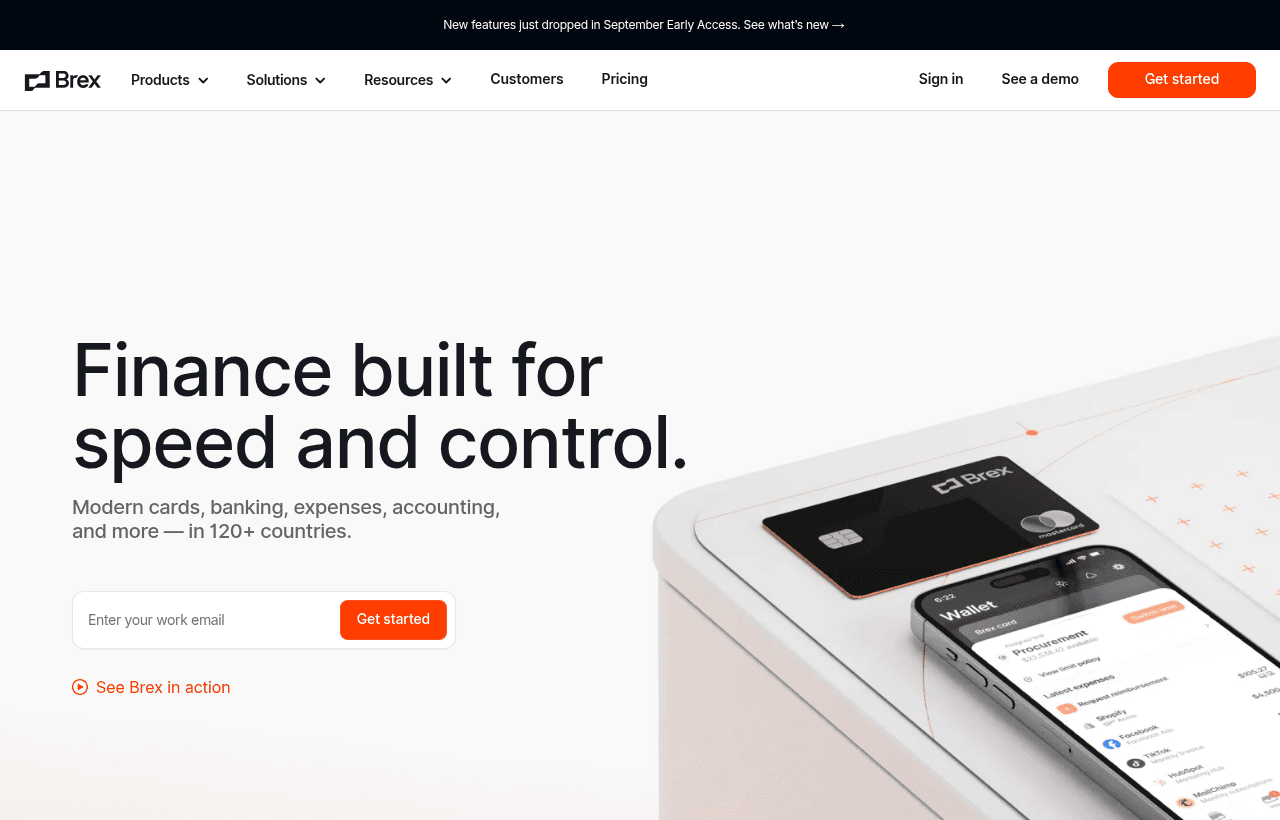
Corporate credit card with high limits and no personal guarantee, built for startups backed by investors or with revenue.
Mercury vs Brex, Detailed Comparison
What's Included in Each Startup Deal
Here is exactly what you get when claiming each deal through SaaSOffers:
MMercury
- $500 account opening bonus
- FDIC-insured checking and savings
- Treasury with up to 5.0% APY
- Unlimited free domestic wires and ACH
- Direct integrations with QuickBooks and Xero
BBrex
- $1,000 signup bonus
- No personal guarantee
- High credit limits based on cash balance
- 7x points on rideshare, 4x on travel
- Integrated expense management
The short verdict
Pick Mercury if you need a business bank account first: it costs $0 a month, has no minimum balance, accepts US companies whose founders live abroad, and adds a 1.5% cashback card. Pick Brex if you already have cash in the bank and want a corporate card with category points, per-user spend controls and travel booking. The single biggest difference is the starting point. Mercury is banking with a card attached, and Brex is a card and spend platform with a business account attached. Many funded startups end up running both: Mercury for deposits and wires, Brex for team spend.
Our deals for Mercury and Brex
- Mercury deal: $500 account bonus. Requirements: US-incorporated startup.
- Brex deal: $1,000 bonus + rewards. Requirements: Funded or revenue-generating startup.
Neither deal needs a promo code. We checked both tools' plans and prices against their official pricing and help pages in November 2026.
Both vendors also run public offers. Mercury's help center lists a public referral program that pays $250 to a referred business and $250 to the referrer once the new account holds at least $10,000 for one full business day within 90 days. Brex's November 2026 public offer is a $500 gift card for new customers who apply by November 30, 2026, spend within 30 days of approval and make a payment that clears before February 1, 2027. Brex says that offer cannot be combined with other offers, so confirm which bonus applies before you apply.
Mercury vs Brex at a glance
| Dimension | Mercury | Brex |
|---|---|---|
| What it is | Business banking: checking, savings, cards, bill pay, invoicing | Corporate card and spend management with a business account |
| Free plan | Mercury, $0 a month | Essentials, $0 per user per month |
| Paid plans | Plus $35 a month, Pro $350 a month (flat, not per user) | Premium $12 per user per month |
| Minimum balance to open | None | $50,000 cash for VC funded startups on monthly payments |
| Founder location | Founders can live abroad; company must be US formed | US operations and US physical address required |
| FDIC coverage | Up to $5M via a sweep network of up to 20 banks | Checking up to $250,000; vault up to $6M via partner banks |
| Card rewards | IO card: 1.5% cashback | Points: 7x rideshare, 4x Brex travel, 3x restaurants, 2x software, 1x other |
| Card repayment | Daily at first, monthly once your total Mercury balance reaches $15,000 | Daily or monthly, by eligibility |
| Domestic wires and ACH | $0 | Local currency wires included on Essentials |
| Treasury yield | 3.32% to 3.64% net for $250,000 to $2M (up to 4.09% only above $20M) | 3.62% to 3.97% total return shown on the pricing page (DGVXX plus a Brex additional return by balance tier) |
| Accounting sync | QuickBooks Online, Xero, NetSuite | QuickBooks Online, Xero, NetSuite, Sage Intacct, Dynamics 365 Business Central |
| Team members | No limit; plans priced per company | Priced per user on Premium |
Pricing side by side
| Plan | Billed yearly | Billed monthly | Key limits |
|---|---|---|---|
| Mercury | $0 | $0 | Unlimited invoices and bill pay, debit and IO cards, reimbursements for up to 5 active users a month, $5 per 1099 filing |
| Mercury Plus | $29.90 a month | $35 a month | Recurring invoices, unlimited 1099 filings, priority support, ACH debit invoicing at $1 per transaction |
| Mercury Pro | $299 a month | $350 a month | Relationship manager, NetSuite categorizations, ACH debit invoicing at $0 |
| Brex Essentials | $0 | $0 | One local card program, bill pay, reimbursements, travel booking, API, up to two entities |
| Brex Premium | Not shown | $12 per user | Multiple expense policies, advanced approvals, multi-entity US and international, ERP and HRIS integrations |
| Brex Enterprise | Custom | Custom | Unlimited entities, local card issuance, named account manager |
Mercury charges per company and Brex charges per user. That changes the math as headcount grows. Mercury also lists two add-ons with fees waived until December 31, 2026: Mercury Books at $35 a month and Mercury Payroll at $100 a month plus $50 per person paid.
Example 1: a 5-person seed startup, $10,000 a month on cards
Fees for a year on the first paid tier:
- Mercury Plus billed yearly: $29.90 x 12 = $358.80. With our $500 bonus, you are $141.20 ahead.
- Brex Premium: 5 x $12 x 12 = $720. With our $1,000 bonus, you are $280 ahead.
Card rewards for a year, if all $10,000 falls in 1x categories on Brex:
- Mercury IO: $10,000 x 1.5% = $150 a month, $1,800 a year.
- Brex: 10,000 points a month, worth $60 as cash or $100 in Brex travel. That is $720 a year in cash or $1,200 in travel.
On flat spend with no rideshare, dining or software, IO pays more.
Example 2: a 15-person startup, $40,000 a month on cards
Fees for a year:
- Mercury Plus billed yearly is still $358.80, because it is not per user. Mercury Pro billed yearly is $299 x 12 = $3,588.
- Brex Premium: 15 x $12 x 12 = $2,160. With our $1,000 bonus: $1,160.
Card rewards, with $2,000 rideshare, $5,000 restaurants, $13,000 recurring software and $20,000 other:
- Mercury IO: $40,000 x 1.5% = $600 a month, $7,200 a year.
- Brex: 14,000 + 15,000 + 26,000 + 20,000 = 75,000 points a month. That is $750 in travel or $450 in cash, so $9,000 a year in travel or $5,400 in cash.
Brex wins here only if you redeem for Brex travel. Taken as cash, IO still pays more.
Getting approved
Mercury's bar is about where the company is formed. The company must be formed in the US or a US territory and have existing or planned US operations, but the principal place of business can be international, and founders can live abroad. Mercury does not accept money services businesses, adult entertainment, cannabis, internet gambling or trusts. You need formation documents, an EIN (or an SS-4 with the EIN within 90 days), and ID for the control person and every 25% owner. Mercury says the application takes 10 minutes or less. There is no minimum balance.
Brex's bar is about money in the bank and US presence. It needs a US EIN, US incorporation, US operations and a US physical address, and PO boxes are rejected. VC or accelerator funded startups on monthly payments need a $50,000 minimum cash balance, lower for some partner referrals. Commercial businesses need more than $500,000 in annual revenue. Brex states there is no guarantee of approval.
A pre-funding company with founders outside the US can open Mercury today. The same company usually cannot get a Brex card yet.
Where your cash sits and what it earns
Mercury holds deposits at Choice Financial Group and Column N.A. and sweeps them across up to 20 banks for up to $5M in FDIC coverage. Mercury Treasury starts at a $250,000 combined balance. As of October 23, 2026 it quoted net yields from 3.32% in the government fund up to 4.09% in the ultra-short fund at the top tier. Treasury is invested in money market funds and is not FDIC insured. The government fund settles same day if you start by 3pm ET.
Brex's business account keeps checking at Column N.A., Member FDIC, up to $250,000, and a vault extends FDIC coverage up to $6M through partner banks. Brex Treasury invests in a money market fund (DGVXX) and moves money back to checking in as little as 1 hour between 8am and 3pm ET. Brex's pricing page posts a total treasury return of 3.62% to 3.97%, built from the DGVXX yield plus a Brex-paid additional return that depends on your balance tier. Brex also lists 10,000 points as a sign-on bonus for $3,000 of spend within 3 months on the business account.
Payments and foreign currency
Mercury is stronger for moving money. ACH, domestic wires and real-time payments are $0. USD international wires are $0 with SHA and $15 with OUR. Non-USD wires carry a 1% FX fee, and non-USD card spend carries 3%. Every plan includes unlimited bill payments and invoices, and up to 6 free checkbooks a year.
Brex is stronger for spending abroad as a team. Its cards work in 210+ countries and territories, Essentials includes local currency wires, and Brex charges no foreign transaction fee but lists an FX markup of up to 3%. Premium adds multi-entity across the US and international, and Enterprise adds local card issuance.
Team spend controls
Brex was built for this. Essentials includes AI custom rules, bill pay, reimbursements and free travel booking. Premium at $12 per user adds multiple expense policies, dynamic review chains, advanced approvals and live budgets. Support is 24/7 live on every plan.
Mercury covers the basics. You can issue debit and IO cards to the whole team, set daily, weekly, monthly or yearly card limits, and use Admin, Bookkeeper, Limited or Custom roles. There is no cap on team members. The limit that bites is reimbursements: paying back out-of-pocket expenses for more than 5 active users a month needs a paid plan.
Pick Mercury if
- You have not raised yet, or you hold well under $50,000.
- Your founders live outside the US but the company is a US entity.
- You send many wires or ACH payments and want them at $0.
- Your card spend is mostly ads, cloud and other 1x categories, where 1.5% cash beats 0.6 cent per point.
- You want one flat fee instead of a per-user bill as you hire.
Pick Brex if
- You hold $50,000 or more from VCs or an accelerator, or earn over $500,000 a year.
- Rideshare, dining and software subscriptions are a big part of spend and you book travel through Brex.
- You need expense policies, approval chains and budgets for a growing team.
- You run more than one entity or need Sage Intacct or Business Central sync.
- You want 24/7 live support on the free plan.
Switching between them
Moving to Mercury: Mercury's switch page says you can keep your existing bank open while you move payments and deposits, link external accounts through Plaid to move money, and work with its implementation team to map your setup. Mercury's own guidance also tells you to check every autopay and recurring transaction and to test a $1 payment before you cut over.
Moving card spend to Brex: go to Cards and Limits, then Pay vendors by card, and upload a statement from your old card. Brex checks which vendors accept Brex cards for automatic payments. An admin creates a card per vendor and the cardholder pushes the new details to the vendor. Some vendors still need a manual update in their own portal.
Moving card spend to Mercury IO has no documented import, so you update each vendor by hand. Rebuild approval rules and roles on either side manually.
Final take
Open Mercury first if you need a bank account, live outside the US or have not raised. Add Brex once you clear its cash bar and your team spends enough in its multiplier categories to beat 1.5% cash. Our Mercury deal lists a $500 bonus on a $0 account, double Mercury's public $250 referral, so confirm its terms before you open. Our Brex deal is the larger bonus on paper, so confirm it before you apply. If you are weighing cards only, read Brex vs Ramp.
Frequently Asked Questions
Common questions about Mercury vs Brex for startups.
Can I use both Mercury and Brex together?
Yes. There are no restrictions on claiming startup deals from multiple tools. Many startups use both Mercury and Brex simultaneously, each serving different needs. Claim both through SaaSOffers for maximum savings.
Which has a better startup deal, Mercury or Brex?
Brex offers $1,000 bonus + rewards, while Mercury offers $250 credit on a $10k deposit. However, the "better" deal depends on which tool you actually need, a larger credit on a tool you won't use is worth less than a smaller credit on a tool that's essential to your stack.
Is Mercury free for startups?
Mercury offers $250 credit on a $10k deposit through its startup program on SaaSOffers. The deal type is "premium", available to SaaSOffers Premium members ($79/year). US-incorporated startup
Is Brex free for startups?
Brex offers $1,000 bonus + rewards through its startup program on SaaSOffers. The deal type is "premium", available to SaaSOffers Premium members ($79/year). Funded or revenue-generating startup
Is Mercury a bank?
No. Mercury is a financial technology company. Deposits are held at partner banks, which Mercury names as Choice Financial Group and Column N.A. Checking and savings deposits get up to $5M in FDIC insurance through a sweep network of up to 20 banks.
Does Mercury charge monthly fees?
The core Mercury plan is $0 a month with no minimum balance, no overdraft fees and no opening fee. Domestic wires, ACH and USD international wires (SHA) are free. Mercury Plus costs $35 a month, or $29.90 a month billed yearly. Mercury Pro costs $350 a month, or $299 a month billed yearly.
Who can open a Mercury account?
The company must be formed and registered in the US or a US territory. Founders can live abroad, and the principal place of business can be international. Mercury does not accept money services businesses, adult entertainment, cannabis or internet gambling companies, or trusts.
Does Brex require a personal guarantee?
No. Brex says it does not require a personal guarantee. You apply with your company EIN, and Brex says personal credit is not used or reported. Credit limits come from business financials such as revenue, amount raised or cash balance.
Is Brex free?
Yes. The Essentials plan costs $0 per user per month and includes cards, bill pay, reimbursements, travel booking, accounting integrations and API access for up to two entities. Premium costs $12 per user per month and adds multiple expense policies, advanced approvals and multi-entity support.
Who is eligible for Brex?
You need a US EIN, US incorporation, US operations and a US physical address. Funded startups on monthly payments need a $50,000 minimum cash balance, which Brex says can be lower for some partner referrals. Commercial businesses need more than $500,000 in annual revenue. Companies without a US EIN, US incorporation and a US address cannot apply.
We've helped 10,000+ startup founders unlock $500,000+ in SaaS credits and discounts. Every comparison is based on real deal data from our platform.