
CircleCI Startup Credits: $500 in credits
Continuous integration and delivery platform, automate testing and deployment for every code change.
Free · Opens in new tab
Already have an account? Log in
Deal Highlights
What CircleCI Gives a Startup
CircleCI is a continuous integration and delivery platform. It automates the testing and deployment of every code change your team makes, so that instead of a person manually running tests and pushing releases, a pipeline does it automatically the moment code is committed. The offer is a substantial head start for an early engineering team: five hundred dollars in credits. That is a real budget to run your builds and deployments on, enough to get a proper CI/CD pipeline established and humming before you pay anything out of pocket. The fit is clear from the requirement, an engineering team with CI/CD needs.
The problem CircleCI solves is one that grows quietly until it becomes a serious drag. When a small team ships code, someone has to make sure it works and gets deployed. Done by hand, that means running tests locally, hoping nothing was missed, and manually pushing to production, a process that is slow, error-prone, and gets worse as more people commit more often. Bugs slip through, deploys become nerve-wracking events, and engineers waste time on release mechanics instead of building. CircleCI automates all of it, so every change is tested and shipped through a reliable, repeatable pipeline.
For a startup, the payoff is speed and confidence together, which usually feel like opposites. Automated testing and deployment let a team ship frequently without the fear that each release will break something. That combination, moving fast while staying stable, is exactly what an early company needs to iterate quickly on its product without accumulating a mess. CircleCI, with a generous credit head start, puts that capability within reach of a small team from the beginning.
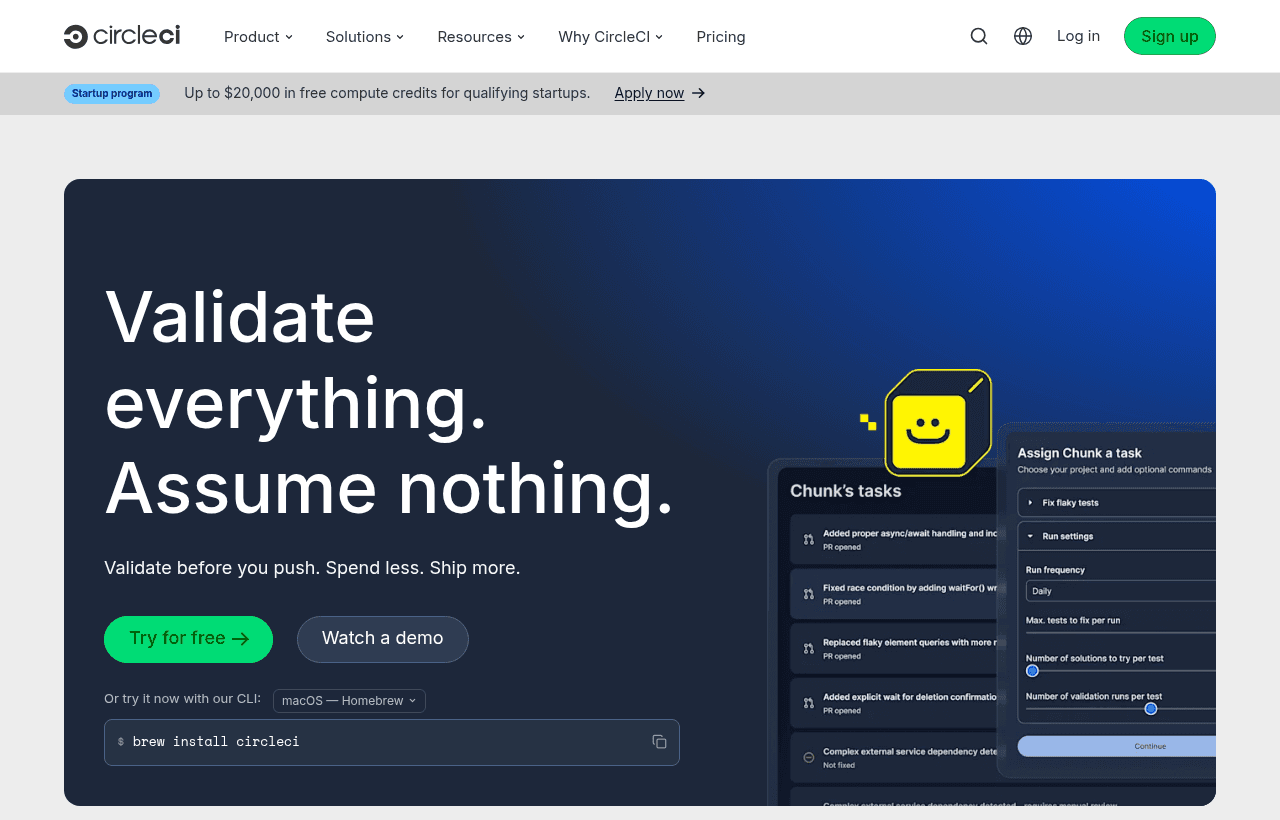
CircleCI, one of the tools included in this startup deal.
Automating the Path From Commit to Production
The core job CircleCI does is take a code change and carry it automatically through the steps needed to verify and ship it. A developer commits their work, and the pipeline springs into action, building the code, running the tests, and, if everything passes, moving toward deployment. What used to be a manual checklist becomes an automated flow that runs the same way every time, without anyone having to remember the steps.
For a startup, this automation removes a category of work that adds no value and plenty of risk. Manually running tests and deploying is tedious, and tedious manual work is where mistakes happen, a forgotten step, a test skipped under time pressure, a deploy done wrong late at night. CircleCI makes the process consistent and hands-off, so the same reliable sequence runs for every change regardless of who made it or when. The team stops spending mental energy on release mechanics and trusts the pipeline to handle them.
That consistency is what makes frequent shipping safe. When every change goes through the same automated verification, you catch problems before they reach users, and you deploy with confidence because the process has proven itself countless times. A startup can ship many times a day if it wants to, because each ship is a routine automated event rather than a risky manual undertaking. Turning deployment from a stressful ceremony into a background process is one of the biggest practical upgrades a growing engineering team can make.
Catching Bugs Before Users Do
Every code change is a chance to introduce a bug. Even careful engineers break things, and in a fast-moving startup where people are shipping constantly, the risk is ever-present. CircleCI's automated testing is the safety net that catches those bugs early, before they reach production and before they cost you customers. Every change runs through your test suite automatically, so a regression gets flagged the moment it is introduced rather than discovered later by an unhappy user.
The timing of this catch is what makes it so valuable. A bug caught the instant it is committed is cheap to fix, the engineer who wrote it is right there, the change is fresh, and nothing has been built on top of it yet. The same bug discovered in production days later is expensive, it has reached users, it takes investigation to trace back, and fixing it means an emergency instead of a quick correction. By running tests on every change, CircleCI shifts bug-catching to the cheapest possible moment, which saves a startup real time and protects its reputation.
This safety net also changes how a team behaves. When engineers trust that the pipeline will catch mistakes, they can move faster and refactor more boldly, because they know a broken change will be flagged before it does harm. Without that confidence, teams either move slowly and cautiously or ship carelessly and pay for it later. Automated testing on every commit gives a startup the confidence to move quickly while keeping quality high, which is exactly the balance a young product needs to strike.
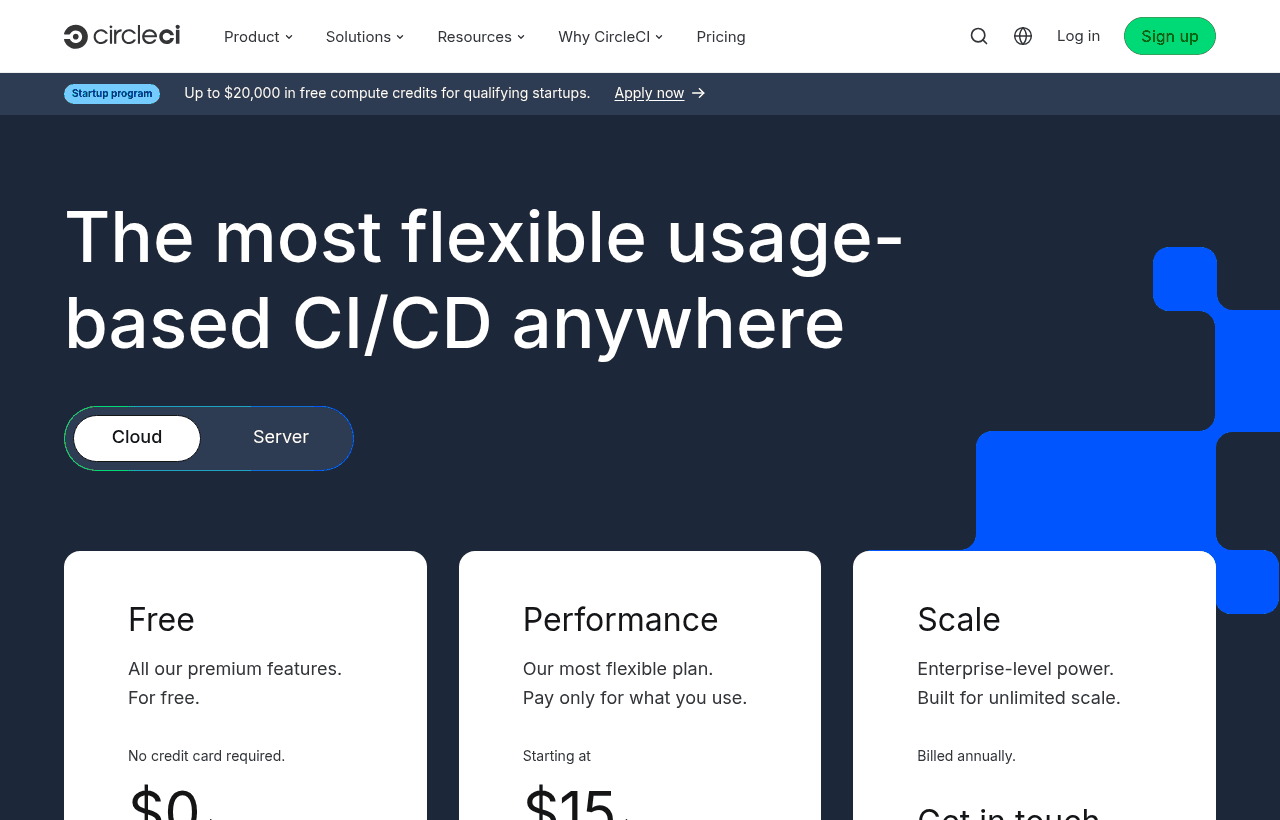
A look at CircleCI before the discount, so you can see what the deal saves you.
Freeing Engineers to Build
Every hour an engineer spends manually running tests, babysitting a deploy, or fixing a release that went wrong is an hour not spent building the product. For a startup with a small team, that time is its most precious resource, and wasting it on release mechanics is a real cost. CircleCI automates that work away, so your engineers spend their time on what actually moves the company forward rather than on the repetitive machinery of shipping.
This leverage matters most for a small team. A large company can afford people whose job is release management, a startup cannot. By automating the pipeline, CircleCI gives a small team the effect of that dedicated function without the headcount. The routine work of testing and deploying happens automatically, and engineers only get involved when something genuinely needs their attention. That is exactly the kind of force multiplication an early company needs, doing more with the people it already has.
The compounding effect is significant over time. Manual release work does not just cost the hour it takes, it costs the context-switching, the interruptions, and the mental overhead of worrying about deploys. Removing all of that lets engineers stay focused on deep work, which is where their real value lies. A team that is not constantly pulled into release chores ships more and better product. For a startup, that reclaimed focus and momentum is worth far more than the mechanics CircleCI takes off their plate.
Scaling With the Team
A CI/CD pipeline is not just useful at the current size, it becomes more valuable as the team and the codebase grow. When a startup is three engineers, manual deploys are painful but survivable. When it is fifteen engineers all committing to a shared codebase many times a day, manual processes collapse entirely, there is simply too much change flowing through for a person to verify and ship by hand. CircleCI is built to handle that volume, so the pipeline that served the early team keeps serving the larger one.
This scalability means a startup that adopts CircleCI early builds a foundation it will not outgrow. The pipeline handles more changes, more tests, and more deploys as the company grows, without the process breaking down. Investing in automation while the team is small means that when it scales, the machinery for shipping is already in place and proven, rather than being an emergency to solve under pressure. You grow into the tool rather than away from it.
Establishing good CI/CD practices early also shapes the engineering culture in a healthy direction. When automated testing and deployment are the norm from the beginning, the team writes testable code, ships in small safe increments, and treats reliability as a default rather than an afterthought. Those habits are far easier to build early than to retrofit later onto a larger team and a bigger codebase. CircleCI, established while the company is young, helps a startup grow up with the disciplines that keep a fast-moving engineering team from turning into a chaotic one.
CircleCI Compared to the Alternatives
The default alternative for many early teams is manual testing and deployment, which costs nothing upfront but plenty over time. Manual processes are slow, inconsistent, and prone to human error, and they get more painful as the team grows. What feels free when you are two engineers becomes a serious drag on velocity and a source of production incidents at ten. CircleCI replaces that with automation that stays fast and reliable as you scale, and the credit head start means you can adopt it without the cost being a barrier early on.
Against building and running your own CI/CD infrastructure, CircleCI saves a startup from a distraction it cannot afford. You could stand up your own build servers and pipeline tooling, but then your engineers are maintaining CI/CD infrastructure instead of building your product, and keeping that infrastructure reliable is its own ongoing job. CircleCI provides the platform as a service, so your team gets a robust pipeline without operating the machinery behind it. For a small team, offloading that operational burden is exactly the right trade.
Compared to other CI/CD platforms, CircleCI's strength is that it is a mature, established platform that handles the full journey from commit to deployment well, and it scales with you. The category has real competition, but for a startup the value of a proven tool that just works, that fits standard engineering workflows, and that grows with the team is exactly what you want. You are adopting infrastructure your product will depend on, so reliability and maturity matter, and the five hundred dollars in credits lets you prove the fit before committing real budget.
Making the $500 in Credits Count
The credits give a startup room to establish a real CI/CD pipeline before paying anything, so the way to make the most of them is to use that window to get automation properly embedded into how the team works. The goal is that by the time the credits are used, testing and deployment are fully automated and the team relies on the pipeline every day.
Start by getting your core pipeline running, building your code, running your test suite, and automating your path to deployment. Getting this basic flow working on every commit is the foundation, and it delivers value immediately, every change is now verified automatically. Use the credits to run this pipeline freely as you set it up and refine it, without watching a meter while you are still getting it right.
Invest in a solid test suite alongside the pipeline. Automated testing is only as good as the tests it runs, so the value of CircleCI grows with the quality of your tests. Use the setup period to build good test coverage of the things that matter most, so the pipeline actually catches the bugs you care about. A pipeline running strong tests is what turns CI/CD from a formality into a real safety net.
Wire the pipeline into your team's workflow so that its results are visible and acted on. When tests fail, the team should know immediately and fix the issue before moving on. Making the pipeline's feedback a natural part of how engineers work is what turns automation into a habit rather than a background process people ignore. That habit is where the reliability benefit comes from.
By the time the credits run down, you will have a proven pipeline and clear evidence of what it does for you, fewer bugs reaching production, faster and safer deploys, and engineers freed from release chores. That evidence makes the decision to continue easy, and you will already have your automation fully established rather than facing it as a project still to do.
Who Should Claim This Deal
CircleCI is a strong fit for any startup with an engineering team that ships code regularly. If your team is committing changes and currently testing and deploying by hand, or has no real automation around releases, CircleCI gives you a pipeline that verifies and ships every change automatically. The requirement is simply an engineering team with CI/CD needs, and the five hundred dollars in credits gives you a substantial head start to establish that pipeline before it costs anything.
It suits fast-moving teams especially well. If you want to ship frequently without the fear that each release will break something, automated testing and deployment give you exactly that, speed and confidence together. For a startup whose success depends on iterating quickly on its product, that combination is precisely what a CI/CD platform provides.
It is also a smart move for teams thinking ahead about scale. Establishing good CI/CD practices while the team is small builds a foundation that grows with the company and instills healthy engineering habits early. Adopting CircleCI now means the machinery for shipping is already proven when the team gets bigger, rather than an emergency to solve later under pressure.
The teams that will get less from it are those with no real codebase or deployment yet, where there is not enough change flowing to justify automation. But for any startup with an active engineering team committing and shipping code, CircleCI automates the tedious, risky work of testing and deploying, frees engineers to build, and scales as the company grows. With a generous credit head start, it is exactly the kind of foundational tooling an engineering team should put in place early.
Who Is This Deal For?
Early-Stage Startups
Seed and pre-seed companies looking to move fast without overspending on tools.
Growing SaaS Teams
Series A+ companies scaling their stack and optimizing software costs.
Solo Founders
Indie hackers and bootstrapped founders who need enterprise tools at startup prices.
Get $500 in credits off CircleCI
Premium deal. Upgrade once, unlock everything.
!Eligibility Requirements
Engineering team with CI/CD needs
Frequently Asked Questions
Everything you need to know about this startup deal.
CircleCI's free plan includes 6,000 build minutes per month on Linux and 5 concurrent jobs. This covers most early-stage startup needs. The $500 credit extends to paid plans with more concurrency, larger resource classes, and macOS/Windows builds.
Get the weekly deals digest
New verified startup deals every week. No spam, ever. Unsubscribe anytime.
Related Offers

Toggl Track
Used by 1,100 members
Free Plan
Simple and intuitive time tracking for teams with reporting and integrations.
View offer
Auth0
Used by 994 members
1 year of B2B Professional free
Get 1 year of the Auth0 B2B Professional plan free, with up to 100,000 monthly active users, SSO, enterprise MFA and SCIM.
View offer
Bugsnag
Used by 471 members
Free Plan
Error monitoring and stability management for web and mobile applications.
View offer
Turborepo
Used by 1,880 members
Free & Open Source
High-performance build system for JavaScript and TypeScript monorepos by Vercel.
View offer
Windmill
Used by 1,501 members
Free Plan
Open-source developer platform for building internal tools, workflows, and scripts.
View offer
Height
Used by 1,442 members
Free Plan
AI-powered project management tool with autonomous task management and workflows.
View offerDeal Summary
Looking for more startup deals?
Browse all offers