

Brex vs Ramp for Startups in 2026
Choosing between Brex ($1,000 bonus + rewards) and Ramp ($500 cashback bonus) for your startup? This side-by-side comparison covers features, startup deals, pricing, and which tool fits your stack, with verified deals you can claim through SaaSOffers.
Quick Answer
Brex: $1,000 bonus + rewards (Funded or revenue-generating startup). Ramp: $500 cashback bonus (US-incorporated startup).

Brex
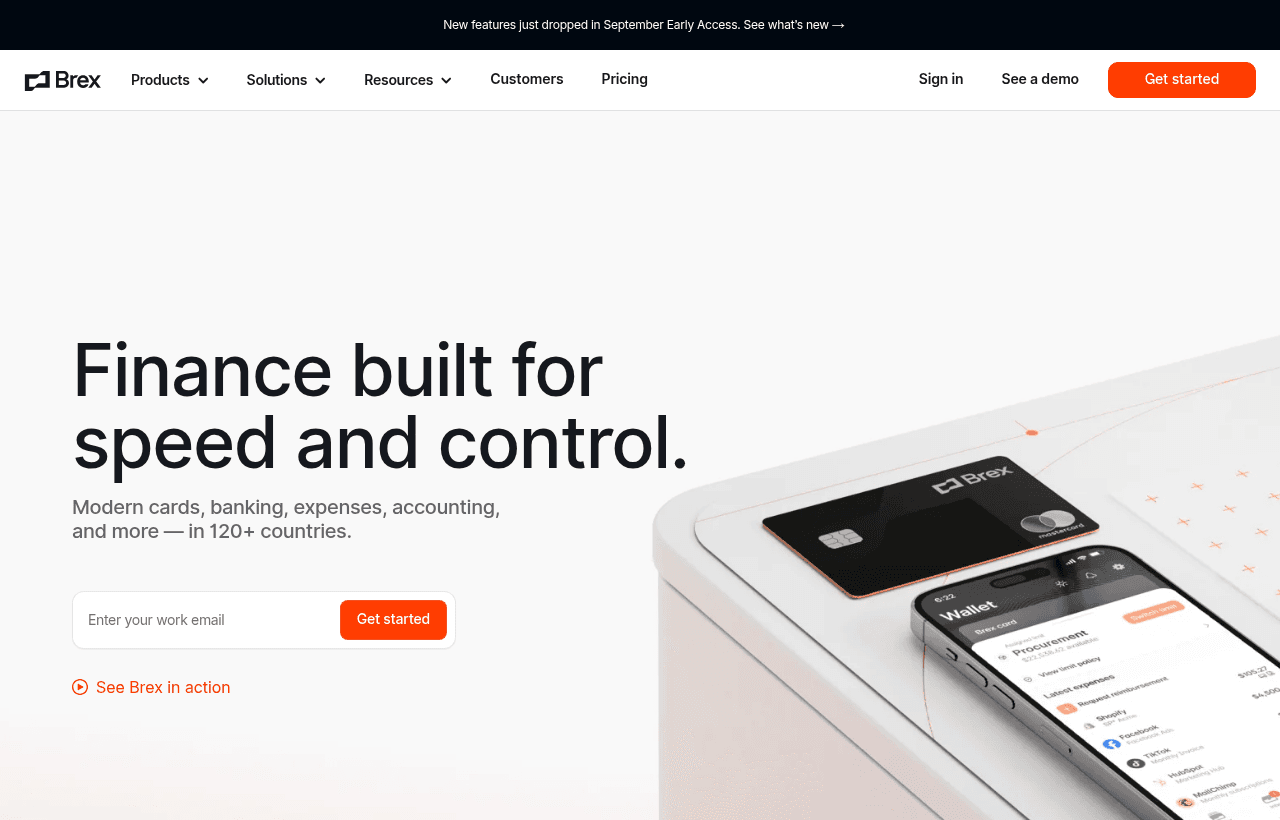
Corporate credit card with high limits and no personal guarantee, built for startups backed by investors or with revenue.

Ramp
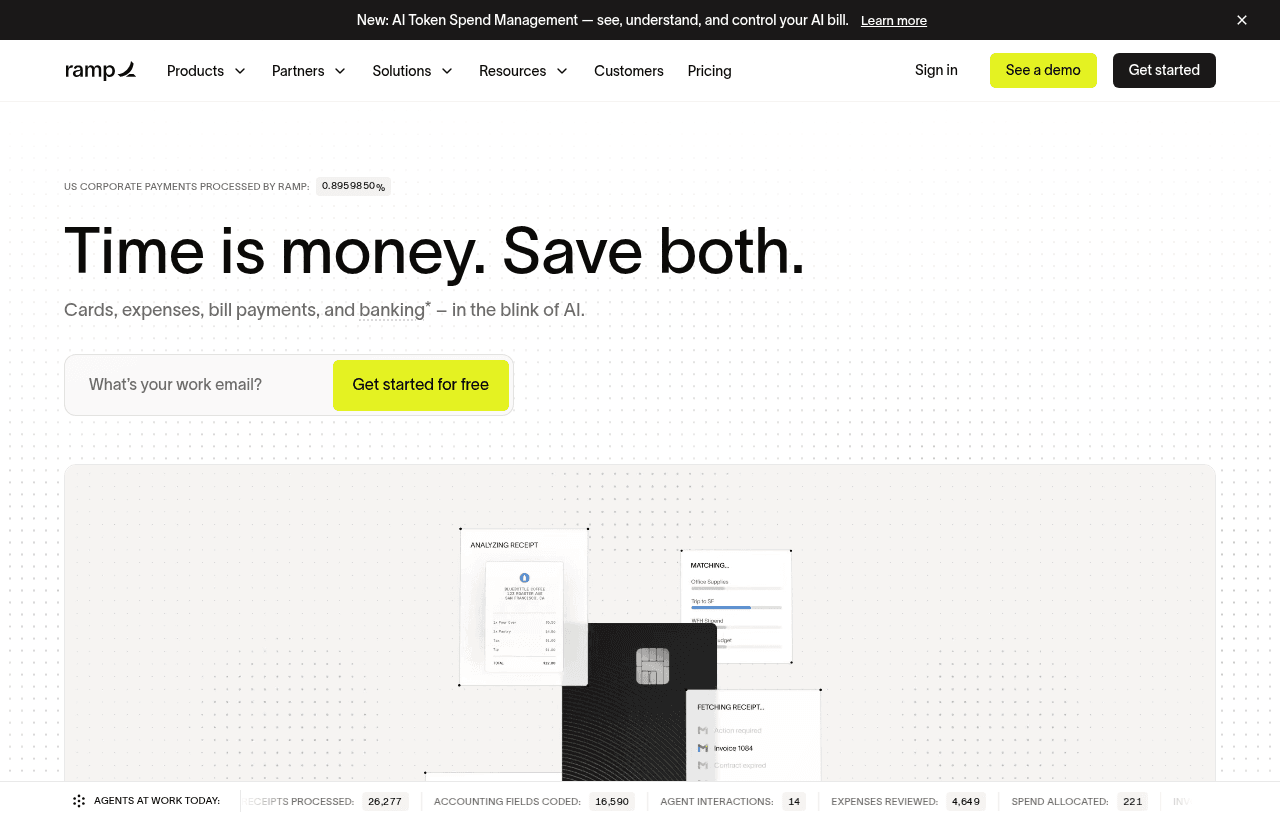
Corporate card and spend management for startups, 1.5% cashback, real-time expense tracking, and automated accounting.
Brex vs Ramp, Detailed Comparison
What's Included in Each Startup Deal
Here is exactly what you get when claiming each deal through SaaSOffers:
BBrex
- $1,000 signup bonus
- No personal guarantee
- High credit limits based on cash balance
- 7x points on rideshare, 4x on travel
- Integrated expense management
RRamp
- $500 cashback bonus
- 1.5% cashback on all purchases
- Real-time expense tracking
- Automated receipt matching
- Accounting integrations (QBO, Xero, NetSuite)
The short verdict
Pick Ramp if you want the cheapest way into a corporate card and spend software, and your US company holds at least $25,000 in a linked business bank account. Pick Brex if you spend heavily on travel, rideshare, restaurants or software and want points with category multipliers, or if you need card programs and entities outside the US. The single biggest difference is how each one pays you back: Brex runs a points program with up to 7x on rideshare, while Ramp pays cashback and does not publish a fixed rate on its pricing page. Both have a $0 plan, and neither asks founders for a personal guarantee.
Our deals for Brex and Ramp
- Brex deal: $1,000 bonus + rewards. Requirements: Funded or revenue-generating startup.
- Ramp deal: $500 cashback bonus. Requirements: US-incorporated startup.
Neither deal needs a promo code. We checked both tools' plans and prices against their official pricing and help pages in November 2026.
One honest note on Brex. Brex runs its own public offer in November 2026: a $500 gift card for new customers who apply by November 30, 2026, spend within 30 days of approval and make a payment that clears before February 1, 2027. Brex says that offer cannot be combined with other offers, so confirm which bonus applies to you before you apply. We found no public Ramp sign-up bonus on ramp.com pages we could verify.
Brex vs Ramp at a glance
| Dimension | Brex | Ramp |
|---|---|---|
| Free plan | Essentials, $0 per user per month | Free, $0 per user per month |
| First paid plan | Premium, $12 per user per month | Plus, $15 per user per month plus a platform fee based on team size |
| Annual billing discount | Not shown on the pricing page | 20% off Plus with annual billing |
| Minimum cash to qualify | $50,000 for VC or accelerator funded startups on monthly payments | $25,000 in a linked US business bank account |
| Revenue route | More than $500,000 in annual revenue | Ramp weighs cash flow and revenue when it sets the limit |
| Personal guarantee | None | None |
| Card rewards | Points: 7x rideshare, 4x Brex travel, 3x restaurants, 2x recurring software, 1x other | Cashback, no published fixed rate |
| Point or cashback value | 1 cent per point in Brex travel, 0.6 cent as cash | Applied as statement credit, never expires |
| Entities on the free plan | Up to two entities | Multi-entity support starts on Plus |
| NetSuite and Sage Intacct | Direct sync | Plus plan required |
| Local currency cards | Local card issuance on Enterprise | Local currency cards in 30+ countries on Enterprise |
| 1099 filing | Not listed on the pricing page | $0.65 per IRS filing, state filing free |
Pricing side by side
| Plan | Billed yearly | Billed monthly | Key limits |
|---|---|---|---|
| Brex Essentials | $0 | $0 | One local card program, bill pay, reimbursements, travel booking, API, up to two entities |
| Brex Premium | Not shown | $12 per user | Multiple expense policies, advanced approvals, multi-entity US and international, ERP and HRIS integrations |
| Brex Enterprise | Custom | Custom | Unlimited entities, local card issuance, named account manager |
| Ramp Free | $0 | $0 | Unlimited cards, bill pay, QuickBooks Online and Xero sync, 2% on checking |
| Ramp Plus | 20% off monthly price | $15 per user plus platform fee | NetSuite and Sage Intacct, multi-entity, custom roles, audit log, 30-day free trial |
| Ramp Enterprise | Custom | Custom | Workday and Oracle sync, local currency cards in 30+ countries, dedicated success manager |
Ramp does not publish the Plus platform fee, so every Ramp Plus number below excludes it. Ramp's billing policy counts users with the Auditor role as billable and does not bill pending users, deactivated users or Guests.
Example 1: a 5-person startup on paid plans for a year
- Brex Premium: 5 users x $12 x 12 months = $720. With our $1,000 bonus, the bonus covers the full $720 and leaves $280 over.
- Ramp Plus billed monthly: 5 users x $15 x 12 months = $900, plus the platform fee. With our $500 bonus: $400 plus the platform fee.
- Ramp Plus billed yearly at 20% off: $15 x 0.8 = $12 per user, so 5 x $12 x 12 = $720, plus the platform fee. With our $500 bonus: $220 plus the platform fee.
Ramp lets you pay the Plus bill with the rewards you earn on the card. Whether our $500 bonus lands as cashback you can use the same way depends on its terms, so confirm that before you count it against the invoice.
Example 2: a 15-person startup on paid plans for a year
- Brex Premium: 15 x $12 x 12 = $2,160. With our $1,000 bonus: $1,160.
- Ramp Plus billed monthly: 15 x $15 x 12 = $2,700, plus the platform fee. With our $500 bonus: $2,200 plus the fee.
- Ramp Plus billed yearly: 15 x $12 x 12 = $2,160, plus the platform fee. With our $500 bonus: $1,660 plus the fee.
At 5 or 15 people, plenty of startups never leave the free plans. On Brex Essentials and Ramp Free, either bonus is pure upside against a $0 bill, once you confirm it applies to you.
Rewards: points with multipliers vs cashback
Brex pays in points. On monthly payments the standard multipliers are 7x on rideshare, 4x on travel prepaid through Brex, 3x on restaurants, 2x on recurring software and 1x on everything else. Points count only on USD spend with US merchants. A point is worth 1 cent when you book Brex travel and 0.6 cent as cash or statement credit. That gap matters. A startup spending $10,000 a month on 1x categories earns 10,000 points, which is $100 in travel or $60 in cash.
Ramp pays cashback. Its help center says cashback accrues monthly, never expires, and can go to card statements, a Ramp Checking Account, Ramp Plus and Bill Pay fees, airline and hotel points, gift cards or charities. Ramp's own example shows a $1,000 purchase earning $15 and a $500 refund reversing $7.50. Ramp does not print a headline rate on its pricing page or in that help article, so check the rate in your approval terms.
The practical split: a team whose spend is mostly ads, cloud and travel booked outside Brex earns at 1x on most of it with Brex. A team with heavy rideshare, dinners and software subscriptions gets more from the Brex multipliers, as long as it books travel through Brex or redeems for travel.
Who gets approved, and for how much
Ramp's bar is lower on cash. It asks for at least $25,000 in any US business bank account linked to the application, a US corporation, LLC or LP, a US physical address, an EIN and most operations in the US. Sole proprietors are not accepted. Ramp sets the limit as a percentage of cash in linked accounts or through revenue-based underwriting.
Brex asks VC or accelerator funded startups on monthly payments for a $50,000 minimum cash balance, which Brex says can be lower for some partner referrals. Commercial businesses need more than $500,000 in annual revenue. Companies that have not raised yet, or hold less than $50,000, can still apply and may qualify for a Brex business account with daily payments. Brex needs a US EIN, US incorporation, US operations and a US physical address, and it rejects PO boxes. Limits come from revenue, amount raised or cash balance.
So a pre-seed company with $30,000 in the bank qualifies on paper for Ramp but not for Brex monthly terms. Neither card is a credit line you can carry: Ramp calls itself a charge card with no interest, and Brex cards are paid in full daily or monthly.
Accounting and ERP sync
This is where the free plans differ most. Ramp Free syncs with QuickBooks Online and Xero. NetSuite and Sage Intacct need Ramp Plus, and so does direct sync with QuickBooks Desktop through the Web Connector. On any plan, Ramp can export a file for QuickBooks Desktop. One Ramp account connects to one QuickBooks Desktop company file at a time.
Brex has direct sync with QuickBooks Online, Xero, NetSuite, Sage Intacct and Microsoft Dynamics 365 Business Central. Essentials includes accounting integrations, and Premium adds ERP and HRIS integrations. QuickBooks Desktop has no direct sync on Brex: you export from Brex and upload by hand. If your bookkeeper lives in QuickBooks Desktop, Ramp Plus is the cleaner fit. If you already run NetSuite and want to stay on a $0 plan, check the Brex Essentials sync before you commit.
Banking and cash yield
Ramp Free includes a checking account paying 2% APY, stated as accurate on November 2, 2026 and variable. Deposits sit at First Internet Bank of Indiana with pass-through FDIC coverage through IntraFi ICS. Ramp also lists a Ramp Investment Account at 4.61% yield to maturity as of September 3, 2026, net of an advisory fee of up to 0.15%, and that account is not FDIC insured.
Brex's business account holds checking at Column N.A., Member FDIC, up to $250,000, with a vault that extends FDIC coverage up to $6M through partner banks. Brex Treasury moves money to checking in as little as 1 hour between 8am and 3pm ET. Brex also lists a sign-on bonus of 10,000 points for $3,000 of spend within 3 months on its business account.
Global spend and entities
Brex accepts its cards in 210+ countries and territories and offers 24/7 live support on every plan. Essentials covers up to two entities, and Premium adds multi-entity across the US and international. Brex charges no foreign transaction fee but lists an FX markup of up to 3%.
Ramp keeps multi-entity for Plus and puts local currency card issuing in 30+ countries, locally funded reimbursements and paying the card in local currency on Enterprise. If you have a UK or EU subsidiary today and want to stay off a paid plan, Brex Essentials goes further.
Pick Brex if
- You raised from VCs or an accelerator and hold $50,000 or more in cash.
- Rideshare, restaurants and software subscriptions make up a large share of card spend.
- You will book company travel through Brex and redeem points at 1 cent each.
- You need two entities, or NetSuite and Sage Intacct sync, without paying per user.
- You want 24/7 live support on the $0 plan.
Pick Ramp if
- You hold between $25,000 and $50,000 in cash and want a card now.
- You prefer plain cashback you can apply to fees and statements over managing points.
- You want a 2% checking account and AP tools on the free plan.
- Your books run on QuickBooks Desktop and you are fine paying for Plus to get direct sync.
- You want to trial the paid tier first: Ramp Plus has a 30-day free trial.
Switching between them
Both vendors document a path for moving card spend from another provider, and neither moves your old cards themselves.
Moving to Ramp: download the last 90 days of transactions from your old card provider and upload them. Ramp says processing takes 1 to 2 minutes and flags large and recurring vendors. You then open "Move your spend on Ramp" in the Setup Guide, assign each vendor to a cardholder and create a virtual card per vendor, which picks up merchant and category restrictions automatically.
Moving to Brex: go to Cards and Limits, then Pay vendors by card, and upload a card statement from the other platform. Brex checks which vendors accept Brex cards for automatic payments. An admin creates a card per vendor, and the cardholder pushes the new card details to the vendor. Some vendors still need a manual update in their own portal.
Plan the cutover around renewal dates. Keep the old card open until every recurring charge has posted once on the new one, then close it. Rebuild expense policies and approval chains by hand; neither vendor documents an import for those.
Final take
Ramp is the easier yes for an early US startup: lower cash bar, $0 plan with AP and a 2% checking account, and a 30-day trial of Plus. Brex is the better card for teams that travel and spend in its multiplier categories, and its free plan covers two entities and more ERP syncs. Our Brex deal is the larger bonus on paper, so confirm it before you apply. If you are still choosing a bank account, read Mercury vs Brex next.
Frequently Asked Questions
Common questions about Brex vs Ramp for startups.
Can I use both Brex and Ramp together?
Yes. There are no restrictions on claiming startup deals from multiple tools. Many startups use both Brex and Ramp simultaneously, each serving different needs. Claim both through SaaSOffers for maximum savings.
Which has a better startup deal, Brex or Ramp?
Brex offers $1,000 bonus + rewards, while Ramp offers $500 cashback bonus. However, the "better" deal depends on which tool you actually need, a larger credit on a tool you won't use is worth less than a smaller credit on a tool that's essential to your stack.
Is Brex free for startups?
Brex offers $1,000 bonus + rewards through its startup program on SaaSOffers. The deal type is "premium", available to SaaSOffers Premium members ($79/year). Funded or revenue-generating startup
Is Ramp free for startups?
Ramp offers $500 cashback bonus through its startup program on SaaSOffers. The deal type is "premium", available to SaaSOffers Premium members ($79/year). US-incorporated startup
Does Brex require a personal guarantee?
No. Brex says it does not require a personal guarantee. You apply with your company EIN, and Brex says personal credit is not used or reported. Credit limits come from business financials such as revenue, amount raised or cash balance.
Is Brex free?
Yes. The Essentials plan costs $0 per user per month and includes cards, bill pay, reimbursements, travel booking, accounting integrations and API access for up to two entities. Premium costs $12 per user per month and adds multiple expense policies, advanced approvals and multi-entity support.
Who is eligible for Brex?
You need a US EIN, US incorporation, US operations and a US physical address. Funded startups on monthly payments need a $50,000 minimum cash balance, which Brex says can be lower for some partner referrals. Commercial businesses need more than $500,000 in annual revenue. Companies without a US EIN, US incorporation and a US address cannot apply.
Is Ramp free?
Ramp Free costs $0 per user and includes unlimited cards, bill pay, expenses and QuickBooks Online and Xero sync. Ramp Plus costs $15 per user a month plus a platform fee based on team size that Ramp does not publish, or 20% less with annual billing.
Who can get a Ramp card?
A US-registered corporation, LLC or LP with an EIN, a physical US address and at least $25,000 in cash in a linked US business bank account. Sole proprietors are not accepted. No personal guarantee is required.
What cashback does Ramp pay?
Ramp's partner pages say up to 1.5% cashback on all card spend. Its help center example shows $15 earned on $1,000 of purchases. Cashback does not expire and can pay statements, Plus fees, gift cards, loyalty points or charity donations.
We've helped 10,000+ startup founders unlock $500,000+ in SaaS credits and discounts. Every comparison is based on real deal data from our platform.