

DigitalOcean vs Linode for Startups in 2026
Choosing between DigitalOcean ($5,000 in credits) and Linode (Free Credits) for your startup? This side-by-side comparison covers features, startup deals, pricing, and which tool fits your stack, with verified deals you can claim through SaaSOffers.
Quick Answer
DigitalOcean offers $5,000 in credits and is best for startups needing developer & it. Linode offers Free Credits and is best for developer & it. DigitalOcean provides a higher-value startup deal, but Linode may be the better fit depending on your stack. You can claim both through SaaSOffers, there are no restrictions on using multiple startup deals.

DigitalOcean
Simple, developer-friendly cloud infrastructure with predictable pricing, credits for compute, databases, and Kubernetes.

Linode
Cloud computing platform with simple, affordable, and accessible Linux cloud solutions.
What Is DigitalOcean?
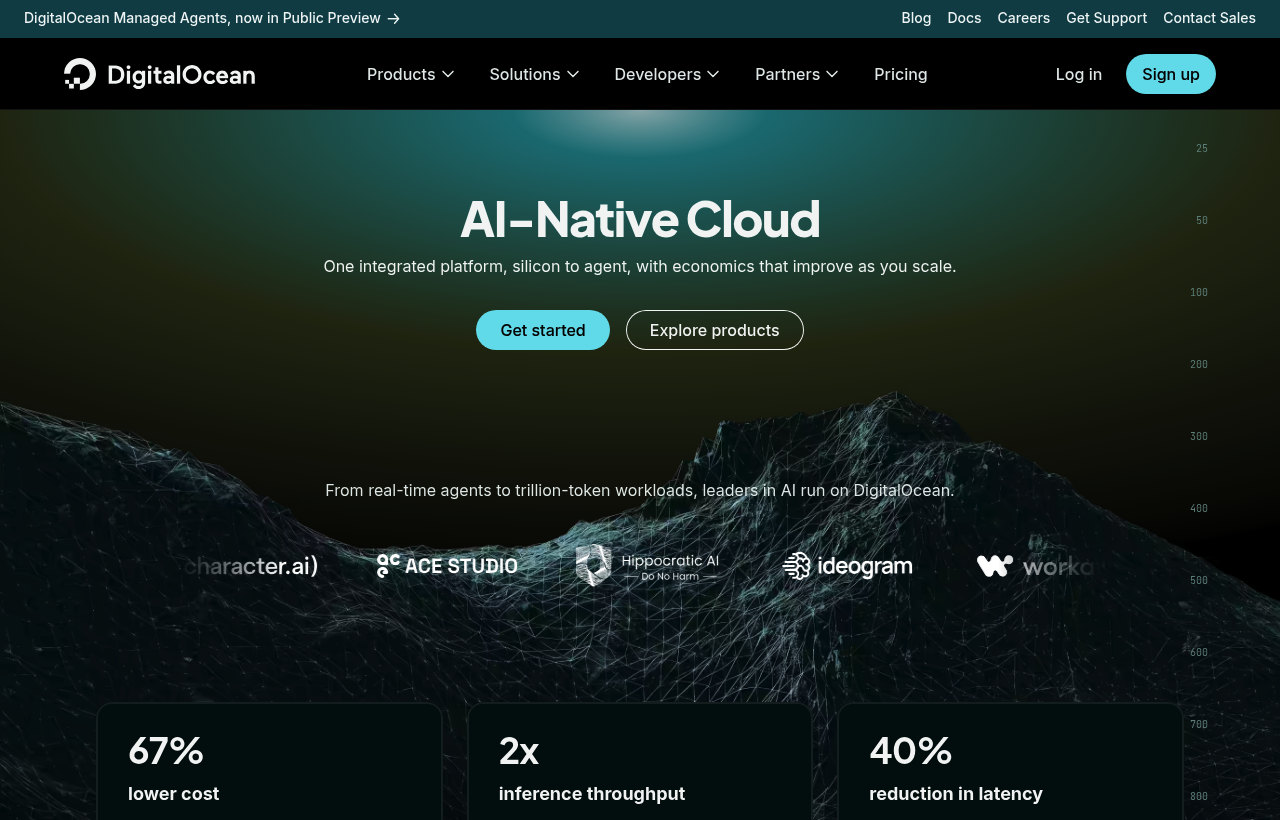
DigitalOcean is the cloud infrastructure platform built for developers and startups who want simple, predictable cloud computing without AWS-level complexity. With straightforward pricing, a clean UI, and managed services that deploy in minutes, DigitalOcean serves over 800,000 customers in 2026, from solo developers hosting side projects to startups running production workloads serving millions of users.
DigitalOcean's product line covers compute (Droplets), managed Kubernetes (DOKS), managed databases (PostgreSQL, MySQL, Redis, MongoDB), App Platform (PaaS), object storage (Spaces), and serverless functions. The platform's defining characteristic: everything is simpler and more predictably priced than equivalent AWS services.
Key Features
- Predictable Pricing. No Bill Shock
- App Platform. PaaS Without Complexity
- Managed Kubernetes. Simplified K8s
- Managed Databases. Zero DBA Required
- Spaces. S3-Compatible Object Storage
What Is Linode?
Linode is a cloud computing platform built around simple, affordable Linux infrastructure, and this deal hands a startup Free Credits to spend across that platform. Credits turn cloud hosting from a monthly bill into a runway you can plan against. Instead of watching costs the moment you spin up a server, a team gets room to build, test, break things, and rebuild without the meter feeling like a threat.
The core promise is straightforward. Linode gives you Linux servers in the cloud that are easy to launch, priced without surprises, and accessible to engineers who would rather ship product than fight a control panel. For an early company, that combination matters more than any single feature. You want infrastructure that gets out of the way, and you want to know what it will cost before you commit. The Free Credits let you get comfortable with both before real money is on the line.
This is a Developer and IT deal, and it fits the moment when a startup graduates from a laptop and a prototype to something that needs to run reliably somewhere other people can reach. Linode covers that transition cleanly. You provision a server, deploy your code, point a domain at it, and you are live. The credits mean the first weeks or months of that journey come without a hosting invoice.
DigitalOcean vs Linode, Detailed Comparison
What's Included in Each Startup Deal
Here is exactly what you get when claiming each deal through SaaSOffers:
DDigitalOcean
- $5,000 in DigitalOcean credits (12 months)
- Droplets (VMs) with SSD storage
- Managed Kubernetes and databases
- App Platform for auto-deploy
- Spaces object storage and CDN
LLinode
- Benefits details available on the deal page
Who Should Use DigitalOcean vs Linode?
The right tool depends on what your startup actually needs day-to-day. Both DigitalOcean and Linode serve different use cases, and many startups use tools from the same category for different purposes. Here is when each makes sense:
Choose DigitalOcean if:
- You need developer & it as a core part of your product or operations
- $5,000 in credits in credits covers your usage for 6–12 months
- Your team has experience with DigitalOcean or similar tools in its category
- You want a premium-tier deal with SaaSOffers Premium
Choose Linode if:
- You need developer & it as a core part of your product or operations
- Free Credits in credits covers your usage for 6–12 months
- Your team has experience with Linode or similar tools in its category
- You want a premium-tier deal with SaaSOffers Premium
Can you use both? Yes, there are no restrictions on claiming multiple startup deals. Many startups use DigitalOcean and Linode simultaneously for different needs. Claim both through SaaSOffers.
Startup Deal Comparison: Which Saves More?
Both DigitalOcean and Linode offer startup deals through SaaSOffers. Here is how the deals compare for a typical early-stage startup in 2026:
Frequently Asked Questions
Common questions about DigitalOcean vs Linode for startups.
What is the difference between DigitalOcean and Linode?
DigitalOcean offers $5,000 in credits and is categorized as Developer & IT. Linode offers Free Credits and is categorized as Developer & IT. Both offer startup deals through SaaSOffers. The right choice depends on your specific needs, DigitalOcean is best for teams needing developer & it, while Linode excels at developer & it.
Can I use both DigitalOcean and Linode together?
Yes. There are no restrictions on claiming startup deals from multiple tools. Many startups use both DigitalOcean and Linode simultaneously, each serving different needs. Claim both through SaaSOffers for maximum savings.
Which has a better startup deal, DigitalOcean or Linode?
DigitalOcean offers $5,000 in credits, while Linode offers Free Credits. However, the "better" deal depends on which tool you actually need, a larger credit on a tool you won't use is worth less than a smaller credit on a tool that's essential to your stack.
Is DigitalOcean free for startups?
DigitalOcean offers $5,000 in credits through its startup program on SaaSOffers. The deal type is "premium", available to SaaSOffers Premium members ($79/year). Early-stage startup, new DigitalOcean account
Is Linode free for startups?
Linode offers Free Credits through its startup program on SaaSOffers. The deal type is "premium", available to SaaSOffers Premium members ($79/year).
How does DigitalOcean compare to AWS for startups?
DigitalOcean is simpler and more predictably priced. AWS has broader services. For startups needing compute, databases, storage, and basic networking, DigitalOcean provides equivalent capability at lower complexity. For startups needing 20+ AWS services (ML, IoT, serverless, etc.), AWS is more appropriate. Many startups use DigitalOcean for production and AWS for specialized services.
How much does DigitalOcean cost per month?
Droplets start at $4/month (512MB). A typical startup stack (2 Droplets + PostgreSQL + Redis) costs $50–$100/month. App Platform starts at $5/month for dynamic apps. The $5,000 credit covers 50–100 months at basic usage or 8–20 months at moderate production scale.
Does DigitalOcean support Kubernetes?
Yes. DigitalOcean Kubernetes (DOKS) provides managed K8s with a free control plane. You pay only for worker nodes (Droplets). One-click cluster creation, auto-scaling node pools, and integrated load balancers. DOKS is the simplest managed Kubernetes for teams without dedicated DevOps.
Is Linode affordable?
Yes. VMs from $5/month with predictable pricing. No hidden fees.
Does Linode support Kubernetes?
Yes. Managed Kubernetes (LKE) with free control plane.
Does Linode have object storage?
Yes. S3-compatible object storage at $5/month for 250GB.
The Bottom Line: DigitalOcean vs Linode
Both DigitalOcean and Linode offer genuine value for early-stage startups in 2026. The decision comes down to your specific needs:
DigitalOcean provides $5,000 in credits and is the stronger choice for startups that need developer & it. The deal is accessible as a premium offer through SaaSOffers.
Linode provides Free Credits and is the stronger choice for startups that need developer & it. The deal is accessible as a premium offer through SaaSOffers.
The best approach for most startups is to claim both deals, there are no restrictions, and each tool serves a different part of your stack. Start by claiming the tool you need first, then add the second when you need it.
We've helped 10,000+ startup founders unlock $500,000+ in SaaS credits and discounts. Every comparison is based on real deal data from our platform.