

Stripe Billing vs Paddle for Startups in 2026
Choosing between Stripe Billing ($500 in credits) and Paddle ($500 processing credit) for your startup? This side-by-side comparison covers features, startup deals, pricing, and which tool fits your stack, with verified deals you can claim through SaaSOffers.
Quick Answer
Stripe Billing offers $500 in credits and is best for startups needing finance & legal. Paddle offers $500 processing credit and is best for finance & legal. Both offer comparable deal values, choose based on which tool your team actually needs. You can claim both through SaaSOffers, there are no restrictions on using multiple startup deals.

Stripe Billing
Manage recurring subscriptions, invoicing, and revenue recognition with Stripe's native billing infrastructure.

Paddle
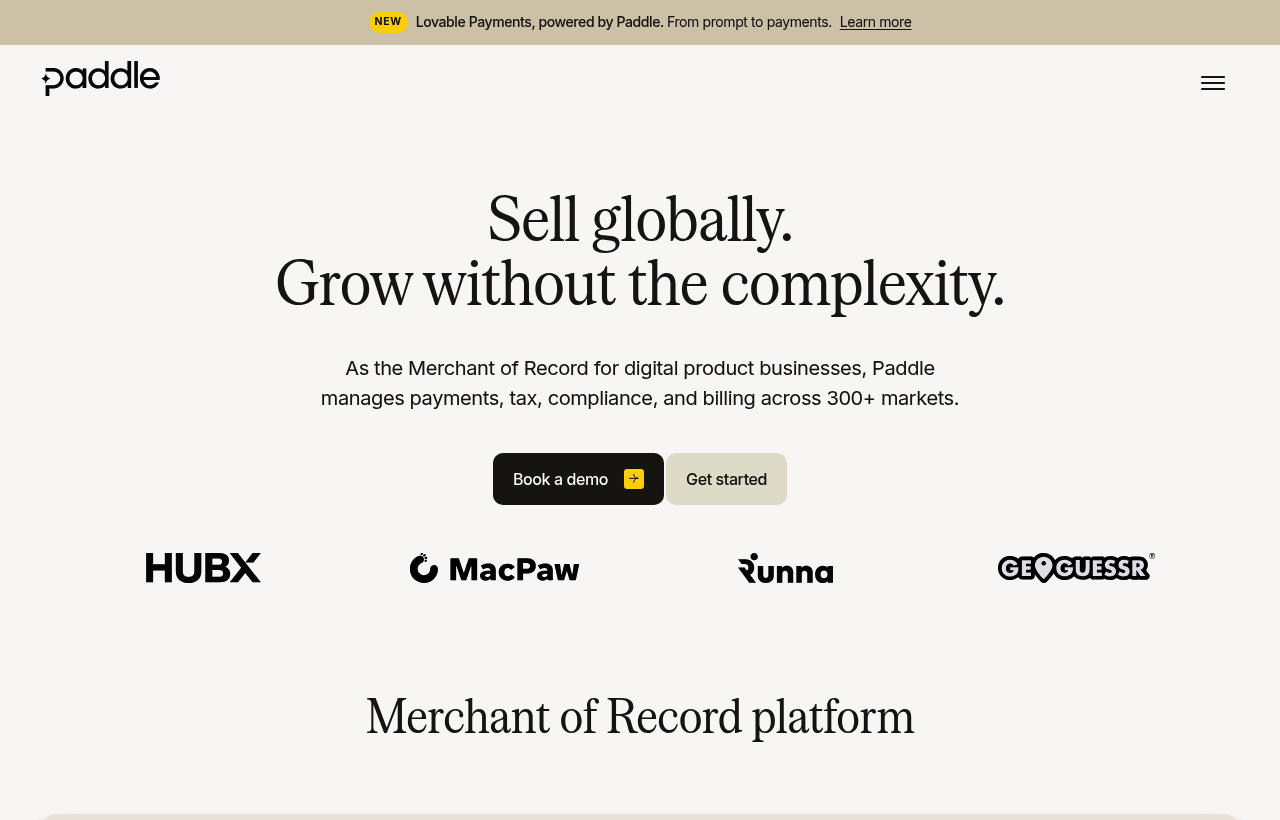
Merchant of record for SaaS. Paddle handles payments, tax, compliance, and billing so you don't have to.
What Is Stripe Billing?
Stripe Billing is the recurring revenue layer that sits on top of Stripe's payment infrastructure. It handles subscriptions, invoicing, and revenue recognition so a startup can charge customers on a schedule, send them proper invoices, and keep the books straight without building any of that machinery in-house. This deal comes with $500 in credits, and it is aimed at startups already using Stripe for payments, which means the billing layer drops into a stack the team has probably already set up.
The reason this matters is that billing looks simple until you try to build it. Charging a card once is easy. Charging the same customer every month, handling the customer who upgrades halfway through a cycle, prorating the difference, retrying the payment that failed because a card expired, generating an invoice that a finance department will accept, and then reporting all of it in a way an accountant recognizes as revenue, that is not easy. It is a system, and it is a system that never stops running. Stripe Billing is that system, already built, already tested against millions of real transactions, ready for a startup to plug into.
The $500 in credits lowers the cost of getting started so the team can wire up real subscriptions, run real charges, and see the whole flow work end to end before the billing volume grows into meaningful fees. For a startup, that head start means the revenue engine is proven early, when there is still time to shape pricing and plans around what the tooling makes easy.
What Is Paddle?
Paddle is a merchant of record for software companies, and understanding that phrase is the key to understanding why it matters. Most payment processors just move money: they charge the customer's card and deposit the funds, and everything else, sales tax, VAT, compliance, fraud, billing disputes, is the software company's problem. A merchant of record is different. Paddle becomes the seller of record for the transaction, which means it takes on the tax calculation and remittance, the compliance, the fraud handling, and the billing infrastructure, and the software company simply receives its revenue. The startup deal includes a $500 processing credit for SaaS startups with global customers, lowering the cost of getting onto this model.
For a SaaS startup selling internationally, this distinction is enormous. The moment a software company sells to customers in multiple countries, it walks into a thicket of sales tax and VAT obligations that differ by jurisdiction, change over time, and carry real penalties for getting wrong. Paddle taking on the merchant-of-record role means the startup does not have to become a global tax compliance operation to sell software abroad, which is exactly the kind of complexity that can otherwise swallow a small team.
Stripe Billing vs Paddle, Detailed Comparison
What's Included in Each Startup Deal
Here is exactly what you get when claiming each deal through SaaSOffers:
SStripe Billing
- $500 in Stripe Billing credits
- Subscription management
- Automated invoicing
- Revenue recognition
- Smart payment retries and dunning
PPaddle
- $500 processing credit
- Merchant of record (Paddle handles tax)
- Subscription management
- Global payment methods
- Dunning and churn reduction
Who Should Use Stripe Billing vs Paddle?
The right tool depends on what your startup actually needs day-to-day. Both Stripe Billing and Paddle serve different use cases, and many startups use tools from the same category for different purposes. Here is when each makes sense:
Choose Stripe Billing if:
- You need finance & legal as a core part of your product or operations
- $500 in credits in credits covers your usage for 6–12 months
- Your team has experience with Stripe Billing or similar tools in its category
- You want a premium-tier deal with SaaSOffers Premium
Choose Paddle if:
- You need finance & legal as a core part of your product or operations
- $500 processing credit in credits covers your usage for 6–12 months
- Your team has experience with Paddle or similar tools in its category
- You want a premium-tier deal with SaaSOffers Premium
Can you use both? Yes, there are no restrictions on claiming multiple startup deals. Many startups use Stripe Billing and Paddle simultaneously for different needs. Claim both through SaaSOffers.
Startup Deal Comparison: Which Saves More?
Both Stripe Billing and Paddle offer startup deals through SaaSOffers. Here is how the deals compare for a typical early-stage startup in 2026:
Frequently Asked Questions
Common questions about Stripe Billing vs Paddle for startups.
What is the difference between Stripe Billing and Paddle?
Stripe Billing offers $500 in credits and is categorized as Finance & Legal. Paddle offers $500 processing credit and is categorized as Finance & Legal. Both offer startup deals through SaaSOffers. The right choice depends on your specific needs, Stripe Billing is best for teams needing finance & legal, while Paddle excels at finance & legal.
Can I use both Stripe Billing and Paddle together?
Yes. There are no restrictions on claiming startup deals from multiple tools. Many startups use both Stripe Billing and Paddle simultaneously, each serving different needs. Claim both through SaaSOffers for maximum savings.
Which has a better startup deal, Stripe Billing or Paddle?
Paddle offers $500 processing credit, while Stripe Billing offers $500 in credits. However, the "better" deal depends on which tool you actually need, a larger credit on a tool you won't use is worth less than a smaller credit on a tool that's essential to your stack.
Is Stripe Billing free for startups?
Stripe Billing offers $500 in credits through its startup program on SaaSOffers. The deal type is "premium", available to SaaSOffers Premium members ($79/year). Startup using Stripe for payments
Is Paddle free for startups?
Paddle offers $500 processing credit through its startup program on SaaSOffers. The deal type is "premium", available to SaaSOffers Premium members ($79/year). SaaS startup with global customers
Is Stripe Billing separate from Stripe Payments?
Stripe Billing is an add-on to Stripe Payments. Standard Stripe processing fees (2.9% + $0.30 per charge) apply to all transactions. Billing adds an additional 0.5–0.8% fee for subscription-specific features (recurring billing, invoicing, dunning, revenue recognition). The $500 credit offsets these Billing-specific fees.
Can I use Stripe Billing for usage-based pricing?
Yes. Stripe Billing supports metered/usage-based pricing via the Meter API. Your application reports usage events to Stripe; Stripe calculates the charge at the end of each billing period based on your pricing tiers. This supports per-API-call, per-unit, per-seat, and tiered usage pricing models.
How does Stripe Billing compare to Chargebee?
Stripe Billing is simpler and natively integrated for teams already on Stripe. Chargebee is more feature-rich for complex billing scenarios — multiple payment gateways, advanced revenue recognition, enterprise invoicing, and a $100,000 startup credit. Choose Stripe Billing for simplicity; choose Chargebee for complex billing requirements.
What is a merchant of record?
Paddle is the legal seller of your product. When a customer pays, they pay Paddle (not you directly). Paddle handles tax compliance in every jurisdiction and pays you net of taxes and fees. You never file VAT returns or register for tax in foreign countries.
How does Paddle compare to Stripe?
Stripe: you are the merchant, you handle tax (or add Stripe Tax). Paddle: Paddle is the merchant, tax is handled. Paddle charges more per transaction (5%+) but includes tax compliance. Stripe charges less (2.9%) but tax compliance is separate and complex.
How much does Paddle charge?
Paddle charges 5% + $0.50 per transaction for the standard plan. This includes payment processing, tax compliance, fraud prevention, and subscription management.
The Bottom Line: Stripe Billing vs Paddle
Both Stripe Billing and Paddle offer genuine value for early-stage startups in 2026. The decision comes down to your specific needs:
Stripe Billing provides $500 in credits and is the stronger choice for startups that need finance & legal. The deal is accessible as a premium offer through SaaSOffers.
Paddle provides $500 processing credit and is the stronger choice for startups that need finance & legal. The deal is accessible as a premium offer through SaaSOffers.
The best approach for most startups is to claim both deals, there are no restrictions, and each tool serves a different part of your stack. Start by claiming the tool you need first, then add the second when you need it.
We've helped 10,000+ startup founders unlock $500,000+ in SaaS credits and discounts. Every comparison is based on real deal data from our platform.