
Pinecone Startup Credits: $1,000 in credits
Managed vector database for AI applications, semantic search, recommendation systems, and RAG at any scale.
Free · Opens in new tab
Already have an account? Log in
Deal Highlights
What Pinecone Is and Why AI Apps Need It
Pinecone is a managed vector database built for AI applications, the infrastructure behind semantic search, recommendation systems, and retrieval-augmented generation at any scale. Where a traditional database stores and queries structured data by exact matches, a vector database stores the numerical representations, called embeddings, that AI models produce, and finds results by meaning and similarity rather than exact matches. The startup deal provides $1,000 in credits for AI startups building vector search, covering the development and early scaling period when a team is building the retrieval layer that a modern AI product depends on.
The reason this matters is that a huge share of AI applications in 2026 depend on finding relevant information by meaning, and that is exactly what a vector database does. A chatbot that answers from a company's documents, a search that understands intent rather than keywords, a recommendation system that finds similar items, all work by converting content into embeddings and finding the closest matches, and doing that reliably at scale is a genuinely hard infrastructure problem. Pinecone provides that as a managed service, so an AI startup builds its product on top of a working vector database rather than trying to build and operate one itself.
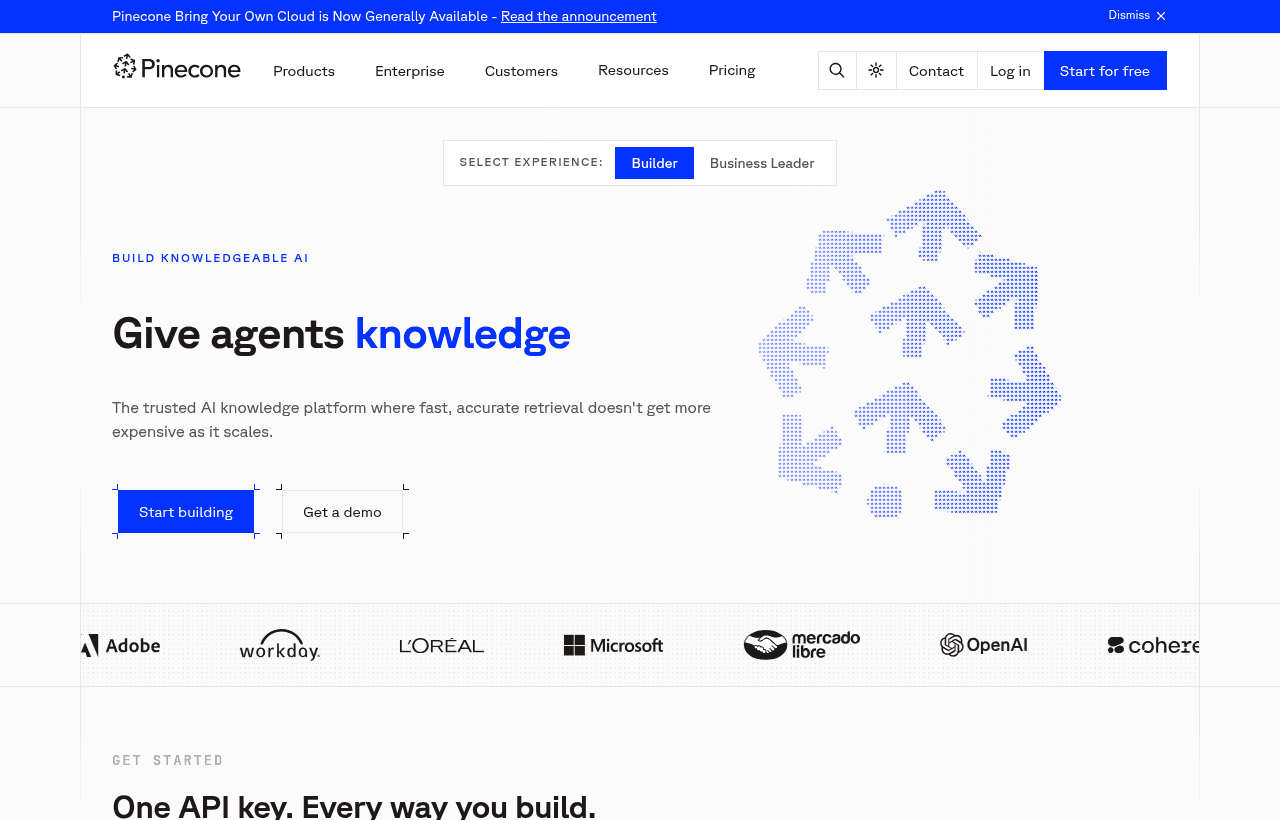
Pinecone, one of the tools included in this startup deal.
The Problem a Vector Database Solves
Storing embeddings and searching them by similarity sounds simple until you try to do it at scale. Finding the nearest vectors among millions or billions of them, fast, reliably, and while new data is constantly being added, is a difficult engineering problem involving specialized indexing and infrastructure that most teams have no business building themselves. A startup that tried to build its own vector search would spend enormous effort on infrastructure that is not its actual product, and would likely end up with something slower and less reliable than a purpose-built service. Pinecone abstracts that problem away behind an API, so the startup gets fast, scalable similarity search without building the hard part.
This abstraction is the entire value for an AI startup. The team's actual product is whatever it builds on top of retrieval, the assistant, the search experience, the recommendations, not the vector database underneath. By using Pinecone for the retrieval layer, the team keeps its limited engineering effort on the product rather than on the infrastructure, which for a small company is the difference between shipping and getting bogged down building undifferentiated plumbing. The vector database is essential but it is not the product, and Pinecone lets a startup treat it as the solved, managed foundation it should be.
Powering Retrieval-Augmented Generation
One of the most common uses of Pinecone in 2026 is retrieval-augmented generation, the pattern where an AI application retrieves relevant information and feeds it to a language model so the model can answer based on specific, current, or private data rather than only what it was trained on. This is how a company builds an assistant that answers from its own documents, a support bot that knows the company's actual product, or any AI feature grounded in specific knowledge. The retrieval step, finding the right information to give the model, is exactly what a vector database does, which makes Pinecone foundational to this whole category of AI product.
For an AI startup, RAG is often the core of the product, and the quality of the retrieval directly shapes the quality of the output. If the vector database returns the right, relevant information, the model produces good, grounded answers, and if the retrieval is poor, the whole thing degrades no matter how good the model is. Building on a reliable, fast vector database means the retrieval foundation is solid, so the team can focus on the parts of the product that differentiate it. Pinecone being purpose-built for exactly this workload is why it has become a default choice for startups building RAG applications, and the credits lower the cost of building that foundation during development.
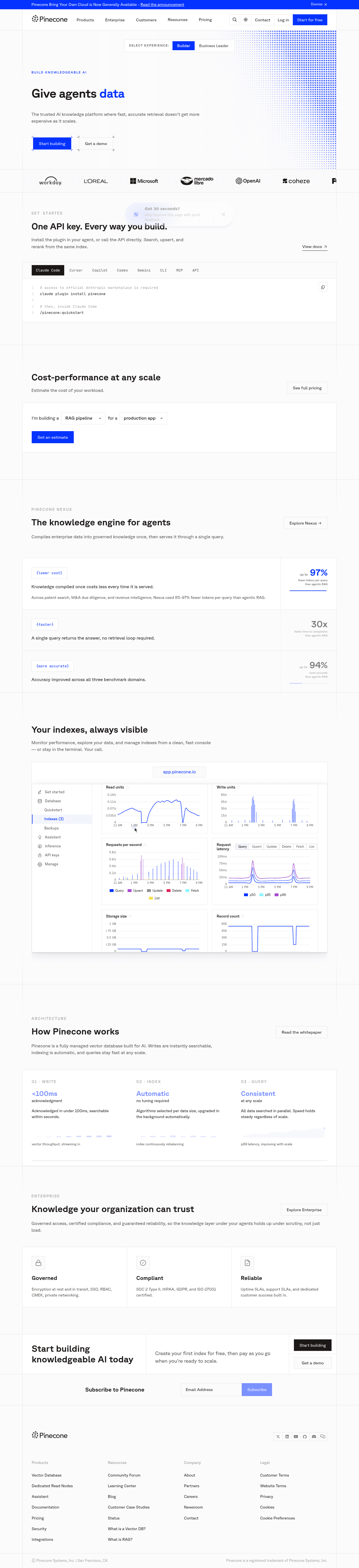
A look at Pinecone before the discount, so you can see what the deal saves you.
Semantic Search and Recommendations
Beyond RAG, Pinecone powers semantic search and recommendation systems, two capabilities that a lot of products benefit from. Semantic search lets users find things by meaning rather than exact keywords, so a search for a concept returns relevant results even when they do not contain the exact words, which is a far better search experience than keyword matching. For any product with a lot of content to search, this is a meaningful upgrade in how users find what they need, and it is built directly on the similarity search a vector database provides.
Recommendation systems work on the same foundation, finding items similar to what a user has shown interest in by comparing their embeddings. A product that recommends relevant content, items, or connections based on similarity can drive engagement and value, and building that on a vector database is how many recommendation features actually work under the hood. For an AI startup, having one piece of infrastructure that supports RAG, semantic search, and recommendations means the retrieval layer serves multiple parts of the product, which is efficient. Pinecone handling all of these workloads reliably at scale is what lets a startup build these capabilities without operating the difficult infrastructure they each require.
Managed Infrastructure and Startup Economics
The managed aspect of Pinecone is central to its value for a small team, because operating a vector database at scale is a real operational burden that a startup cannot afford to take on. Keeping the indexes performant as data grows, handling scaling, ensuring reliability and uptime, these are ongoing operational responsibilities that would consume engineering attention a startup needs for its product. Pinecone being fully managed means the startup does not run any of that, the service handles the scaling and the operations, and the team just uses the API. For a company without a dedicated infrastructure team, that offload is essential.
The $1,000 in credits fits startup economics by covering the period when a team is building and validating its AI product before the usage, and therefore the cost, scales up. During development and early testing, the credits let the team build the retrieval layer, experiment with how it uses the vector database, and validate that the product works, without paying for the infrastructure while the product is still finding its footing. As the product grows and usage rises, the cost grows with it, aligned to the value being delivered. For an AI startup managing a tight budget, having the retrieval infrastructure covered during the build phase is exactly the kind of support that lets the team focus its resources on the product rather than the plumbing.
Pinecone Compared to Building It Yourself
The real comparison for many teams is Pinecone versus building vector search on open-source libraries and running the infrastructure themselves. The self-built path can look cheaper on paper because there is no service fee, but it carries the substantial hidden costs of building, operating, scaling, and maintaining the vector search infrastructure, all of which consume the engineering effort that is a startup's scarcest resource. For most AI startups, the managed service is the better trade because it converts an ongoing infrastructure burden into a solved dependency, freeing the team to build the product that actually differentiates the company.
Against other managed vector databases, the considerations are performance at scale, reliability, and how well the service fits the team's workload, and Pinecone competes on being a mature, purpose-built service designed for exactly these AI retrieval workloads. The judgment for a startup is that unless the team has both the expertise and a strong reason to run its own vector infrastructure, a managed service is usually the right choice, and Pinecone is a well-established option for AI applications. The $1,000 in credits lowers the cost of building on it during the stage when the team should be focused on the product rather than on operating infrastructure, which is exactly when that focus matters most.
Making the Credits Count
The way to get value from the credits is to use them to build the retrieval layer properly during development, experimenting with how the product uses vector search and getting the foundation right before usage scales. Use the period to figure out how the application should chunk and embed its data, how it should query, and how the retrieval quality affects the product, so that by the time the product is ready to grow, the retrieval layer is solid rather than a rough prototype. The credits cover exactly this exploration, which is the stage where getting the retrieval right sets up everything the product does on top of it.
For an AI startup, the strategic value is building on a reliable retrieval foundation from the start, so that as the product grows the vector database scales with it rather than becoming a bottleneck the team has to rebuild. The retrieval layer is fundamental to a lot of AI products, and getting it right early, on infrastructure built to scale, means the company does not face a painful re-architecture when usage climbs. The $1,000 in credits lowers the cost of establishing that foundation during the build phase, which is precisely when a startup should be investing its effort in the product rather than in operating the difficult infrastructure that a managed vector database handles for it.
Who Should Claim This Deal
The Pinecone deal fits any AI startup building a product that depends on finding information by meaning, a RAG application, semantic search, or a recommendation system, and wants a reliable, scalable retrieval layer without operating vector-search infrastructure itself. If a team is building the retrieval foundation of an AI product, the $1,000 in credits covers the development and early scaling period on a managed vector database purpose-built for exactly these workloads. For a company whose product rests on quality retrieval, getting that foundation right on infrastructure built to scale is exactly the kind of decision worth making carefully while the credits lower the cost.
Retrieval Quality Shapes the Whole Product
A point worth emphasizing for any AI startup building on retrieval is that the quality of what the vector database returns shapes the quality of the entire product, which makes getting the retrieval layer right one of the highest-leverage things the team can do. In a RAG application, the model can only answer well from information the retrieval actually surfaces, so if the vector search returns irrelevant or incomplete results, the output degrades no matter how capable the underlying model is. The retrieval is the foundation the rest of the product stands on, and a weak foundation limits everything built above it regardless of how good the other pieces are.
This is why building on reliable, fast, purpose-built retrieval infrastructure matters so much, and why the team should invest care in how it uses the vector database, not just in adopting one. How the application chunks its data, how it generates embeddings, and how it queries all affect retrieval quality, and getting these right on infrastructure that performs reliably at scale is what produces a product that actually works well. A startup that treats retrieval as a core part of the product to get right, rather than a commodity to bolt on, builds a better product, and using Pinecone means the infrastructure underneath that effort is solid rather than a source of its own problems. The credits give the team room to get the retrieval right during development.
A Foundation That Grows With the Product
The lasting value of building on Pinecone is that the retrieval foundation grows with the product rather than becoming something the team has to rebuild once usage climbs. Because the service is built to scale, an AI startup can go from a prototype to a product serving real load on the same foundation, without the painful re-architecture that catches teams who built their retrieval on infrastructure that could not grow. The credits lower the cost of establishing that scalable foundation during development, which is exactly when a startup should be proving its product rather than worrying about the infrastructure underneath it.
Who Is This Deal For?
Early-Stage Startups
Seed and pre-seed companies looking to move fast without overspending on tools.
Growing SaaS Teams
Series A+ companies scaling their stack and optimizing software costs.
Solo Founders
Indie hackers and bootstrapped founders who need enterprise tools at startup prices.
Get $1,000 in credits off Pinecone
Premium deal. Upgrade once, unlock everything.
!Eligibility Requirements
AI startup building vector search
Frequently Asked Questions
Everything you need to know about this startup deal.
A vector database stores numerical representations (embeddings) of text, images, or other data and finds similar items by mathematical distance. When you search 'shoes similar to this one' or 'documents about this topic,' the vector database finds the closest matches by embedding similarity.
Get the weekly deals digest
New verified startup deals every week. No spam, ever. Unsubscribe anytime.
Related Offers

Higgsfield
55% off annual Business plan
55% off an annual Higgsfield Business plan. Higgsfield is an AI video and image studio with Seedance, Kling, Veo and more in one account.
View offer
Seedance
55% off annual Business plan
55% off an annual Higgsfield Business plan with Seedance included. Seedance is ByteDance's AI video model for text, image and reference-driven clips.
View offerChromaDB
Used by 306 members
Free & Open Source
Open-source embedding database for building AI applications with semantic search.
View offer
Laxis
Used by 2,176 members
Free Plan
AI meeting assistant that records, transcribes, and generates actionable meeting notes.
View offer
Pictory
Used by 659 members
Free Trial
AI-powered video creation tool, turn text, scripts, and blogs into videos.
View offer
Segment
Used by 2,293 members
$25,000 in credits
Collect, clean, and route customer data to every tool in your stack with the leading customer data platform.
View offerDeal Summary
Looking for more startup deals?
Browse all offers