

Paddle vs Lemon Squeezy for Startups in 2026
Choosing between Paddle ($500 processing credit) and Lemon Squeezy (Free to start (% per transaction)) for your startup? This side-by-side comparison covers features, startup deals, pricing, and which tool fits your stack, with verified deals you can claim through SaaSOffers.
Quick Answer
Paddle offers $500 processing credit and is best for startups needing finance & legal. Lemon Squeezy offers Free to start (% per transaction) and is best for finance & legal. Paddle provides a higher-value startup deal, but Lemon Squeezy may be the better fit depending on your stack. You can claim both through SaaSOffers, there are no restrictions on using multiple startup deals.

Paddle
Merchant of record for SaaS. Paddle handles payments, tax, compliance, and billing so you don't have to.

Lemon Squeezy
Merchant of record for digital products, handle payments, tax compliance, and fraud prevention globally.
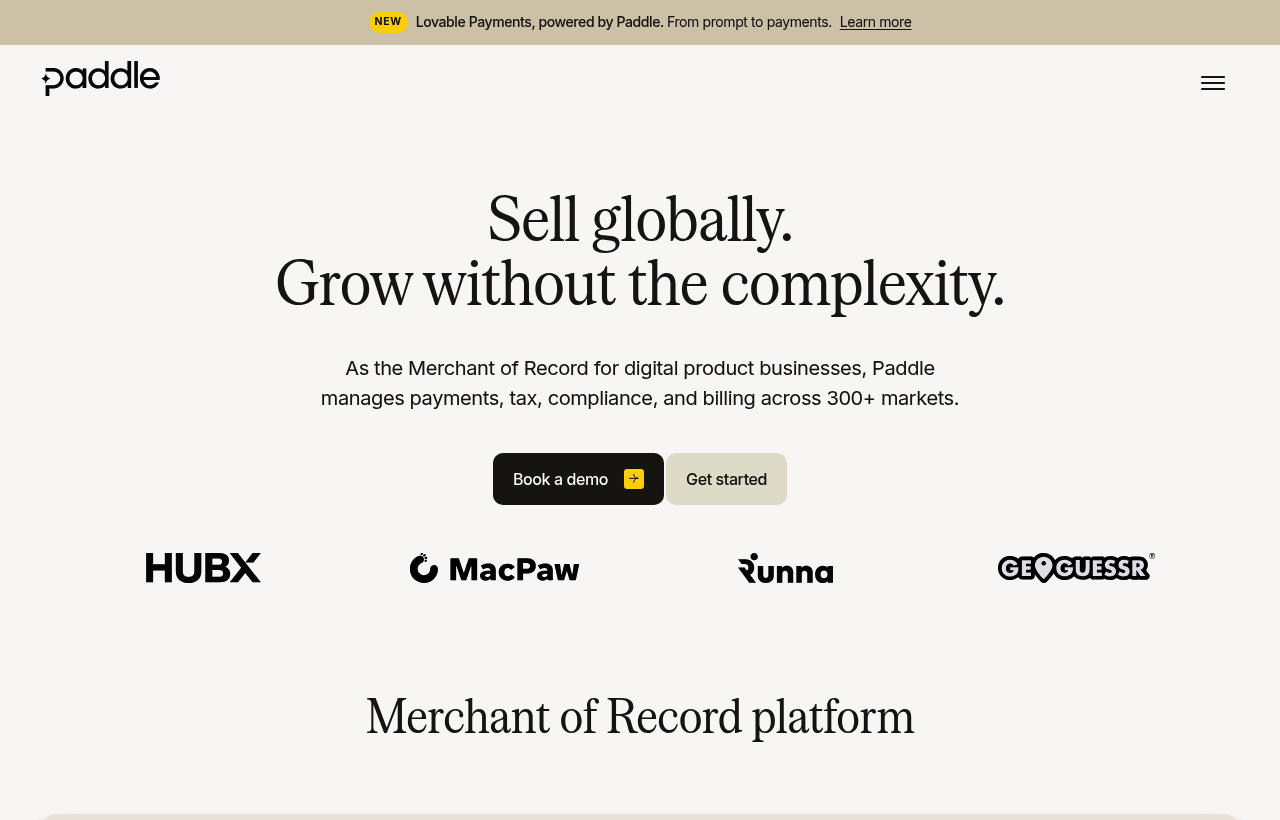
What Is Paddle?
Paddle is a merchant of record for software companies, and understanding that phrase is the key to understanding why it matters. Most payment processors just move money: they charge the customer's card and deposit the funds, and everything else, sales tax, VAT, compliance, fraud, billing disputes, is the software company's problem. A merchant of record is different. Paddle becomes the seller of record for the transaction, which means it takes on the tax calculation and remittance, the compliance, the fraud handling, and the billing infrastructure, and the software company simply receives its revenue. The startup deal includes a $500 processing credit for SaaS startups with global customers, lowering the cost of getting onto this model.
For a SaaS startup selling internationally, this distinction is enormous. The moment a software company sells to customers in multiple countries, it walks into a thicket of sales tax and VAT obligations that differ by jurisdiction, change over time, and carry real penalties for getting wrong. Paddle taking on the merchant-of-record role means the startup does not have to become a global tax compliance operation to sell software abroad, which is exactly the kind of complexity that can otherwise swallow a small team.
What Is Lemon Squeezy?
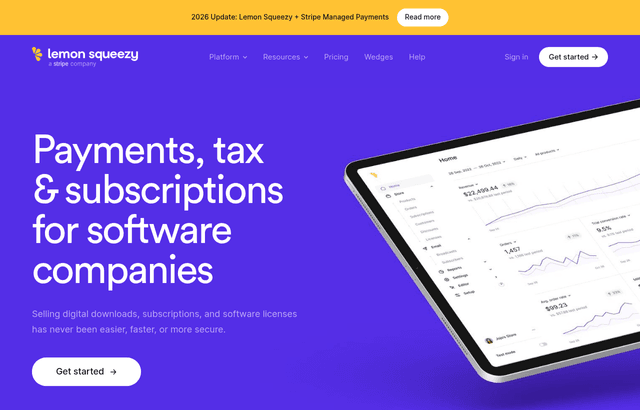
Lemon Squeezy is a merchant of record for digital products, handling payments, tax compliance, and fraud prevention globally, and this deal is free to start with a percentage taken per transaction. In plain terms, it lets a startup sell digital products to customers anywhere in the world without becoming an expert in international tax law or building its own payments and fraud systems. For a team selling software, subscriptions, or downloads, that is a genuine shortcut past some of the least glamorous and most dangerous parts of running a business.
The key phrase is merchant of record. When Lemon Squeezy acts as the merchant of record, it is legally the seller in the transaction, which means the responsibility for collecting and remitting the right taxes falls on Lemon Squeezy, not on the startup. That single fact removes an enormous burden. Selling digital products across borders means dealing with a bewildering web of tax rules that differ by country and region and change over time. Lemon Squeezy takes that on, along with payment processing and fraud prevention, and charges a percentage per transaction. There is nothing to pay to start, so a startup only pays when it makes a sale.
Paddle vs Lemon Squeezy, Detailed Comparison
What's Included in Each Startup Deal
Here is exactly what you get when claiming each deal through SaaSOffers:
PPaddle
- $500 processing credit
- Merchant of record (Paddle handles tax)
- Subscription management
- Global payment methods
- Dunning and churn reduction
LLemon Squeezy
- No monthly fees
- Global tax compliance handled
- Subscription and one-time payments
- License key management
- Affiliate program built-in
Who Should Use Paddle vs Lemon Squeezy?
The right tool depends on what your startup actually needs day-to-day. Both Paddle and Lemon Squeezy serve different use cases, and many startups use tools from the same category for different purposes. Here is when each makes sense:
Choose Paddle if:
- You need finance & legal as a core part of your product or operations
- $500 processing credit in credits covers your usage for 6–12 months
- Your team has experience with Paddle or similar tools in its category
- You want a premium-tier deal with SaaSOffers Premium
Choose Lemon Squeezy if:
- You need finance & legal as a core part of your product or operations
- Free to start (% per transaction) in credits covers your usage for 6–12 months
- Your team has experience with Lemon Squeezy or similar tools in its category
- You want a premium-tier deal with SaaSOffers Premium
Can you use both? Yes, there are no restrictions on claiming multiple startup deals. Many startups use Paddle and Lemon Squeezy simultaneously for different needs. Claim both through SaaSOffers.
Startup Deal Comparison: Which Saves More?
Both Paddle and Lemon Squeezy offer startup deals through SaaSOffers. Here is how the deals compare for a typical early-stage startup in 2026:
Frequently Asked Questions
Common questions about Paddle vs Lemon Squeezy for startups.
What is the difference between Paddle and Lemon Squeezy?
Paddle offers $500 processing credit and is categorized as Finance & Legal. Lemon Squeezy offers Free to start (% per transaction) and is categorized as Finance & Legal. Both offer startup deals through SaaSOffers. The right choice depends on your specific needs, Paddle is best for teams needing finance & legal, while Lemon Squeezy excels at finance & legal.
Can I use both Paddle and Lemon Squeezy together?
Yes. There are no restrictions on claiming startup deals from multiple tools. Many startups use both Paddle and Lemon Squeezy simultaneously, each serving different needs. Claim both through SaaSOffers for maximum savings.
Which has a better startup deal, Paddle or Lemon Squeezy?
Paddle offers $500 processing credit, while Lemon Squeezy offers Free to start (% per transaction). However, the "better" deal depends on which tool you actually need, a larger credit on a tool you won't use is worth less than a smaller credit on a tool that's essential to your stack.
Is Paddle free for startups?
Paddle offers $500 processing credit through its startup program on SaaSOffers. The deal type is "premium", available to SaaSOffers Premium members ($79/year). SaaS startup with global customers
Is Lemon Squeezy free for startups?
Lemon Squeezy offers Free to start (% per transaction) through its startup program on SaaSOffers. The deal type is "premium", available to SaaSOffers Premium members ($79/year). Startup selling digital products
What is a merchant of record?
Paddle is the legal seller of your product. When a customer pays, they pay Paddle (not you directly). Paddle handles tax compliance in every jurisdiction and pays you net of taxes and fees. You never file VAT returns or register for tax in foreign countries.
How does Paddle compare to Stripe?
Stripe: you are the merchant, you handle tax (or add Stripe Tax). Paddle: Paddle is the merchant, tax is handled. Paddle charges more per transaction (5%+) but includes tax compliance. Stripe charges less (2.9%) but tax compliance is separate and complex.
How much does Paddle charge?
Paddle charges 5% + $0.50 per transaction for the standard plan. This includes payment processing, tax compliance, fraud prevention, and subscription management.
What is a merchant of record?
A merchant of record (MoR) is the legal entity that sells the product to the customer. Lemon Squeezy acts as the MoR — they charge the customer, handle tax compliance, and pay you net of taxes and fees. You never deal with VAT returns, sales tax filings, or international tax compliance.
How does Lemon Squeezy pricing work?
5% + $0.50 per transaction. No monthly fees. You pay only when you earn revenue. This includes all features: subscriptions, license keys, affiliates, and tax compliance.
Is Lemon Squeezy better than Stripe for selling digital products?
Lemon Squeezy handles tax compliance that Stripe does not. With Stripe, you are the merchant and must handle VAT/GST yourself (or add Stripe Tax at extra cost). With Lemon Squeezy, tax compliance is included. The tradeoff: Lemon Squeezy takes 5% vs Stripe's 2.9%.
The Bottom Line: Paddle vs Lemon Squeezy
Both Paddle and Lemon Squeezy offer genuine value for early-stage startups in 2026. The decision comes down to your specific needs:
Paddle provides $500 processing credit and is the stronger choice for startups that need finance & legal. The deal is accessible as a premium offer through SaaSOffers.
Lemon Squeezy provides Free to start (% per transaction) and is the stronger choice for startups that need finance & legal. The deal is accessible as a premium offer through SaaSOffers.
The best approach for most startups is to claim both deals, there are no restrictions, and each tool serves a different part of your stack. Start by claiming the tool you need first, then add the second when you need it.
We've helped 10,000+ startup founders unlock $500,000+ in SaaS credits and discounts. Every comparison is based on real deal data from our platform.