

Mailchimp vs SendGrid for Startups in 2026
Choosing between Mailchimp ($500 in credits) and SendGrid ($1,000 in credits) for your startup? This side-by-side comparison covers features, startup deals, pricing, and which tool fits your stack, with verified deals you can claim through SaaSOffers.
Quick Answer
Mailchimp offers $500 in credits and is best for startups needing marketing & growth. SendGrid offers $1,000 in credits and is best for marketing & growth. SendGrid provides a higher-value startup deal, but Mailchimp may be the better fit depending on your stack. You can claim both through SaaSOffers, there are no restrictions on using multiple startup deals.

Mailchimp
Email marketing and automation platform, free credits to build your audience and convert subscribers to customers.

SendGrid
Send transactional and marketing emails at scale with the email delivery platform trusted by 80,000+ companies.
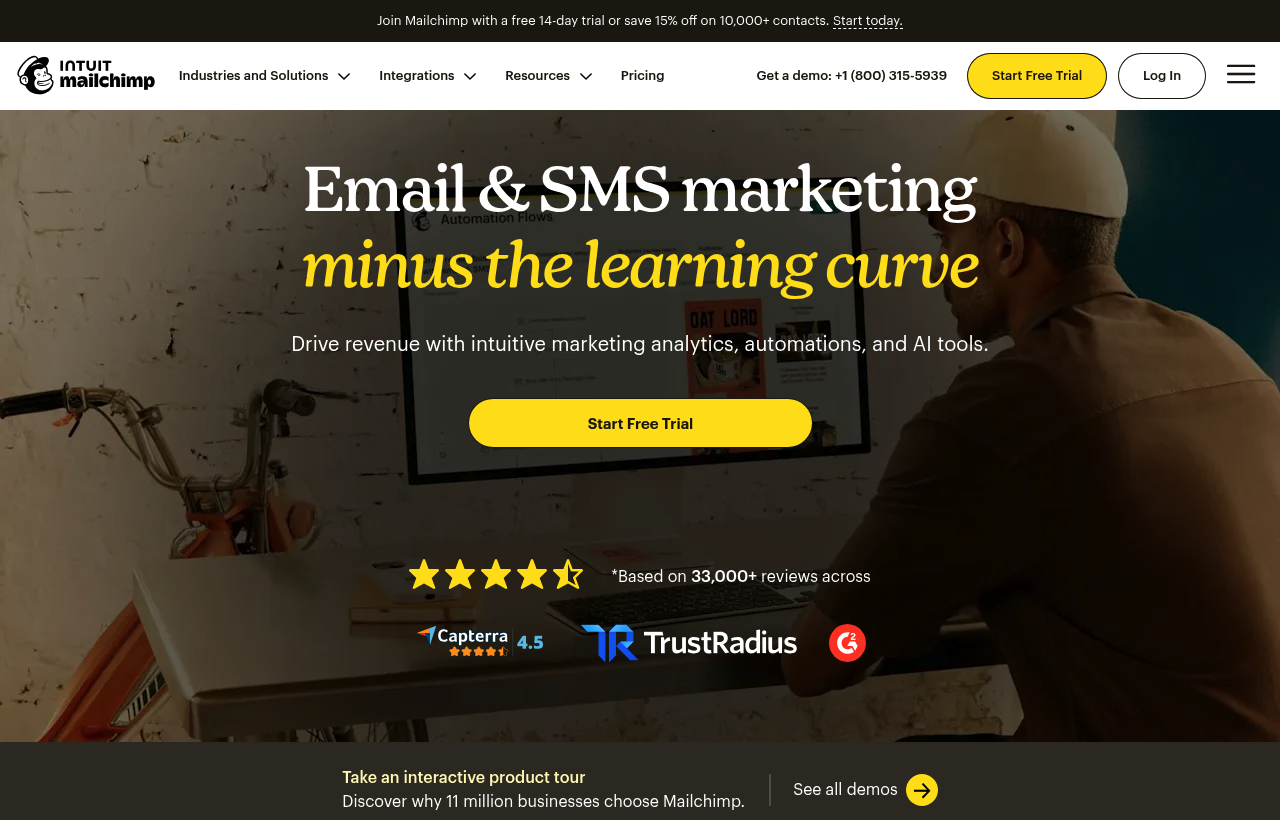
What Is Mailchimp?
Mailchimp is an email marketing and automation platform built for small and mid-sized businesses. It handles list management, campaign design, automated sequences, landing pages, forms, and reporting. Over the last few years it has expanded beyond email into a broader marketing suite with SMS, social posting, and a basic CRM, following its acquisition by Intuit.
For a startup, the appeal is speed. You can import a list, drag together a decent-looking campaign, and send it the same afternoon with no developer involved. The template library and the editor remain the best in the category for non-designers. That accessibility is why Mailchimp still owns the default position in early-stage marketing stacks despite heavy competition on price.
What Is SendGrid?
SendGrid is an email delivery platform for sending transactional and marketing emails at scale, trusted by tens of thousands of companies. This deal gives an early-stage startup with a new account 1,000 dollars in credits, real runway to build email into the product and the marketing without the cost arriving before the growth does. For a company that depends on email to onboard users, confirm actions, and stay in touch with customers, that credit covers the phase where email volume ramps up but revenue has not yet caught up.
Email is infrastructure that a startup cannot really do without. Password resets, receipts, notifications, onboarding sequences, and marketing campaigns all run on it, and every one of those messages has to actually arrive in the inbox to do its job. That last part, deliverability, is deceptively hard, which is why sending email at scale is a specialized problem better handled by a dedicated platform than by a homegrown mail server. SendGrid exists to make sure the emails a startup sends are the emails its users receive.
For an early-stage startup, the 1,000 dollars in credits is the practical foundation. The team can wire up transactional email, run marketing campaigns, and grow their sending volume on a platform built to handle scale, all before the cost becomes a line item that matters. That runway lets a small team treat email as reliable infrastructure from the start rather than an afterthought that breaks under load.
Mailchimp vs SendGrid, Detailed Comparison
What's Included in Each Startup Deal
Here is exactly what you get when claiming each deal through SaaSOffers:
MMailchimp
- $500 in Mailchimp credits
- Email marketing campaigns
- Marketing automation workflows
- Landing pages and signup forms
- Audience segmentation and analytics
SSendGrid
- $1,000 in SendGrid credits
- Transactional email API
- Marketing email campaigns
- Email validation and deliverability tools
- Real-time analytics and reporting
Who Should Use Mailchimp vs SendGrid?
The right tool depends on what your startup actually needs day-to-day. Both Mailchimp and SendGrid serve different use cases, and many startups use tools from the same category for different purposes. Here is when each makes sense:
Choose Mailchimp if:
- You need marketing & growth as a core part of your product or operations
- $500 in credits in credits covers your usage for 6–12 months
- Your team has experience with Mailchimp or similar tools in its category
- You want a premium-tier deal with SaaSOffers Premium
Choose SendGrid if:
- You need marketing & growth as a core part of your product or operations
- $1,000 in credits in credits covers your usage for 6–12 months
- Your team has experience with SendGrid or similar tools in its category
- You want a premium-tier deal with SaaSOffers Premium
Can you use both? Yes, there are no restrictions on claiming multiple startup deals. Many startups use Mailchimp and SendGrid simultaneously for different needs. Claim both through SaaSOffers.
Startup Deal Comparison: Which Saves More?
Both Mailchimp and SendGrid offer startup deals through SaaSOffers. Here is how the deals compare for a typical early-stage startup in 2026:
Frequently Asked Questions
Common questions about Mailchimp vs SendGrid for startups.
What is the difference between Mailchimp and SendGrid?
Mailchimp offers $500 in credits and is categorized as Marketing & Growth. SendGrid offers $1,000 in credits and is categorized as Marketing & Growth. Both offer startup deals through SaaSOffers. The right choice depends on your specific needs, Mailchimp is best for teams needing marketing & growth, while SendGrid excels at marketing & growth.
Can I use both Mailchimp and SendGrid together?
Yes. There are no restrictions on claiming startup deals from multiple tools. Many startups use both Mailchimp and SendGrid simultaneously, each serving different needs. Claim both through SaaSOffers for maximum savings.
Which has a better startup deal, Mailchimp or SendGrid?
SendGrid offers $1,000 in credits, while Mailchimp offers $500 in credits. However, the "better" deal depends on which tool you actually need, a larger credit on a tool you won't use is worth less than a smaller credit on a tool that's essential to your stack.
Is Mailchimp free for startups?
Mailchimp offers $500 in credits through its startup program on SaaSOffers. The deal type is "premium", available to SaaSOffers Premium members ($79/year). Early-stage startup, new Mailchimp account
Is SendGrid free for startups?
SendGrid offers $1,000 in credits through its startup program on SaaSOffers. The deal type is "premium", available to SaaSOffers Premium members ($79/year). Early-stage startup, new SendGrid account
Is Mailchimp free?
Mailchimp's free plan supports 500 contacts and 1,000 emails/month with basic features. The Standard plan ($13–$350/month based on contacts) adds automation, A/B testing, and advanced segmentation. The $500 credit covers 3–38 months depending on plan and contact count.
Is Mailchimp good for startups?
Yes for content marketing, newsletters, and product announcements. Less ideal for behavioral product messaging (Customer.io is better) or transactional email (SendGrid is better). Mailchimp excels at building and nurturing an audience through regular email communication.
Does Mailchimp integrate with Shopify?
Yes. Mailchimp's Shopify integration syncs customer data, purchase history, and product catalog. Use purchase data for segmentation, abandoned cart emails, and product recommendation campaigns.
How much does SendGrid cost per email?
SendGrid pricing varies by plan. The Essentials plan starts at $19.95/month for 50,000 emails ($0.40 per 1,000). The Pro plan starts at $89.95/month for 100,000 emails with dedicated IP. The $1,000 startup credit covers 10–50 months of email sending depending on volume and plan selection.
Is SendGrid better than Amazon SES?
SendGrid is better for startups that want managed deliverability — SendGrid handles IP reputation, ISP relationships, and bounce management. SES is cheaper per email ($0.10 per 1,000) but requires you to manage deliverability yourself. For startups without a dedicated email operations person, SendGrid's managed approach prevents costly deliverability mistakes.
Does SendGrid handle marketing and transactional email?
Yes. SendGrid provides both a transactional email API (for password resets, notifications, receipts) and a marketing campaign platform (for newsletters, drip campaigns, promotions). Using one provider for both simplifies email management and provides unified analytics across all email types.
The Bottom Line: Mailchimp vs SendGrid
Both Mailchimp and SendGrid offer genuine value for early-stage startups in 2026. The decision comes down to your specific needs:
Mailchimp provides $500 in credits and is the stronger choice for startups that need marketing & growth. The deal is accessible as a premium offer through SaaSOffers.
SendGrid provides $1,000 in credits and is the stronger choice for startups that need marketing & growth. The deal is accessible as a premium offer through SaaSOffers.
The best approach for most startups is to claim both deals, there are no restrictions, and each tool serves a different part of your stack. Start by claiming the tool you need first, then add the second when you need it.
We've helped 10,000+ startup founders unlock $500,000+ in SaaS credits and discounts. Every comparison is based on real deal data from our platform.