
Retool Startup Credits: $1,000 in credits
Build internal tools 10x faster with the low-code platform used by companies like Amazon, DoorDash, and Mercedes-Benz.
Free · Opens in new tab
Already have an account? Log in
Deal Highlights
What Retool Gives a Startup
Retool is a low-code platform for building internal tools fast, used by companies like Amazon, DoorDash, and Mercedes-Benz. The deal is $1,000 in credits for early-stage startups with under 50 employees, which covers real use of the platform while the team builds the internal tools it needs to run the business. For an early team, that means the admin panels, dashboards, and operational tools that every company needs behind the scenes can be built quickly, without pulling engineers off the product for weeks or the cost landing before the company can carry it.
The problem Retool solves is that internal tools are necessary but rarely worth building from scratch. Every company needs ways to view and manage its data, handle customer accounts, process operations, and give the team a window into what is happening. These tools do not make money directly, but the business cannot run without them, so they get built anyway, usually consuming engineering time that should be going to the product. Retool lets a team build these tools in a fraction of the time through a low-code interface, and the $1,000 in credits covers that while the startup is still lean.
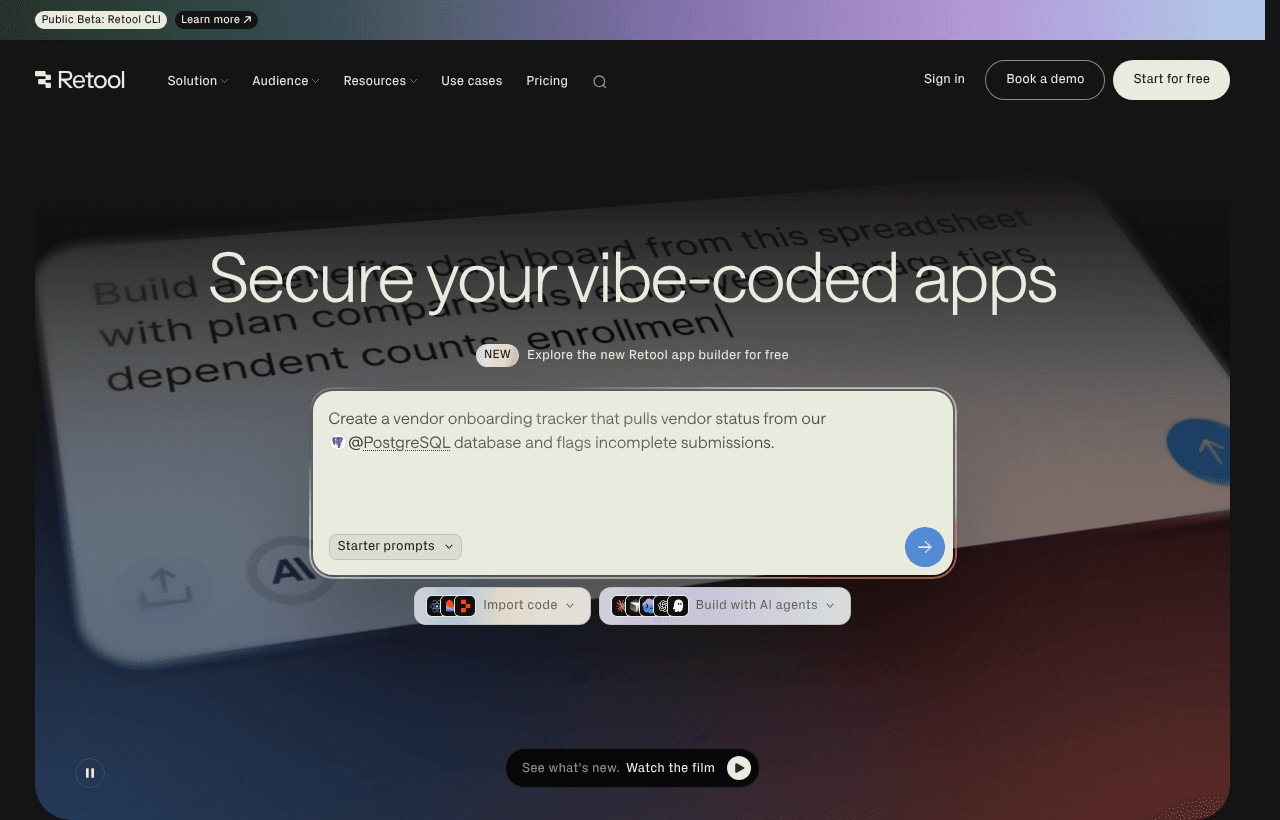
Retool, one of the tools included in this startup deal.
Building Internal Tools Fast
The headline promise of Retool is building internal tools much faster than coding them by hand, and for a startup that speed is the whole value. Internal tools follow familiar patterns: a table of data, forms to edit records, buttons to trigger actions, filters and search. Building these from scratch means writing frontend code, wiring up the backend, handling the state, and styling it, over and over for each tool. Retool provides pre-built components and a visual way to assemble them, so what would take days of coding takes a fraction of the time.
For a small team, this speed changes the economics of internal tooling. When a tool takes an afternoon instead of a week, the team can actually build the tools it needs rather than doing without them or living with clunky workarounds. The operations person who needs a way to look up customer records gets a proper tool quickly, instead of asking an engineer to run a database query every time. The whole company operates more smoothly because the tools that support it are cheap enough to build.
This matters because the alternative to building internal tools is usually not having them, and not having them is a hidden drag on the whole team. People waste time on manual processes, ask engineers for one-off help, and work around missing tooling in ways that add up to real lost productivity. Retool making internal tools fast to build means the team can equip itself properly, and the compounding time saved across the company is often far larger than the effort spent building the tools. The credits let the team build several of these and feel that difference.
Low-Code That Widens Who Can Build
Retool is low-code, which means building internal tools does not require the same engineering effort as writing them from scratch, and in many cases people beyond the core engineering team can build or adjust them. This widens who in the company can create the tooling they need, which relieves the bottleneck that forms when every internal tool request has to go through a small engineering team. For a startup, that bottleneck is real, because engineers are always in demand for the product.
The low-code model strikes a useful balance. It is not so simplified that it cannot handle real needs, Retool connects to actual data sources and can express genuine logic, but it is accessible enough that building a tool is a matter of assembling components and wiring them up rather than writing an application from nothing. This means a technically inclined operations or support person can often build the tool they need, and an engineer building one moves far faster than they would coding it by hand. The result is more tools, built by more people, in less time.
For a small team, widening who can build internal tools is a meaningful multiplier. It means the operations side of the company is not perpetually waiting on engineering for the tooling it needs to do its job, and engineers are not constantly pulled into building admin panels instead of the product. Everyone gets more of what they need, and the company's operational capacity grows without adding headcount. The credits let the team discover who can build with Retool and how much that relieves the pressure on engineering.
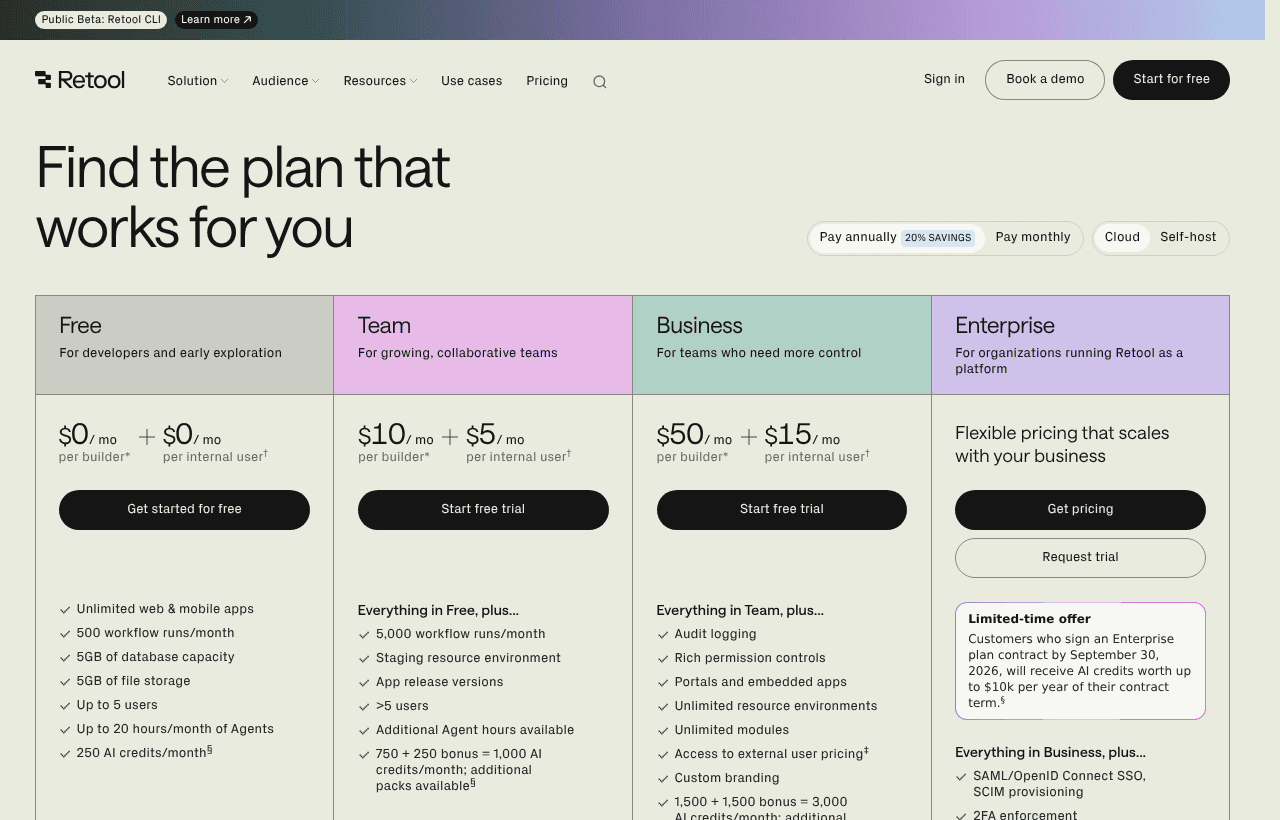
A look at Retool before the discount, so you can see what the deal saves you.
Connecting to the Data the Business Runs On
Internal tools are only useful if they connect to the real data and systems the business runs on, and Retool is built to connect broadly, to databases, APIs, and the services a company uses. A tool that can display and edit the actual customer records, trigger real operations, and pull from the systems where the business's data lives is a tool that does real work. Retool's ability to connect to those sources is what makes the tools it builds genuinely operational rather than disconnected mockups.
For a startup, this connectivity is what turns Retool from a UI builder into an operational platform. The team's data lives in a database, some services are accessed through APIs, and the business runs on this stack. Retool connecting to it means a tool can be built on top of the real systems, giving the team a proper interface to the data and operations that matter. An admin panel built in Retool acts on the live business, which is exactly what makes it worth building.
This also means the tools stay current with the business, because they act on the real underlying data rather than a copy. When the data changes, the tool reflects it, and when someone uses the tool to make a change, it happens in the actual system. For a small team, having internal tools that are directly wired into the real data and services keeps everyone working from the same accurate picture and able to act on it. The credits let the team connect Retool to its actual stack and build tools that do real operational work.
The $1,000 in Credits and What They Buy
The $1,000 in credits is the substance of this deal, and its value is in timing and in freeing the team to build tooling early. Internal tools are a real ongoing cost as a company grows, and early on, when the startup is spending before it earns, that cost can be a reason to skimp on the operational tooling the team actually needs. The credits remove that pressure, letting the team build the internal tools that make the business run smoothly without the cost weighing on the decision during the leanest phase.
For an early team, this is well matched to when internal tooling needs arrive. As soon as a company has customers and operations, it needs ways to manage them, and building that tooling should not have to wait until there is budget for it. The $1,000 in credits lets the team equip itself with proper internal tools from early on, which means the operational side of the company runs well from the start rather than limping along on manual processes until the tooling can be justified.
The requirement, an early-stage startup with under 50 employees, targets the credits at exactly the companies they suit: young teams small enough that engineering time is precious and internal tooling can easily get neglected. For a team that fits, the credits are runway applied to the operational backbone of the business, at the stage when conserving cash and engineering time for the product is most important. Building internal tools cheaply and early is exactly what this deal makes possible.
Retool Compared to Building Internal Tools From Scratch
The alternative to Retool is building internal tools by hand, writing the frontend and backend code for each admin panel and dashboard the company needs. This gives full control over every tool, and for highly unusual internal needs that control can matter. But for the overwhelming majority of internal tools, which follow common patterns, building from scratch means spending scarce engineering time reinventing the same table-form-button structure repeatedly, time that produces no product value.
The real cost of building internal tools by hand is opportunity cost. Every hour an engineer spends building an admin panel is an hour not spent on the product customers pay for, and internal tools are a bottomless source of such requests because the business always needs more of them. Teams that build all their internal tooling from scratch either burn a lot of engineering time on it or, more often, simply do without the tools and absorb the operational inefficiency instead. Neither outcome is good for an early startup.
Retool's case is that most internal tools are similar enough to build far faster with a low-code platform, freeing engineering time for the product while still giving the company the tooling it needs. The team trades some low-level control over each tool for a large gain in speed and for widening who can build, which for internal tooling is almost always the right trade. The fact that large companies like Amazon and DoorDash use Retool speaks to it handling serious needs, and the $1,000 in credits lets a startup test that trade on its own tools at no cost.
Making the $1,000 in Credits Count
Credits deliver value when they fund real tools the team actually uses, so the way to use them well is to build the internal tooling the business genuinely needs rather than experimenting for its own sake. The goal during the credit period is to equip the company with proper internal tools connected to its real data, so the team feels the operational improvement and judges the platform on real use.
Start by identifying the internal tools the team most needs: the admin panel for managing customers, the dashboard for seeing what is happening, the tool for handling a recurring operational task. Connect Retool to the real database and services, and build those tools on top of the actual data. Put them into daily use by the people who need them, since the true test of an internal tool is whether it makes someone's job easier every day. This turns the credits into working tooling the company relies on.
While doing this, the team should notice who is able to build with Retool, because part of the value is relieving engineering by letting others build the tools they need. Involving an operations or support person in building a tool tests that low-code accessibility directly. By the time the credits are used, the company should have a set of real internal tools in daily use and a clear read on how much engineering time the platform saves and how well it fits the business, which is exactly what the credits are meant to establish.
How Retool Scales With the Company
Internal tooling needs do not shrink as a company grows, they multiply, so it matters that Retool is built to scale from a startup's first admin panel to the extensive internal tooling of a large organization. The same platform a small team uses to build its first customer-management tool is used by large companies to run substantial internal operations, which means the startup's early investment in building on Retool keeps paying off as the company and its tooling needs grow. There is no ceiling the team hits and has to build past.
This continuity is valuable because internal tools accumulate. What starts as a couple of admin panels becomes a whole suite of operational tooling as the company adds functions, teams, and processes. A platform that scales with that growth means the team keeps building tools the fast way rather than reaching a point where it has to switch approaches. The knowledge the team builds using Retool early carries forward, and the tools built early continue to serve as the company grows around them.
For a startup, choosing a platform that scales this way is a way of avoiding a future disruption. The team that builds its internal tooling on a platform capable of supporting a much larger company will not face a painful migration when it grows, because the platform grows with it. That the platform is trusted by companies operating at large scale gives confidence that the startup can keep building on it for a long time. The credits are the low-risk way to start down that path and confirm the fit early.
Who Should Claim This Deal
This deal is built for early-stage startups with under 50 employees that need internal tools to run the business but cannot afford to spend heavy engineering time building them from scratch. If the team needs admin panels, dashboards, or operational tools connected to its real data, and wants those built fast without pulling engineers off the product, Retool plus $1,000 in credits fits that need directly. The requirement, early-stage and under 50 employees, points the deal squarely at those teams.
It is especially valuable for small teams where engineering time is the binding constraint and internal tooling tends to get neglected as a result. Because Retool is low-code and fast, the team can equip itself with the tools it needs without a major engineering investment, and because it widens who can build, the operations side of the company is not perpetually waiting on engineers. The credits cover the cost while the company is still lean, so proper internal tooling is available from early on.
Teams with genuinely unusual internal needs that demand fully custom-built tools, or companies large enough to be past the deal's requirements, may find it less suited to them. But for an early-stage startup that needs to run its operations well without diverting engineers from the product, this deal is a strong fit. Claim the credits, build the internal tools the business actually needs on its real data, and let the time saved and the smoother operations show whether Retool belongs in the company's stack.
Who Is This Deal For?
Early-Stage Startups
Seed and pre-seed companies looking to move fast without overspending on tools.
Growing SaaS Teams
Series A+ companies scaling their stack and optimizing software costs.
Solo Founders
Indie hackers and bootstrapped founders who need enterprise tools at startup prices.
Get $1,000 in credits off Retool
Premium deal. Upgrade once, unlock everything.
!Eligibility Requirements
Early-stage startup, under 50 employees
Frequently Asked Questions
Everything you need to know about this startup deal.
Retool builds internal tools — admin panels, dashboards, CRUD apps, approval workflows, and operational interfaces — that internal teams use to manage data, processes, and operations. It is not for building customer-facing products. Common examples: customer lookup tools for support teams, order management dashboards, KYC review interfaces, and reporting tools.
Get the weekly deals digest
New verified startup deals every week. No spam, ever. Unsubscribe anytime.
Related Offers

Toggl Track
Used by 1,100 members
Free Plan
Simple and intuitive time tracking for teams with reporting and integrations.
View offer
Auth0
Used by 994 members
1 year of B2B Professional free
Get 1 year of the Auth0 B2B Professional plan free, with up to 100,000 monthly active users, SSO, enterprise MFA and SCIM.
View offer
Bugsnag
Used by 471 members
Free Plan
Error monitoring and stability management for web and mobile applications.
View offer
Turborepo
Used by 1,880 members
Free & Open Source
High-performance build system for JavaScript and TypeScript monorepos by Vercel.
View offer
Windmill
Used by 1,501 members
Free Plan
Open-source developer platform for building internal tools, workflows, and scripts.
View offer
Height
Used by 1,442 members
Free Plan
AI-powered project management tool with autonomous task management and workflows.
View offerDeal Summary
Looking for more startup deals?
Browse all offers