
Close Promo Code: 3 months free Startup
CRM built for inside sales teams, calling, email, and pipeline management in one tool, no separate phone system needed.
Free · Opens in new tab
Already have an account? Log in
Deal Highlights
What Close Gives a Startup
Close is a CRM built specifically for inside sales teams, and this deal gives an eligible startup three months free on the Startup plan. The pitch is simple and unusually well aimed at early companies: calling, email, and pipeline management live in one tool, with no separate phone system to buy and wire up. For a startup with an outbound sales team, that consolidation removes both a cost and a source of friction that slows reps down every single day.
The three months free is real runway for a sales motion. It gives a young team a full quarter to get the CRM adopted, load its pipeline, and start closing with the tool before any subscription cost kicks in. A quarter is roughly the length of a sales cycle in many businesses, so a startup can effectively run a complete cycle inside the free window and see the results before committing budget. That is a generous window to prove value.
Close sits in the Sales and CRM category, and it is opinionated about who it serves. This is not a general-purpose CRM stretched to cover every industry. It is built for teams whose reps spend their day on the phone and in the inbox working outbound deals. That focus is why it fits the deal's requirement, a startup with an outbound sales team, so precisely. If that describes the company, the tool was designed for exactly this situation.
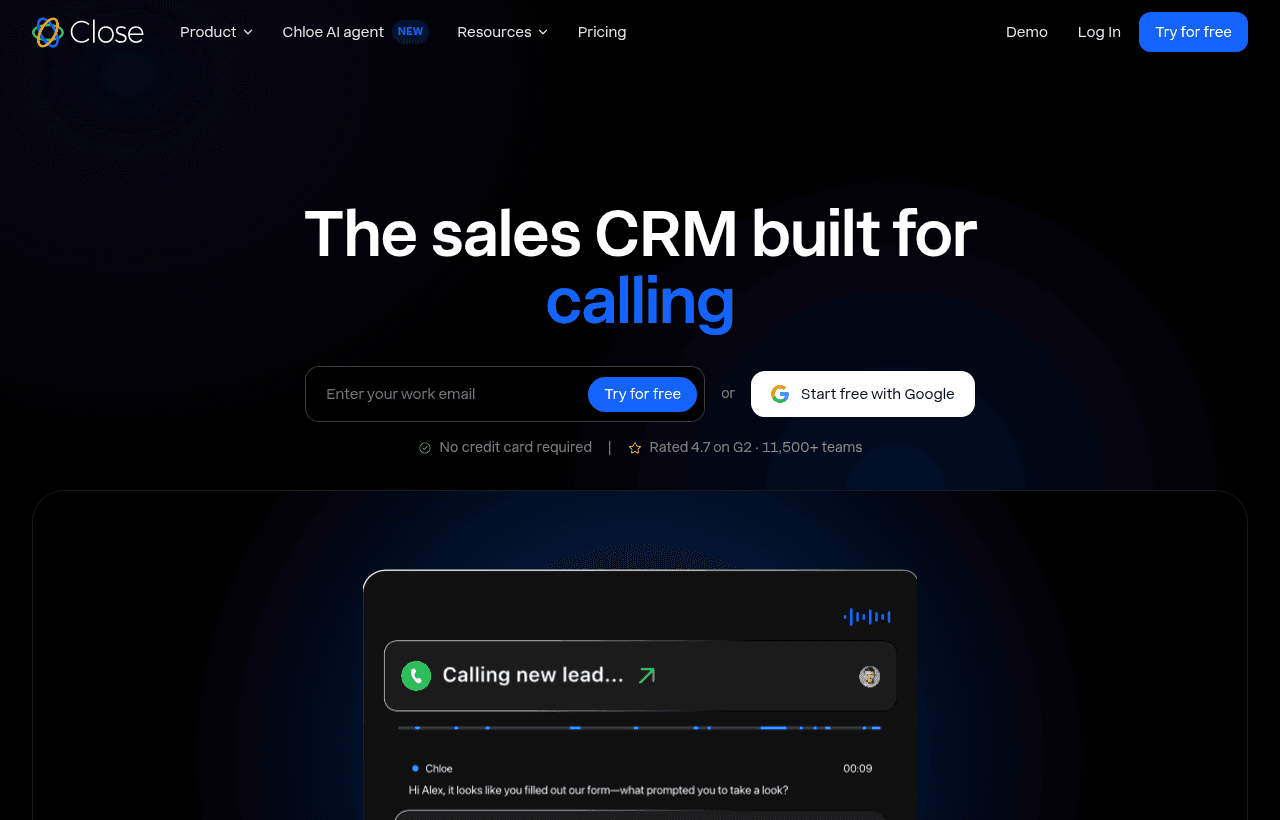
Close, one of the tools included in this startup deal.
Calling Built Into the CRM
The defining feature of Close is that calling is part of the CRM rather than a separate app bolted on beside it. Reps can call prospects directly from within the tool, and the activity is logged automatically against the right contact and deal. There is no separate phone system to purchase, configure, and reconcile, which is exactly what the deal's description promises.
For an outbound team, this changes the rhythm of the workday. A rep working a list can move from record to record and call without leaving the screen, and every call gets captured without anyone typing a note to remember it happened. That saved effort compounds across dozens of calls a day and dozens of reps. Time that would have gone into logging activity manually goes into making more calls instead, which is the entire point of an outbound motion.
Automatic logging also means the pipeline data stays honest. In CRMs where calls happen elsewhere and reps are supposed to log them by hand, the record is always incomplete, because busy people skip the data entry. When calling is native, the activity history is complete by default. A founder or sales lead looking at a deal sees what actually happened, not a partial reconstruction, which makes every coaching and forecasting decision more reliable.
Removing the separate phone system is a genuine cost and complexity win too. A startup avoids paying for and integrating a standalone dialer, and it avoids the failure modes that come from two systems that have to stay in sync. One tool handles the calls and the record together, which is fewer vendors, fewer integrations, and fewer things that can break in the middle of a selling day.
Email in the Same Workflow
Alongside calling, Close handles email inside the same interface, so a rep works both channels from one place. Outbound selling is rarely just phone or just email. It is a sequence of touches across both, and having them unified means a rep can see the full conversation with a prospect, calls and messages together, without switching tools or piecing the story together from two systems.
That unified history is what makes follow-up effective. A rep picking up a deal can see every prior touch in order and knows exactly where the conversation stands. No prospect gets two people emailing them the same thing, and no deal goes cold because the last message got lost in someone's personal inbox. The context lives on the deal, available to whoever works it next, which matters enormously as a small sales team grows and hands off accounts.
Working email inside the CRM also keeps activity data complete, the same way native calling does. Emails are captured against the deal automatically, so the pipeline reflects real engagement without reps doing extra work to record it. For a founder trying to understand which deals are actually moving, engagement data that captures itself is far more trustworthy than data that depends on people remembering to log their own emails.
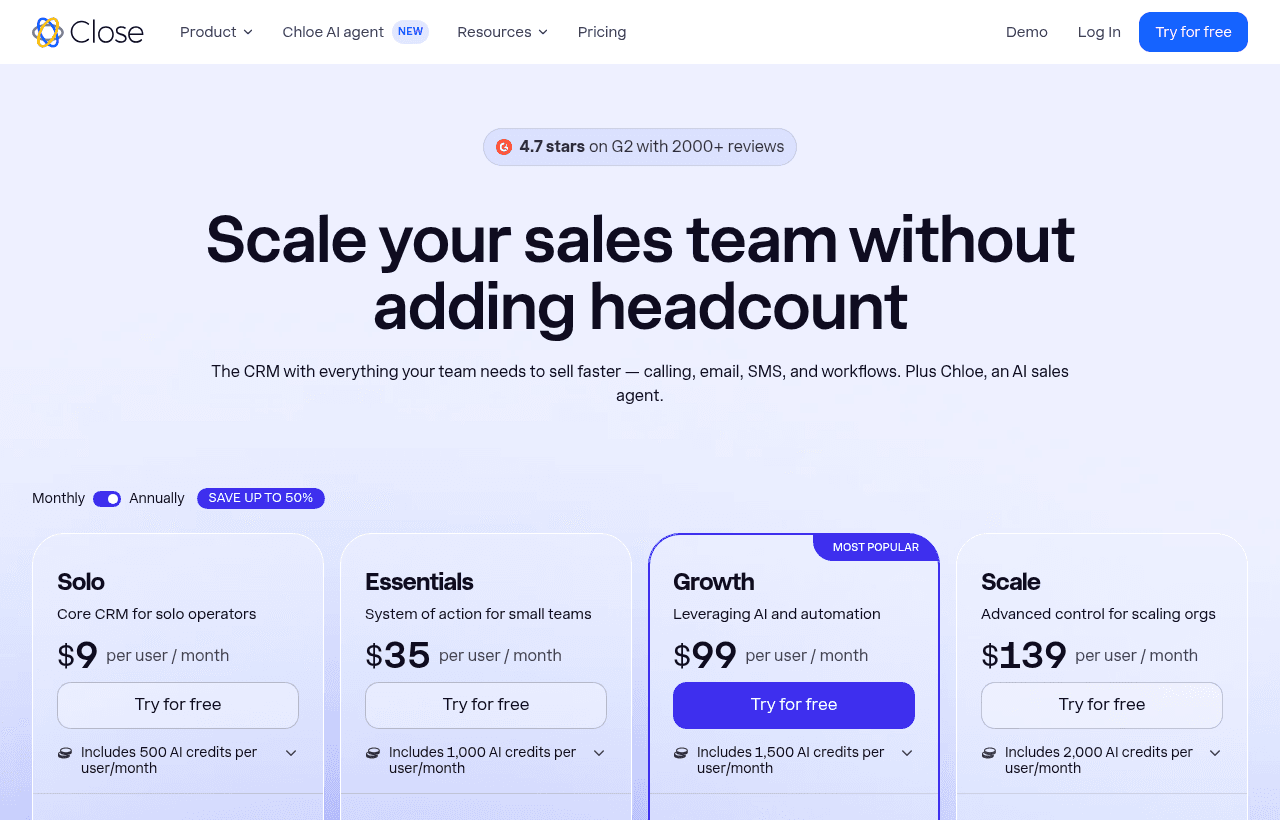
A look at Close before the discount, so you can see what the deal saves you.
Pipeline Management That Matches How Startups Sell
Close ties calling and email together with pipeline management, giving a startup a clear view of every deal and its stage. The pipeline is the backbone of any sales operation, and having it in the same tool as the actual selling activity means the stages reflect real, logged engagement rather than a rep's optimistic guess about where a deal stands.
For an early team, a trustworthy pipeline is the difference between forecasting and hoping. When a founder can see the deals in progress, their stages, and the recent activity on each, they can make real decisions about hiring, spending, and priorities. A pipeline built on automatically captured calls and emails is grounded in evidence, so the forecast it produces is something the company can actually plan around rather than a number nobody quite believes.
The pipeline also keeps a small team coordinated as it scales. As a startup adds reps, the shared pipeline ensures everyone knows which deals are being worked, by whom, and at what stage. That prevents the collisions and dropped deals that happen when sales lives in individual inboxes and spreadsheets. One shared source of truth lets the team grow without the chaos that usually comes with adding salespeople.
Built for Outbound, Not Stretched to Fit
Close earns its focus by being built for the outbound motion rather than adapted to it. Many CRMs are designed around inbound leads or account management and then stretched to cover outbound calling, and the stretch shows in clunky workflows and missing features. Close starts from the assumption that reps are proactively working lists of prospects by phone and email, so the whole tool is arranged around making that fast.
That design choice matters because outbound selling rewards volume and rhythm. A rep who can move quickly through prospects, with calling and email and logging all in one flow, simply gets more done than one fighting a tool built for a different motion. For a startup whose growth depends on outbound reach, the productivity difference between a purpose-built tool and a repurposed one directly affects how many deals the team can work.
This is also why the deal's requirement fits so cleanly. Close is meant for a startup with an outbound sales team, and a company that matches that description gets a tool aligned with how it actually sells. A team without an outbound motion would not use most of what makes Close valuable, but the intended audience gets a CRM that removes friction from exactly the work its reps do all day.
Close Compared to General-Purpose CRMs
Against the large, general-purpose CRMs that dominate the market, Close's advantage for an outbound startup is that it does the selling work in one place instead of assembling it from parts. The big platforms are powerful and endlessly configurable, but getting native calling and unified email working often means integrations, add-ons, and setup effort that a small team does not have the time to manage. Close delivers that combination out of the box.
The general platforms also carry complexity a startup does not need yet. They are built to serve enormous organizations with many teams and elaborate processes, and that breadth translates into configuration overhead and cost. An early team benefits more from a focused tool it can adopt quickly and use fully than from a sprawling platform where it uses a fraction of the features while paying for all of them.
Compared to running sales out of a shared inbox and a spreadsheet, which is where many startups begin, Close is a clear step up in coordination and visibility without the heaviness of an enterprise system. It gives a small team real pipeline discipline, complete activity history, and native selling tools, at a scale and price that fit a company still finding its footing. It is the CRM a startup grows into, not one it has to grow up to use.
Making the Three Months Free Count
To get full value from the free quarter, a startup should treat it as a real trial of its sales motion, not a passive evaluation. Load the pipeline with actual deals from day one, get every rep calling and emailing through the tool immediately, and insist that all selling activity runs through Close so the data is complete. The point is to run the real motion inside the window, not to poke at features and decide later.
Use the quarter to build the habits that make a CRM stick. Reps who spend three months working every deal in Close, with calls and emails captured automatically, will have the tool woven into their daily rhythm by the time the free period ends. Adoption is the hardest part of any CRM rollout, and a free quarter is exactly enough runway to get past that hump so the decision to continue is based on a team already using the tool well.
Because a quarter often covers a full sales cycle, the team can also judge the tool on outcomes, not just feel. By the end of the free window, a founder can look at deals that moved from first contact to close entirely inside Close and see the pipeline, the activity, and the results in one place. That evidence, built during a period that cost nothing, is the strongest possible basis for committing to the tool.
Getting Started With the Team
Getting Close live for an outbound team is fast, and speed matters because the free quarter is a clock the moment it starts. Import the current list of prospects and open deals, set up the pipeline stages to match how the team already talks about its deals, and get every rep making calls and sending email through the tool on day one. The sooner the real work runs through Close, the more of the free window turns into genuine evidence rather than setup time.
Keep the initial configuration simple so reps are not slowed down while they learn the tool. A clean pipeline with a handful of clear stages beats an elaborate one nobody trusts. Let the team work deals for a week or two, then adjust the stages and fields based on how the motion actually flows. Starting light and refining from real use gets the team producing and the data flowing far faster than trying to design the perfect setup before anyone makes a call.
Who Should Claim This Deal
This deal is for a startup with an outbound sales team, which is exactly the requirement attached to it and exactly the company Close is built to serve. If reps spend their days calling and emailing prospects and working deals through a pipeline, the tool matches that work, and the three months free give the team a full quarter to adopt it and prove it out before paying anything.
It is especially valuable for an early company that wants to consolidate its sales stack. If a startup is currently juggling a separate dialer, a shared inbox, and a spreadsheet or a general CRM stretched to fit, Close replaces that patchwork with one tool where calling, email, and pipeline live together. Cutting the separate phone system alone removes a cost and an integration headache, and doing it during a free quarter means the switch carries no upfront risk.
Founders who care about honest pipeline data should find the offer particularly compelling. Because Close captures calls and emails automatically, the activity history and the pipeline reflect what actually happened, which makes forecasting and coaching far more reliable than in systems that depend on manual logging. For a team whose growth rides on outbound selling, that trustworthy view of the pipeline is worth a lot. Claim the three months, run the real motion through the tool, get every rep adopted, and let a full quarter of results decide whether it earns a place in the stack.
Who Is This Deal For?
Early-Stage Startups
Seed and pre-seed companies looking to move fast without overspending on tools.
Growing SaaS Teams
Series A+ companies scaling their stack and optimizing software costs.
Solo Founders
Indie hackers and bootstrapped founders who need enterprise tools at startup prices.
Get 3 months free Startup off Close
Premium deal. Upgrade once, unlock everything.
!Eligibility Requirements
Startup with outbound sales team
Frequently Asked Questions
Everything you need to know about this startup deal.
Close offers a 14-day free trial. The Startup plan is $49/user/month. The 3-month deal saves $147/user. There is no permanent free tier — Close is designed for teams actively selling, not for CRM exploration.
Get the weekly deals digest
New verified startup deals every week. No spam, ever. Unsubscribe anytime.
Related Offers

ZoomInfo
Used by 2,014 members
Free Trial
B2B data platform for sales and marketing intelligence with contact databases.
View offer
PartnerStack
Used by 1,303 members
Free Demo
Partner ecosystem platform, manage affiliate, referral, and reseller programs at scale.
View offer
DocSend
Used by 438 members
3 months free
Get 3 months of DocSend free. The secure document sharing platform used by 35,000+ companies to track who reads your pitch deck, page by page.
View offer
Blinq
Used by 670 members
30-day free trial
Get a 30-day free trial of Blinq Business, the digital business card platform with NFC sharing, AI contact scanning, branded card templates, and CRM sync used by 1M+ professionals.
View offer
Attio
Used by 1,730 members
$500 in credits
Next-generation CRM built on your data, flexible data model, real-time syncing, and powerful automations.
View offer
Copper
Used by 349 members
Free Trial
CRM built for Google Workspace, manage relationships directly from Gmail and Calendar.
View offerDeal Summary
Looking for more startup deals?
Browse all offers