
Attio Startup Credits: $500 in credits
Next-generation CRM built on your data, flexible data model, real-time syncing, and powerful automations.
Free · Opens in new tab
Already have an account? Log in
Deal Highlights
What Attio Gives a Startup
Attio is a next-generation CRM built on a startup's own data. Instead of forcing a company into a rigid, predefined model of contacts and deals, it offers a flexible data model, real-time syncing, and powerful automations, so the CRM shapes itself around how the business actually works rather than the other way around. Through this deal a startup gets $500 in credits, which lets a team set up and run a modern CRM without the cost being a barrier while the company is still building its sales motion.
A CRM is where a startup keeps track of its relationships: prospects, customers, partners, and every interaction with them. For a growing company, this record is the backbone of sales and revenue, and getting it right early pays off for years. The problem with traditional CRMs is that they impose a fixed structure and become clunky, heavy, and painful to adapt as the business changes. Attio takes a different approach, building the CRM around the company's own data and letting the structure flex. For a startup, whose business model and sales process are still evolving, a CRM that can adapt is far more useful than one that locks the team into a shape that may not fit next quarter. The $500 in credits lets a team build this foundation properly from the start.
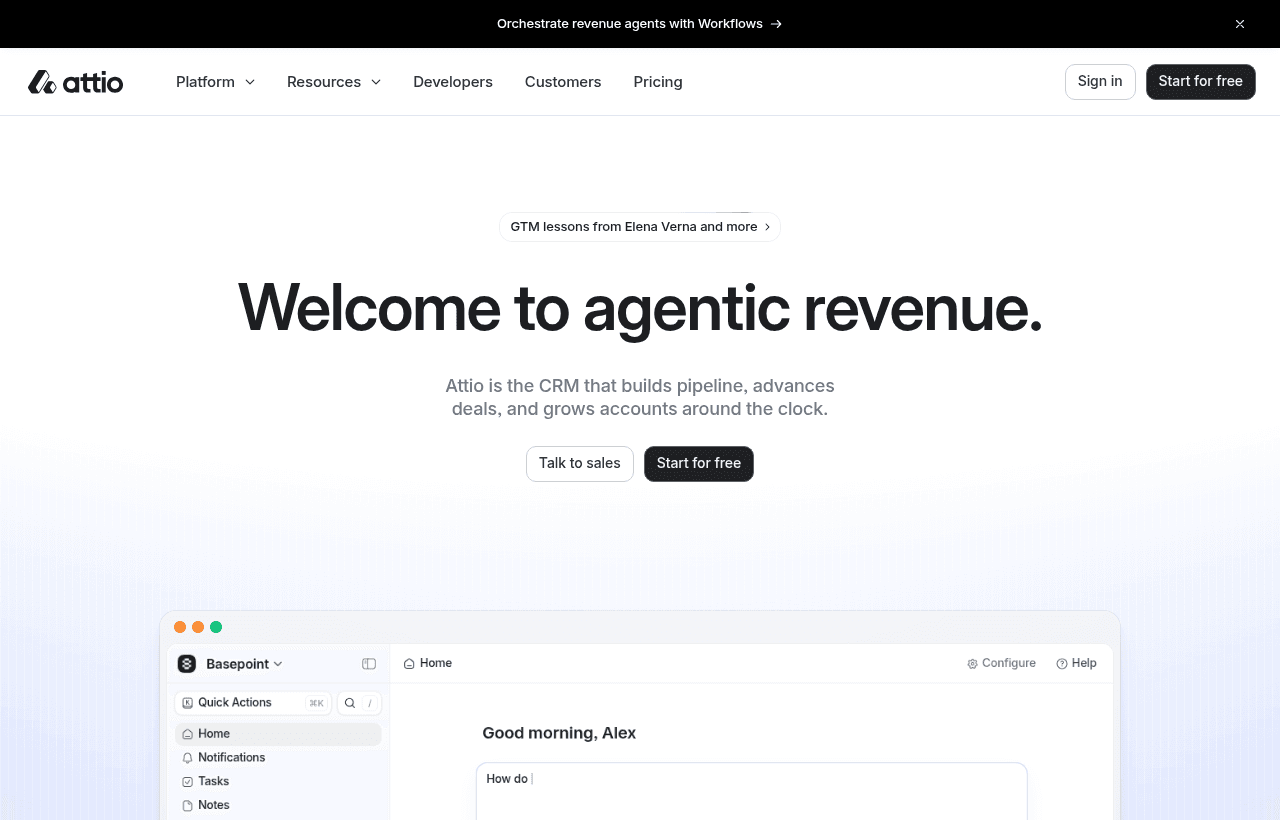
Attio, one of the tools included in this startup deal.
A Flexible Data Model That Fits the Business
The defining feature of Attio is its flexible data model. Traditional CRMs come with a rigid, predefined structure: contacts, accounts, deals, arranged the way the vendor decided. This works if the business fits that mold and becomes a constant source of friction if it does not. Attio instead lets a team define the data model that matches how their business actually works, so the CRM reflects reality rather than forcing reality to fit the tool.
For a startup, this flexibility is genuinely valuable because a young company's business is not fixed. The sales process evolves, the types of relationships that matter change, and the data the team needs to track shifts as the company learns what works. A rigid CRM becomes an obstacle when the business outgrows its assumptions, forcing awkward workarounds or expensive migrations. A flexible data model bends with the business, so the CRM keeps fitting as the company changes. This means a startup can start with a model that matches its current reality and adjust it as it learns, rather than being locked into a structure chosen before the team understood its own business. That adaptability is exactly what a company still figuring out its motion needs.
Built on Your Own Data
Attio emphasizes being built on a company's own data, which means the CRM connects to and reflects the real information a startup has about its relationships rather than being a separate silo that people must manually maintain. This is a meaningful difference. A common failure mode of CRMs is that they become stale, because keeping them current depends on people diligently entering data by hand, and that diligence rarely lasts. A CRM built on the company's actual data, syncing with real sources, is far more likely to stay accurate and useful.
For a startup, a CRM that reflects reality automatically rather than depending on constant manual upkeep is worth a lot. The value of a CRM comes entirely from its accuracy. A CRM full of outdated or incomplete information is worse than useless, because people make decisions based on wrong data and lose trust in the system. By building on the company's own data, Attio aims to keep the CRM current and trustworthy, which is the foundation everything else depends on. A startup that can rely on its CRM to reflect the true state of its relationships can actually use it to drive decisions, rather than treating it as a database that is probably out of date.
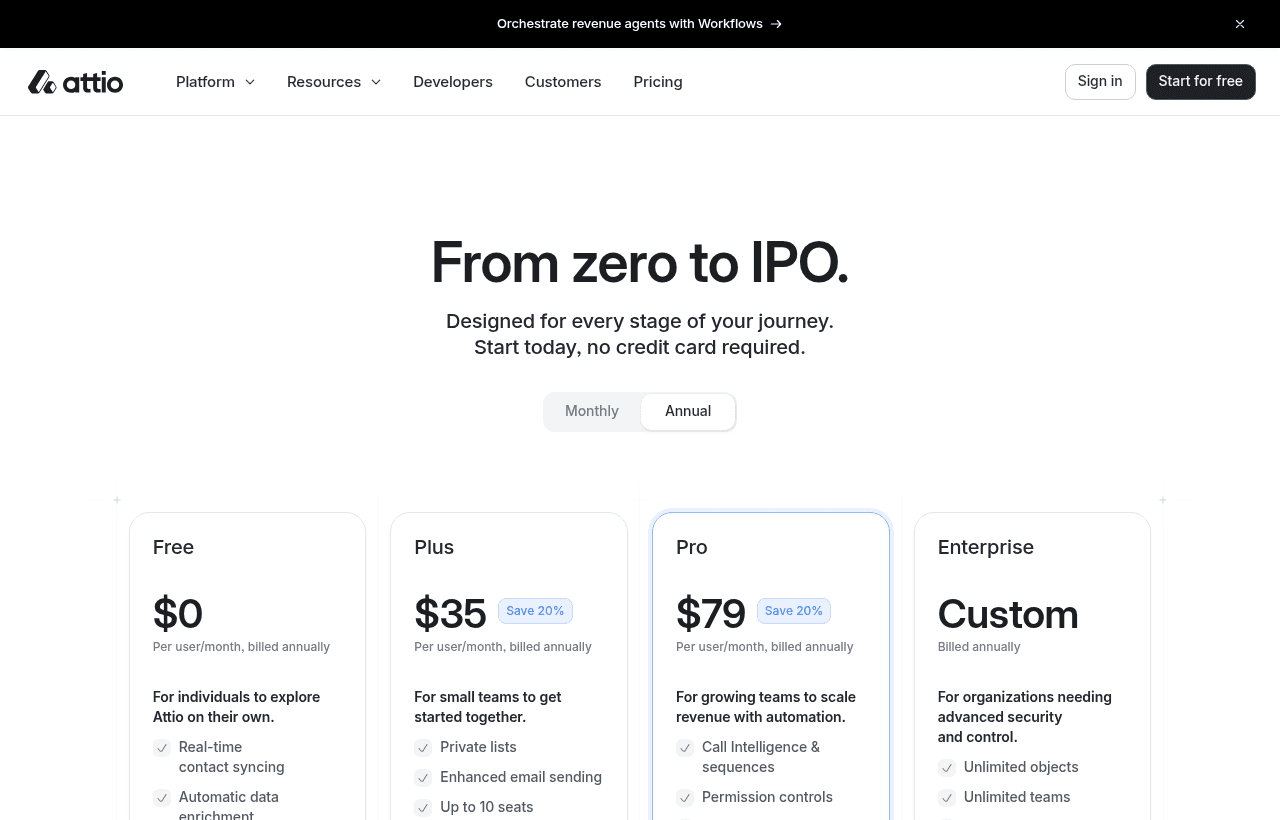
A look at Attio before the discount, so you can see what the deal saves you.
Real-Time Syncing
Attio provides real-time syncing, meaning the CRM stays current as things change rather than requiring manual updates or periodic imports. When information about a relationship changes, the CRM reflects it, so the whole team is working from the same accurate picture. This keeps everyone aligned and prevents the confusion that comes from different people looking at different versions of the truth.
For a startup, real-time syncing matters because a small team needs to move fast and stay coordinated. When a salesperson updates a deal, when a customer interaction happens, when the state of a relationship changes, everyone who needs to know should see it immediately. A CRM that lags behind reality causes mistakes: reaching out to a customer who was already contacted, missing a follow-up, or acting on stale information. Real-time syncing keeps the CRM aligned with reality and keeps the team aligned with each other. This coordination becomes more important as the team grows and more people touch the same relationships, but even a small team benefits from everyone working off the same current picture rather than piecing together the state of a deal from scattered updates.
Powerful Automations
Attio includes powerful automations, letting a team automate the repetitive work that surrounds managing relationships and running a sales process. Following up at the right time, updating records when something happens, moving deals through stages, and triggering actions based on changes are the kind of tasks that consume time and are easy to forget when done manually. Automations handle them consistently, so nothing slips through the cracks.
For a startup, automation is a force multiplier. A small sales team cannot manually keep up with every follow-up, every update, and every process step as the volume of relationships grows. Automations let the team handle more relationships without proportionally more effort, which is exactly the leverage a growing company needs. Just as importantly, automations enforce consistency: the follow-up always happens, the record always updates, the process always advances, regardless of whether a busy person remembered to do it. This consistency improves the sales process and prevents the lost deals that come from dropped follow-ups and forgotten steps. For a startup trying to build a repeatable, reliable sales motion, automations turn good intentions into reliable execution. The $500 in credits lets a team build and run these automations from the start rather than adding them later after opportunities have already been lost to manual gaps.
A CRM That Grows With the Company
One of the traps of choosing a CRM is that the right tool for a five-person startup may be wrong for a fifty-person company, and switching CRMs is painful because it means migrating the company's most important relationship data and retraining everyone. A startup ideally wants a CRM it can grow into rather than one it will have to grow out of. Attio's flexible data model and modern architecture are aimed at this, providing a CRM that can adapt as the company scales rather than one that has to be replaced.
For a startup, choosing a CRM that scales avoids a costly future migration. The flexible data model means the CRM can accommodate a more complex business as the company grows, and the automation capabilities mean it can handle growing volume without the team drowning in manual work. This adaptability is a real advantage, because the cost of switching CRMs later includes not just the migration effort but the risk of losing or corrupting the relationship data that the company's revenue depends on. Starting on a CRM built to flex and scale means a startup can build its relationship data and its sales process on a foundation it can keep, which is far preferable to building on a tool it will outgrow and then having to rebuild on something new at exactly the moment the company is busiest.
Attio Compared to Traditional and Simple CRMs
The CRM landscape has two poles that a startup usually chooses between. At one end are the established, heavyweight CRMs that are powerful and deeply customizable but also complex, expensive, and often rigid in their core model, requiring significant setup and sometimes dedicated administrators to run. These can be overkill for a startup and impose a structure that a young, evolving company finds constraining. At the other end are simple, lightweight CRMs that are easy to start with but hit their limits as the business grows in complexity, at which point the team faces a migration to something more capable.
Attio positions itself as a next-generation option that aims to combine flexibility and power with a modern, usable experience. The flexible data model addresses the rigidity of traditional CRMs, letting the tool fit the business. The modern architecture and real-time syncing address the staleness and clunkiness that plague older systems. And the automation capabilities provide the power a growing team needs without the heavyweight complexity of enterprise CRMs. For a startup, the appeal is a CRM that fits a young, evolving business now and can grow with it, rather than forcing a choice between a rigid heavyweight tool and a simple one that will be outgrown. The $500 in credits lets a team evaluate this directly by building their real CRM in Attio and seeing whether it fits how they actually work, which is a better test than any feature comparison.
Making the $500 in Credits Count
The credits are most valuable when a team uses them to build the CRM properly from the start rather than treating it as a quick experiment. The first move is to model the CRM around how the business actually works, taking advantage of the flexible data model. The whole point of Attio is that the CRM fits the business, so investing time upfront to set up a data model that reflects the real relationships and process the company cares about is what unlocks the value. A CRM shaped to the business is one the team will actually use.
The second move is to connect real data and set up syncing so the CRM stays current automatically. A CRM's value depends on accuracy, and building on the company's own data with real-time syncing is what keeps it accurate without the manual upkeep that causes CRMs to decay. Getting this right during the credit period establishes a CRM the team can trust.
The third move is to build automations for the repetitive parts of the sales process. Identifying the follow-ups, updates, and process steps that consume time or get forgotten, and automating them, is where a team gains leverage and consistency. Using the credits to set up these automations from the start means the sales process runs reliably rather than depending on people remembering every step. A startup that uses the credits to build a well-modeled, accurate, automated CRM comes away with a genuine foundation for its sales and revenue operations, which is worth far more than the credits themselves. It helps to resist over-complicating the model early: starting with a structure that fits today and adjusting it as the business learns keeps the CRM usable rather than turning it into a maze the team avoids.
Who Should Claim This Deal
This deal fits any startup that needs a modern CRM, which is exactly its stated requirement. If a team is managing relationships with prospects, customers, and partners and wants a CRM that fits its business rather than forcing the business to fit the tool, Attio addresses that need directly.
It is an especially strong fit for startups whose business is still evolving and who value flexibility, since the flexible data model is Attio's core strength. A young company whose sales process and relationship types are still taking shape benefits from a CRM that can adapt as it learns, rather than one that locks in assumptions the business may outgrow. Teams that want automation to give a small sales effort the leverage to handle growing volume, and that want a CRM they can scale into rather than out of, will find Attio's approach directly relevant. The $500 in credits lowers the cost of building this foundation while the company is early.
It is a lighter fit for a team that needs only the most basic contact list and does not anticipate a growing or complex sales process, where a simple tool might suffice. But for the many startups building a real sales motion that they expect to scale, the CRM is a foundational choice, and choosing one that flexes and grows with the business is worth getting right. Claiming these credits is a low-risk way to build that foundation on a modern CRM shaped around the company's own data and process.
Who Is This Deal For?
Early-Stage Startups
Seed and pre-seed companies looking to move fast without overspending on tools.
Growing SaaS Teams
Series A+ companies scaling their stack and optimizing software costs.
Solo Founders
Indie hackers and bootstrapped founders who need enterprise tools at startup prices.
Get $500 in credits off Attio
Premium deal. Upgrade once, unlock everything.
!Eligibility Requirements
Startup needing modern CRM
Frequently Asked Questions
Everything you need to know about this startup deal.
Attio has a free plan for up to 3 users with basic CRM features. The Pro plan ($29/user/month) adds automations, custom reports, and advanced enrichment. The $500 credit covers 5–17 months depending on team size and plan.
Get the weekly deals digest
New verified startup deals every week. No spam, ever. Unsubscribe anytime.
Related Offers

ZoomInfo
Used by 2,014 members
Free Trial
B2B data platform for sales and marketing intelligence with contact databases.
View offer
PartnerStack
Used by 1,303 members
Free Demo
Partner ecosystem platform, manage affiliate, referral, and reseller programs at scale.
View offer
DocSend
Used by 438 members
3 months free
Get 3 months of DocSend free. The secure document sharing platform used by 35,000+ companies to track who reads your pitch deck, page by page.
View offer
Blinq
Used by 670 members
30-day free trial
Get a 30-day free trial of Blinq Business, the digital business card platform with NFC sharing, AI contact scanning, branded card templates, and CRM sync used by 1M+ professionals.
View offer
Copper
Used by 349 members
Free Trial
CRM built for Google Workspace, manage relationships directly from Gmail and Calendar.
View offer
Salesmsg
Used by 909 members
Free Trial
Business text messaging platform, two-way SMS, MMS, and calling for sales and support teams.
View offerDeal Summary
Looking for more startup deals?
Browse all offers