

Airtable vs Monday.com for Startups in 2026
Choosing between Airtable ($1,000 in credits) and Monday.com (30 days free) for your startup? This side-by-side comparison covers features, startup deals, pricing, and which tool fits your stack, with verified deals you can claim through SaaSOffers.
Quick Answer
Airtable: $1,000 in credits (Early-stage startup, new Airtable workspace). Monday.com: 30 days free (New monday.com account).

Airtable
Build custom apps and workflows with the relational database platform, free credits for startup teams.

Monday.com
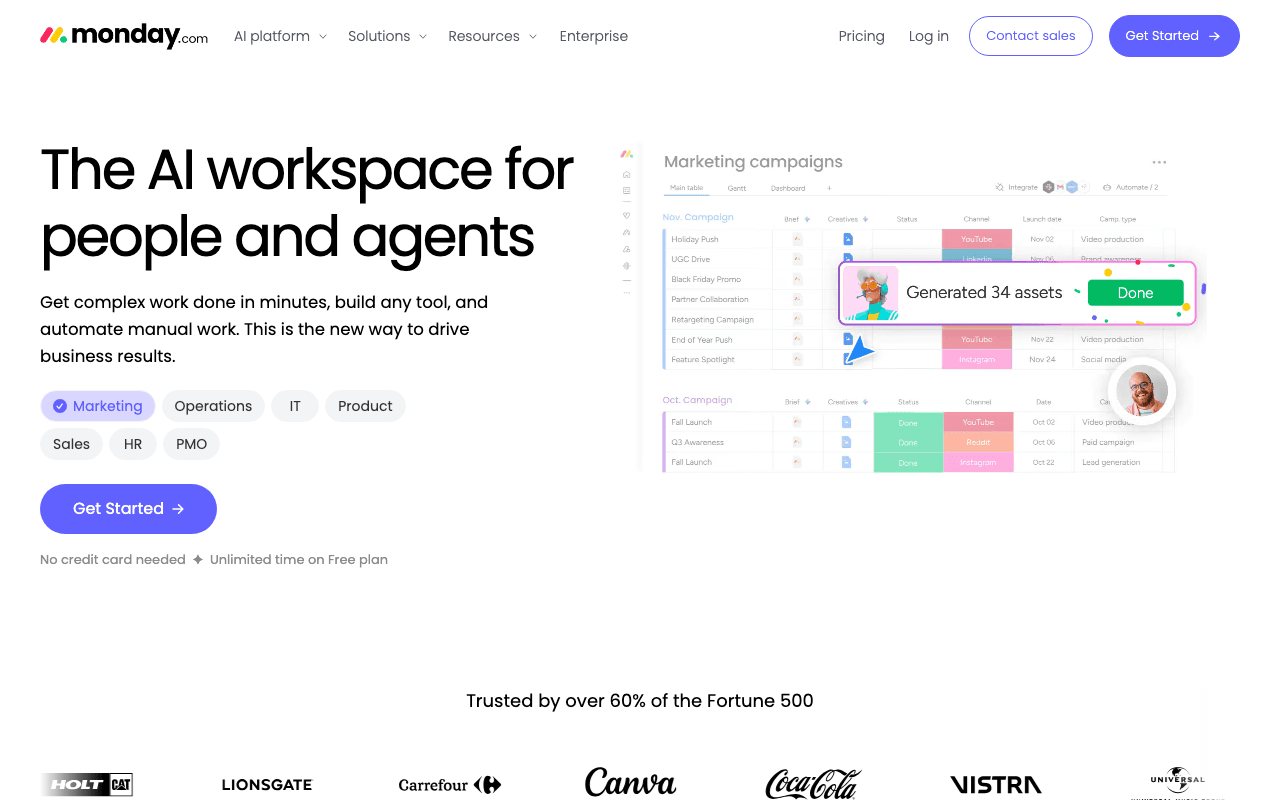
Get 30 days free on monday.com, the visual Work OS for project management, CRM, dev sprints, and team workflows.
Airtable vs Monday.com, Detailed Comparison
What's Included in Each Startup Deal
Here is exactly what you get when claiming each deal through SaaSOffers:
AAirtable
- $1,000 in Airtable credits
- Pro plan with 50,000 records per base
- Automations and interface designer
- Sync and API access
- Team collaboration features
MMonday.com
- 30 days free
- Visual boards and dashboards
- Automations and integrations
- Project, CRM, and dev workflows
- Team collaboration
The short verdict
Pick Airtable if your work is structured data: linked tables of customers, content, inventory or applicants, with tens of thousands of records and heavy automation. Pick monday.com if your work is projects and team workflows: boards of tasks with owners, statuses, timelines and dashboards that managers read. Airtable is a relational database that bills editors (and commenters on Team) and lets read-only users in free. monday.com is a work management tool sold in seat buckets of 3, 5, 10 and up, with cheaper entry plans. On automation the gap is large: Airtable Team includes 25,000 automation runs a month at $20 per seat, while monday.com Standard includes 250 automation actions at $12.
Our deals for Airtable and monday.com
- Airtable deal: $1,000 in credits. Requirement: early-stage startup, new Airtable workspace.
- Monday.com deal: 30 days free. Requirement: new monday.com account.
Neither deal uses a promo code. We checked both tools' plans and prices against their official pricing and help pages in November 2026.
We found no public startup credit page on airtable.com, so the $1,000 credit is stated as our listing gives it; confirm which plan and term it covers when you redeem. Every new monday.com account already gets a 14-day Pro trial with no credit card. Our monday.com link leads to monday.com's standard sign-up page, which does not state a trial length, so check the trial end date under Administration, then Billing, after you sign up. monday.com's own startup program covers monday dev only: 10 seats at $2 per seat a month for the first year, for VC-backed companies founded in the last two years with up to 50 employees.
Airtable vs monday.com at a glance
| Dimension | Airtable | monday.com |
|---|---|---|
| Core object | Record in a table, inside a base | Item in a group, inside a board |
| Linking data | Linked record fields on every plan | Dependencies on Pro; cross-project dependencies on Enterprise |
| Free plan | Up to 5 editors, 1,000 records per base | Up to 2 seats, 3 boards, up to 1,000 items |
| Entry paid plan (billed yearly) | Team, $20 per seat a month | Basic, $9 per seat a month |
| Who is billed | Owners, creators, editors (and commenters on Team); read-only is free | Every seat, bought in buckets: 3, 5, 10, then multiples of 5 |
| Size limit on paid plans | 50,000 records per base on Team, 125,000 on Business | 10,000 items per board below Enterprise |
| Automations per month | 25,000 runs on Team, 100,000 on Business | 250 actions on Standard, 25,000 on Pro |
| API allowance | 100,000 calls a month on Team, 5 requests per second per base | 1,000 calls a day on Standard, 10,000 on Pro |
| Storage | 20 GB of attachments per base on Team | 20 GB on Standard, 100 GB on Pro |
| Timeline and Gantt | On Team | From Standard (milestones and critical path on Pro) |
| External guests | Read-only collaborators and form submitters are free | Standard: 3 free guests, then every 4 count as 1 seat; Pro unlimited |
| Free trial | 14-day Team trial on a first workspace | 14-day Pro trial, no credit card |
Pricing side by side
| Plan | Billed yearly | Billed monthly | Key limits |
|---|---|---|---|
| Airtable Free | $0 | $0 | 5 editors, 1,000 records and 1 GB per base, 100 runs, 1,000 API calls |
| Airtable Team | $20 per seat/mo | $24 per seat/mo | 50,000 records, 20 GB per base, 25,000 runs, 1 year history |
| Airtable Business | $45 per seat/mo | $54 per seat/mo | 125,000 records, 100 GB, 100,000 runs, unlimited API calls, SAML SSO |
| Airtable Enterprise Scale | Custom | Custom | Up to 500,000 records per base |
| monday.com Free | $0 | $0 | 2 seats, 3 boards, 1,000 items, 500 MB, no automations |
| monday.com Basic | $9 per seat/mo | $12 per seat/mo | Unlimited items and free viewers, 5 GB, no guests |
| monday.com Standard | $12 per seat/mo | $14 per seat/mo | 250 automation and 250 integration actions, Timeline, Gantt, Calendar |
| monday.com Pro | $19 per seat/mo | $24 per seat/mo | 25,000 of each action type, private boards, time tracking, formulas |
| monday.com Enterprise | Custom | Custom | 250,000 automation and integration actions combined, portfolios, 12-month minimum term |
monday.com's yearly plan is an 18% discount paid in one upfront payment. Airtable's Business and Enterprise Scale plans need a private email domain; Gmail accounts cannot buy them.
Worked example: a 5-person startup
On Airtable Team, 5 editors cost 5 x $20 x 12 = $1,200 a year billed yearly, or 5 x $24 x 12 = $1,440 monthly. If our $1,000 credit applies to Team, year one drops to $1,200 - $1,000 = $200 on yearly billing, or $1,440 - $1,000 = $440 on monthly billing. Business would cost 5 x $45 x 12 = $2,700.
On monday.com, 5 people fill the 5-seat bucket exactly. Basic costs 5 x $9 x 12 = $540 yearly, or $720 monthly. Standard costs 5 x $12 x 12 = $720 a year, or 5 x $14 x 12 = $840 monthly. Pro costs 5 x $19 x 12 = $1,140 yearly, or $1,440 monthly. If our 30 free days apply, the other 11 months at the monthly rate cost 5 x $14 x 11 = $770 on Standard and 5 x $24 x 11 = $1,320 on Pro.
Without credits, monday.com Standard is $480 a year cheaper than Airtable Team for 5 people. If the $1,000 credit applies to Team, Airtable Team is the cheaper of the two in year one.
Worked example: a 15-person startup, 4 of whom build
Airtable bills editors. If 4 people build bases and 11 only read or submit forms, Team costs 4 x $20 x 12 = $960 a year, and a $1,000 credit would cover it with $40 left. If all 15 edit, Team costs 15 x $20 x 12 = $3,600, or $2,600 after the credit.
monday.com Basic and higher include unlimited free viewers, so the same 4 builders need a 5-seat bucket: Standard 5 x $12 x 12 = $720 yearly, Pro 5 x $19 x 12 = $1,140. If all 15 need to update items, Standard costs 15 x $12 x 12 = $2,160 a year, or 15 x $14 x 12 = $2,520 monthly, and Pro costs 15 x $19 x 12 = $3,420 yearly. With 30 free days, 11 months of Standard at the monthly rate cost 15 x $14 x 11 = $2,310.
The bucket rule matters at 16 people: monday.com sells 20 seats, so Pro yearly costs 20 x $19 x 12 = $4,560 instead of 16 x $19 x 12 = $3,648.
Relational tables versus project boards
An Airtable base holds several tables, and a linked record field connects a row in one table to rows in another, on every plan. A content team can link Articles to Authors and Campaigns, then roll up counts and dates across them. The same table shows as a grid, form, calendar, gallery, kanban, timeline, list or Gantt view, and Team adds the Interface Designer to build simple apps on top of the data.
A monday.com board is a list of items with columns such as status, person, date and number, grouped into sections. Boards are built for tracking work: who owns an item, what state it is in, and when it is due. Dashboards combine boards, from 1 board per dashboard on Free and Basic to 5 on Standard, 20 on Pro and 50 on Enterprise. Dependencies between items arrive on Pro, and dependencies across projects on Enterprise. If your data has many-to-many relationships, Airtable models them directly. If your data is a set of tasks moving through stages, monday.com gives you that shape out of the box.
Automation budgets: runs versus actions
Airtable counts automation runs per workspace each month: 100 on Free, 25,000 on Team and 100,000 on Business. A 5-person team on Team gets 25,000 runs for $1,200 a year.
monday.com counts actions per account each month: none on Free and Basic, 250 on Standard and 25,000 on Pro, each with the same allowance again for integration actions, and 250,000 automation and integration actions combined on Enterprise. One trigger is usually one action, but a rule that notifies 6 board subscribers uses 6. A rule that fires 10 times a day uses about 300 actions in a 30-day month, more than Standard includes. At 100% of quota you get a 72-hour grace period, then automations pause until the quota renews or you upgrade. Only Enterprise customers can buy extra actions. Any team that plans to automate on monday.com should price Pro, not Standard.
Data volume and API limits
Airtable Team allows 50,000 records per base, Business 125,000 and Enterprise Scale up to 500,000. The API allows 100,000 calls a month on Team and unlimited calls on Business, with a rate limit of 5 requests per second per base. Going over returns a 429 error and a 30-second wait.
monday.com allows 10,000 items per board on every plan below Enterprise, which allows 100,000. Items on paid plans are unlimited in total, so large datasets get split across boards. The API allowance is daily: 1,000 calls on Standard, 10,000 on Pro and 25,000 on Enterprise. A sync job that polls every 5 minutes makes 288 calls a day. Three such jobs fit inside Standard's 1,000 daily calls; four make 1,152 and do not. On Airtable Free, the same single job would use 1,000 monthly calls in under 4 days.
Guests, viewers and free plans
Airtable's Free plan is more usable for a small team: up to 5 editors, unlimited read-only collaborators, 50 commenters and 1,000 records per base. It also includes 100 automation runs and 1,000 API calls a month. monday.com Free allows 2 seats, 3 boards and up to 1,000 items, with no automations, no guests and no Timeline, Gantt or Calendar view.
For clients and contractors, Airtable lets read-only collaborators, form submitters and share-link viewers in free of charge. monday.com Basic has unlimited free viewers but no guest access. Standard gives 3 free guests and then bills every 4 guests as 1 seat. Pro and Enterprise allow unlimited guests, and a guest must use a different email domain from the account owner.
Pick Airtable if
- Your data lives in linked tables, such as a CRM, content calendar, applicant tracker or product catalog.
- You need more than 10,000 rows in one place, up to 50,000 per base on Team.
- You run thousands of automations a month and want 25,000 runs on the first paid plan.
- Only a few people build and most of the team reads or submits forms.
- You want to build internal apps with the Interface Designer.
- You are an early-stage startup on a new workspace and our $1,000 credit applies to your plan.
Pick monday.com if
- Your work is projects, tasks and team workflows with owners, statuses and due dates.
- Managers want dashboards that combine several boards.
- You want the lowest entry price: Basic at $9 per seat a month yearly.
- Your team fits a seat bucket exactly, such as 5 or 10 people.
- You need Gantt charts with milestones and critical path on Pro, plus time tracking.
- You want a 14-day Pro trial without entering a card.
Switching between them
From Airtable to monday.com: Airtable exports each table as a CSV file. monday.com imports Excel and CSV files from the profile menu under Import Data, turning each column into a board column, and its help center says only the first tab of a workbook imports and dates must be in ISO format. A CSV holds values only, so plan to rebuild links between tables as connected boards or dependencies after the import. monday.com also lists an Airtable Sync app in its marketplace and an embedded Airtable view for boards and dashboards. Its Airtable migration page offers free standard migration services to customers buying 50 or more seats.
From monday.com to Airtable: monday.com exports a board's table view to Excel from the board menu under More actions, with up to 100,000 items per export, optional subitems and updates on a separate tab. Grouping, sorting and non-table views do not export. Airtable imports CSV files up to 100 MB and Excel files up to 5 MB, and its CSV import extension handles up to 25,000 rows at a time.
If you are also weighing a docs-first tool, see Notion vs monday.com or Airtable vs ClickUp.
Final take
For a 5-person team tracking projects, monday.com Standard at $720 a year costs $480 less than Airtable Team, though Airtable Free covers 5 editors at $0 if 1,000 records per base and 100 runs are enough. Standard's 250 automation actions run out fast, and Pro at $1,140 is the realistic plan for automated workflows. For structured data with linked tables, Airtable Team at $1,200 a year for 5 editors gives 50,000 records per base and 25,000 runs. If our $1,000 credit applies to Team, that first year costs about $200. Confirm the credit's plan and term when you redeem, and check your monday.com trial end date after sign-up.
Frequently Asked Questions
Common questions about Airtable vs Monday.com for startups.
Can I use both Airtable and Monday.com together?
Yes. There are no restrictions on claiming startup deals from multiple tools. Many startups use both Airtable and Monday.com simultaneously, each serving different needs. Claim both through SaaSOffers for maximum savings.
Which has a better startup deal, Airtable or Monday.com?
Airtable offers $1,000 in credits, while Monday.com offers 30 days free. However, the "better" deal depends on which tool you actually need, a larger credit on a tool you won't use is worth less than a smaller credit on a tool that's essential to your stack.
Is Airtable free for startups?
Airtable offers $1,000 in credits through its startup program on SaaSOffers. The deal type is "premium", available to SaaSOffers Premium members ($79/year). Early-stage startup, new Airtable workspace
Is Monday.com free for startups?
Monday.com offers 30 days free through its startup program on SaaSOffers. The deal type is "free", available to all users for free. New monday.com account
How much does Airtable Team cost?
Team is $20 per collaborator per month billed annually and $24 billed monthly, according to Airtable's plans help page. Only users with edit permission on at least one base are charged. Read-only collaborators, form submissions and share links are free.
How many records can an Airtable base hold?
Free allows 1,000 records per base, Team 50,000 and self-serve Business 125,000. Airtable does not list a number for Enterprise Scale. At the limit, new records are blocked until you upgrade, but existing data stays.
What is the SaaSOffers monday.com deal?
30 days free on monday.com. The only requirement is a new monday.com account. There is no promo code: sign up through the SaaSOffers link and the offer applies to the new account.
How much does monday.com cost per seat?
On monday.com's pricing page in November 2026, work management costs $9 per seat a month on Basic, $12 on Standard and $19 on Pro when billed yearly. Billed monthly, the same plans cost $12, $14 and $24. Enterprise is custom priced. The Free plan is $0 for up to 2 seats.
Can I buy monday.com for exactly 4 or 6 people?
No. monday.com uses bucket pricing. Paid plans start at 3 seats and then go up in multiples of 5, so a team of 4 buys 5 seats and a team of 6 buys 10. A team of 6 on Pro billed yearly pays $19 x 10 x 12 = $2,280 a year.
We've helped 10,000+ startup founders unlock $500,000+ in SaaS credits and discounts. Every comparison is based on real deal data from our platform.