
CharlieHR Coupon: Free Trial
Modern HR software for small businesses, onboarding, time off, and team management.
Premium: $79/year for unlimited deals
Already have an account? Log in
Deal Highlights
What CharlieHR Gives a Startup
CharlieHR is modern HR software built for small businesses. It handles the everyday people-operations work that a growing team generates: onboarding new hires, managing time off, keeping employee records straight, and giving a small company a proper system for its team instead of a pile of spreadsheets. The offer here is a low-risk way in: a free trial. A startup can put its real team and its real processes into CharlieHR and see whether it fits before committing any money.
The reason this matters is that HR sneaks up on a startup. In the first handful of people, everyone knows everything and there is no real process. Then you hire, and hire again, and suddenly the questions pile up. Who approved that holiday? Where is that person's contract? Did the new hire get everything they need on day one? What is our headcount and who reports to whom? Without a system, this admin lands on a founder or an office manager and quietly eats their time. CharlieHR gives that work a home so it stops being a distraction.
For a young company, the value is not just tidiness. It is looking and operating like a real, well-run business from early on. Employees judge a company partly by how organized it feels to work there. A smooth onboarding, a clear way to book time off, and reliable records tell a new hire they joined a serious operation. CharlieHR lets a small team deliver that experience without hiring a dedicated HR person to do it.
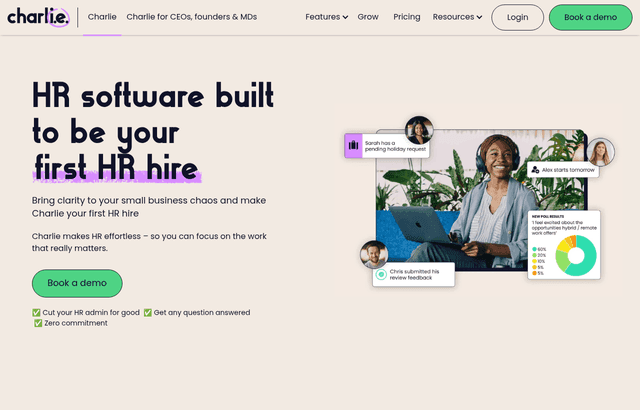
CharlieHR, one of the tools included in this startup deal.
Onboarding That Starts People Right
The first impression a new hire forms of a company is their onboarding, and it sets the tone for everything after. A disorganized first day, missing paperwork, and unclear expectations tell someone they joined a chaotic place. A smooth, prepared start tells them the opposite. CharlieHR gives a startup a structured way to onboard, so every new person gets a consistent, professional welcome.
For a small team, this solves a real problem. Onboarding involves a checklist of tasks, collecting information, sharing documents, setting up the person, and introducing them to how things work. When that lives in someone's head, it gets done differently every time and things fall through the cracks. CharlieHR turns it into a repeatable process, so the tenth hire gets the same complete experience as the first, and nobody has to reinvent the flow each time.
That consistency pays off in retention and speed. A person who is onboarded well becomes productive faster and feels more committed to the company. A person who is onboarded badly starts on the back foot and may quietly wonder about their choice. For a startup where every hire is a significant bet, getting people off to a strong start protects that investment. And because the process is systematized, a founder can hand onboarding off rather than personally running every new hire through it, freeing time for the work only they can do.
Time Off Without the Guesswork
Managing time off is one of those small tasks that becomes a genuine headache as a team grows. Who is out this week? How much holiday does someone have left? Was that day approved, and by whom? Run this over email or a spreadsheet and it turns into a mess of forgotten requests, double-booked absences, and disputes about how many days someone has taken. CharlieHR replaces all of that with a clear system.
Employees request time off in one place, managers approve it, and everyone can see who is out and when. Balances are tracked automatically, so there is never an argument about how many days remain. For a startup, this removes a recurring source of friction and admin. The person who used to field holiday requests by email and keep a running tally in a spreadsheet gets that time back, and the team gets a reliable, self-service way to handle something they do constantly.
Visibility is the quiet benefit here. When everyone can see who is away, planning gets easier. A manager knows before assigning work that half the team is out next week. Nobody schedules a critical meeting when the key person is on holiday. That shared view prevents the small coordination failures that add up in a growing company. It sounds mundane, but the cumulative time and frustration saved by a proper time-off system is real, and it scales up as the team does.
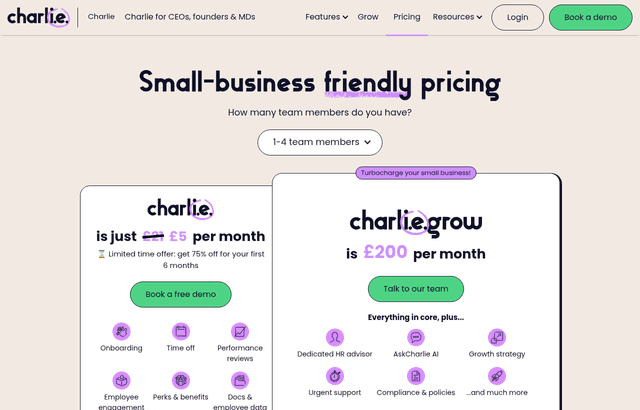
A look at CharlieHR before the discount, so you can see what the deal saves you.
One Source of Truth for the Team
As a startup grows, information about its people scatters. Contracts sit in someone's email. Contact details live in a spreadsheet. The org structure exists only in the founder's memory. This works until it does not, and then simple questions become small investigations. CharlieHR gives a company one organized place for its team records, so the information is there when anyone needs it.
Having a single source of truth matters more than it seems. When employee records are centralized and current, a founder can answer questions about headcount, structure, and their team in seconds rather than digging through files. Compliance and basic good practice get easier, because the records exist and are in order rather than scattered and half-forgotten. And as the company grows or brings in someone to handle people operations, there is an actual system to hand over rather than a mess to untangle.
For employees, a central system also means self-service. They can find what they need, update their own details, and handle routine requests without going through a person every time. That reduces the admin load on whoever currently owns HR by default, usually a founder or an office manager who has better things to do. A startup that centralizes this early avoids the painful cleanup that comes from letting people data sprawl across a dozen places for years.
HR Built for a Company Your Size
A lot of HR software is built for large enterprises, and using it in a small company feels like wearing a suit three sizes too big. It is complex, expensive, and full of features a ten-person team will never touch. CharlieHR is built specifically for small businesses, which means it fits the actual shape of a startup's needs. It handles the essentials a growing team really has, without burying them under enterprise machinery.
This fit matters because the wrong-sized tool is its own kind of burden. Enterprise HR platforms take time to set up and learn, and much of that effort goes toward capabilities a small team does not need yet. A startup adopting one spends energy on complexity that returns nothing. CharlieHR keeps things sized right, so a small team can get up and running without a heavy implementation project and without paying for scale it does not have.
Being built for small businesses also means the experience is approachable for people who are not HR professionals. In a startup, the person running people operations is usually doing it on top of another job. They need software that makes sense without training, that guides them through the common tasks, and that does not assume a dedicated HR department. CharlieHR is designed for exactly that person, which is why a startup can adopt it and get value from it without hiring a specialist to operate it.
CharlieHR Compared to the Alternatives
The default alternative for most early startups is spreadsheets and email. It costs nothing and works at first, but it does not scale. Spreadsheets do not track time-off balances on their own, do not give employees self-service, do not structure onboarding, and quietly rot as people forget to update them. What starts as free becomes expensive in the founder's time and in the errors that creep in. CharlieHR does the parts spreadsheets cannot, and it keeps the information accurate because the system, not a busy person, maintains it.
Against enterprise HR platforms, CharlieHR's advantage is fit and simplicity. The big platforms can do more, but they are built for organizations with dedicated HR teams and hundreds or thousands of employees. For a small startup, that power is mostly overhead: more cost, more complexity, and more setup than the situation warrants. CharlieHR gives a small company the HR essentials it actually needs, in a package sized for its stage, which is exactly the right trade when the team is small and the priority is getting basics handled without a project.
Compared to hiring an HR person before you truly need one, CharlieHR lets a startup delay that cost. Software handles the routine admin, so a founder or office manager can manage people operations part-time until the headcount genuinely justifies a dedicated hire. That keeps a significant salary off the books while still giving the team a professional HR experience. When the company does eventually bring in an HR person, they inherit an organized system rather than a mess, which makes them productive faster.
Making the Free Trial Count
A free trial is your window to find out whether CharlieHR fits your team before spending anything, so the aim is to test it with your real situation rather than poke at it superficially. Put actual processes and actual people into it during the trial, because that is the only way to know if it works for you.
Start by loading your real team into the system and setting up your genuine time-off policy. Once your people and your rules are in, you can see how the day-to-day actually feels, employees requesting time off, balances tracking, and the shared view of who is out. Testing it with real data rather than a token example tells you whether it solves the problems you actually have.
Run a real onboarding through it if you can. If you have a hire coming up during the trial, use CharlieHR to onboard them and see how the structured process performs in practice. That gives you the clearest read on one of the tool's biggest benefits, and it means the trial is already delivering value rather than just being an evaluation.
Get the people who will use it involved. Have your team try requesting time off and updating their own details, and have whoever runs people operations put the admin side through its paces. Their reaction matters, because a tool only helps if the people meant to use it actually find it easy. The trial is the moment to confirm that fit while it costs you nothing.
By the end of the trial, you will know whether CharlieHR has genuinely reduced the people-admin burden and improved the experience for your team. If it has, the decision to continue is easy, and you will already have your real processes set up inside it. If it has not, you have lost nothing but a little setup time. Either way, testing it properly with real data is what makes the free trial worth taking.
Who Should Claim This Deal
CharlieHR is a fit for any small business or startup that has grown past the point where a few people can hold everything in their heads. If you are hiring, managing time off by email, or keeping employee records in scattered files, and the people-admin is starting to land on a founder or an office manager, CharlieHR gives that work a proper home. The free trial lets you test that fit with your real team before paying anything.
It suits growing teams that want to look and operate like a real company without hiring a dedicated HR person yet. For a startup, software that handles onboarding, time off, and records lets someone manage people operations part-time and delay a significant hire, while still giving employees a professional experience. That is exactly the kind of leverage a lean team needs.
It is also a strong fit for founders who want to get HR right early rather than cleaning up a mess later. Centralizing people data and systematizing processes from the start avoids the painful sprawl that comes from letting everything scatter for years. The trial is a low-risk way to put that foundation in place.
The teams that will get less from it are the very smallest, where two or three people genuinely do not have enough HR activity to justify a system yet, and large organizations that need heavy enterprise HR capabilities. But for the broad middle, a growing startup or small business handling more people admin than spreadsheets can bear, CharlieHR offers HR sized exactly for the stage, and a free trial to prove it fits before you commit.
Who Is This Deal For?
Early-Stage Startups
Seed and pre-seed companies looking to move fast without overspending on tools.
Growing SaaS Teams
Series A+ companies scaling their stack and optimizing software costs.
Solo Founders
Indie hackers and bootstrapped founders who need enterprise tools at startup prices.
Get Free Trial off CharlieHR
Premium deal. Upgrade once, unlock everything.
Frequently Asked Questions
Everything you need to know about this startup deal.
Yes. Free trial to explore all HR features before committing.
Get the weekly deals digest
New verified startup deals every week. No spam, ever. Unsubscribe anytime.
Related Offers

Vestwell
Used by 290 members
14-day free trial
Get a 14-day free trial of Vestwell, the modern 401(k) and retirement benefits platform that powers small business plans, IRAs, and pooled employer plans with API-first technology.
View offer
Assembly
Used by 2,457 members
Free Plan
Employee recognition and engagement platform with rewards, surveys, and team building.
View offer
Oyster HR
Used by 1,316 members
$1,000 off first year
Get $1,000 off Oyster. The global employment platform for hiring, paying, and managing remote employees and contractors in 180+ countries.
View offer
ADP
Used by 2,527 members
Free Quote
Enterprise payroll, HR, and workforce management solutions for businesses of all sizes.
View offer
Justworks
Used by 1,773 members
Free Demo
PEO and payroll platform for startups, payroll, benefits, HR, and compliance in one place.
View offer
Gusto
Used by 2,125 members
6 months free Simple
Modern payroll, benefits, and HR for US-based startups, run your first payroll in minutes, not days.
View offerDeal Summary
Looking for more startup deals?
Browse all offers