
Statsig Coupon: Free Tier
Feature flags, A/B testing, and product analytics platform used by top tech companies.
Free · Opens in new tab
Already have an account? Log in
Deal Highlights
What Statsig Gives a Startup
Statsig is a platform for feature flags, A/B testing, and product analytics, used by top tech companies, and this deal comes with a Free tier. That means a startup can control how it ships features, run experiments to learn what works, and understand how people actually use the product, all through one platform, starting at no cost. These three capabilities together form the backbone of building product with data rather than guesswork. For an early team trying to figure out what to build and how it is landing, the Free tier is a way to adopt a serious, proven toolkit without spending anything to begin.
The value is in building smarter. Startups succeed by learning fast what their users want and giving it to them, and that learning depends on being able to ship carefully, test ideas, and measure results. Statsig brings the tools for all three into one place. Feature flags let the team control releases, A/B testing lets it learn which changes actually help, and product analytics let it see how the product is used. Being able to do all of this together, on a platform that top tech companies rely on, gives a small team the same disciplined approach to building that the best companies use.
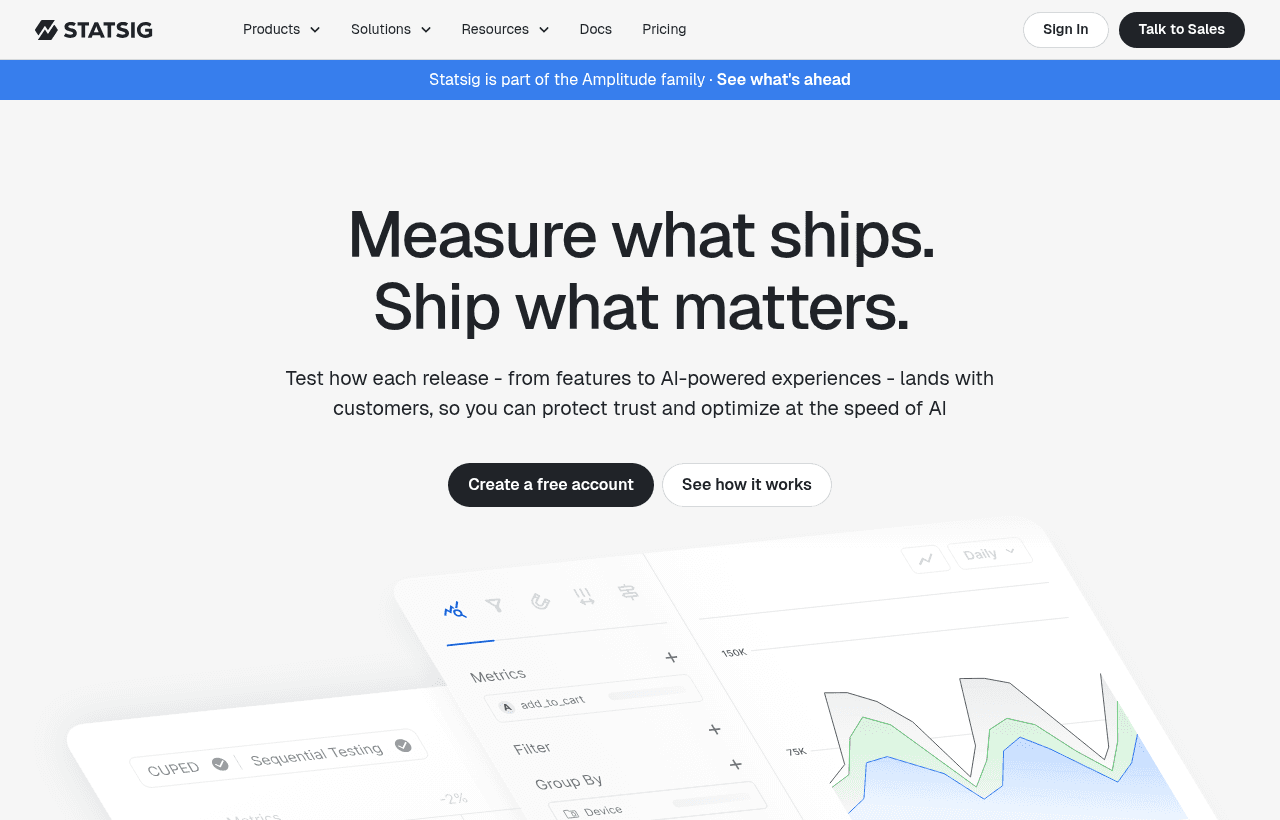
Statsig, one of the tools included in this startup deal.
Feature Flags for Control Over Releases
Feature flags give a team control over which features are on, for whom, and when, separate from deploying code. Instead of a release being all or nothing, a flag lets the team turn a feature on for a subset of users, roll it out gradually, or switch it off instantly if something goes wrong. This decoupling of releasing a feature from deploying the code is a fundamental improvement in how a team ships, and it reduces the risk of every release.
For a startup, that risk reduction matters because a bad release can do real damage when you have few users and little margin for error. With feature flags, the team can roll a new feature out gradually, watching how it behaves before exposing everyone to it, and if a problem appears, turn it off immediately without a scramble to redeploy. That safety net lets a small team ship more confidently and more often, because the cost of a mistake is contained. Shipping frequently and safely is exactly how a startup makes progress, and feature flags make it possible.
Feature flags also enable more sophisticated ways of working. The team can release a feature to a small group first, gather feedback, and expand from there. It can keep a feature hidden behind a flag while it is still being finished, merging code without exposing unfinished work. It can turn features on for specific users, like early customers or internal testing. This flexibility in how features reach users gives a startup fine control over its releases that all-or-nothing deployment cannot, and it is the foundation the experimentation capability builds on.
A/B Testing to Learn What Actually Works
A/B testing lets a team run experiments, showing different versions of something to different users and measuring which performs better. This is how a startup replaces guessing with knowing. Teams have endless opinions about what will improve the product, which design converts better, which flow users prefer, which change moves the numbers, but opinions are often wrong, and shipping based on them is a gamble. A/B testing settles the question with real data from real users, showing what actually works rather than what the team assumed would.
For a startup, this disciplined learning is enormously valuable because the team's decisions shape the product's future and getting them right matters. Building the wrong thing wastes the scarce time and resources a small team cannot spare, and without testing, a team can pour effort into changes that do not help or even hurt, without ever realizing it. A/B testing catches that. By measuring the effect of a change before committing to it fully, the team avoids investing in things that do not work and doubles down on things that do. Over time, that steady, data-guided improvement compounds into a much better product.
The connection to feature flags makes this practical. Because Statsig combines feature flags with A/B testing, running an experiment is a natural extension of how the team already controls releases. The same mechanism that decides who sees a feature can split users into groups for a test and measure the results. That integration lowers the barrier to experimenting, so testing becomes a routine part of shipping rather than a special, heavyweight effort. A startup that can easily run experiments will run more of them, and running more experiments means learning faster.
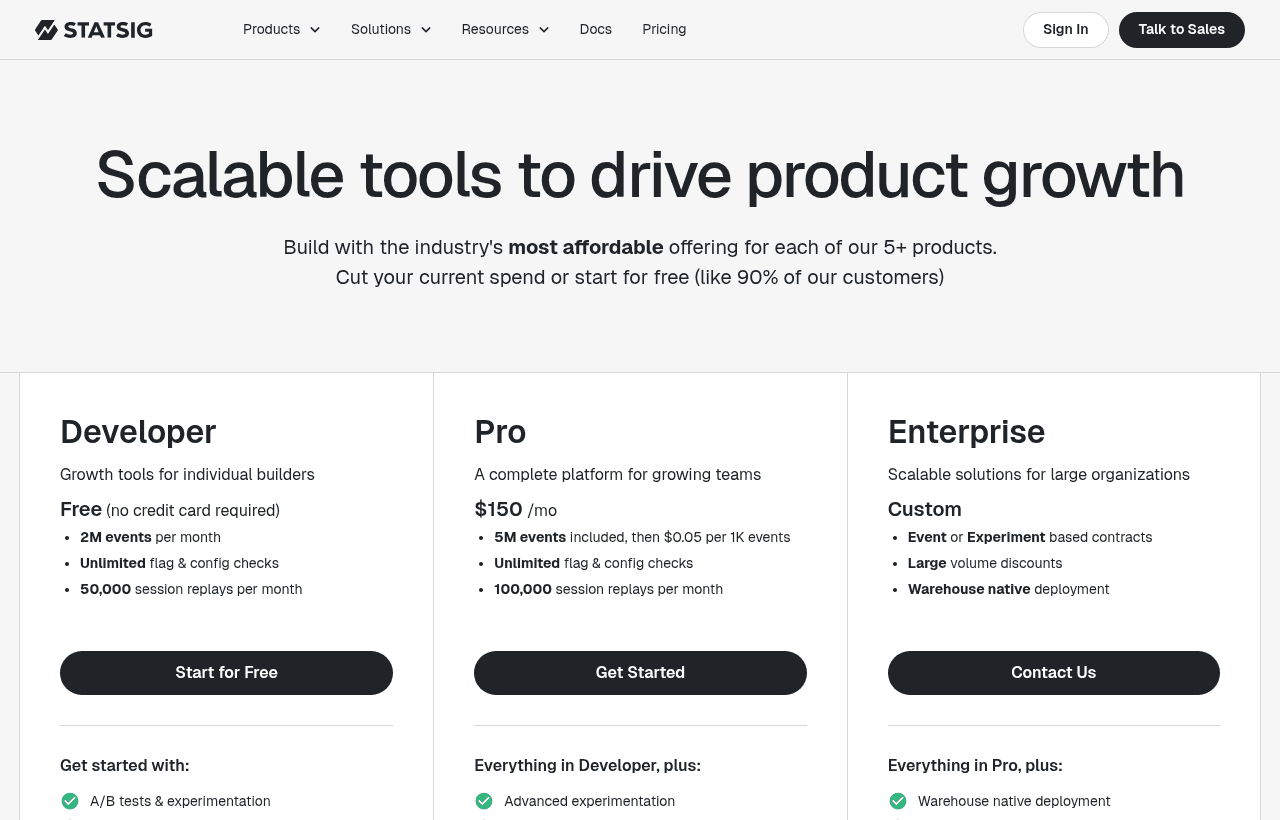
A look at Statsig before the discount, so you can see what the deal saves you.
Product Analytics to Understand Real Usage
Product analytics let a team see how people actually use the product, which features get used, where users spend time, where they drop off, how behavior flows through the experience. This understanding is essential and surprisingly easy to lack. Teams build products based on what they imagine users do, but real usage often differs from expectation in important ways. Analytics replace imagination with observation, showing the team what is really happening rather than what it assumes is happening.
For a startup, this visibility guides where to focus. A small team has limited resources and must choose carefully what to work on, and analytics inform those choices by revealing what matters to users. If a feature the team thought was central goes unused, that is worth knowing. If users consistently drop off at a particular step, that is a problem to fix. If some part of the product drives most of the engagement, that is where to invest. Without analytics, these decisions are guesses. With them, they are informed. That difference determines whether a startup spends its effort on what actually moves the product forward.
Having analytics in the same platform as feature flags and A/B testing creates a powerful loop. The team can ship a change behind a flag, test it, and then watch in analytics how it affects real usage, all connected. That closed loop, ship, test, measure, learn, and repeat, is the engine of data-driven product development, and Statsig puts the whole loop in one place. For a startup, having these capabilities integrated rather than scattered across separate tools makes the whole approach practical to actually adopt and sustain.
Why Data-Driven Building Beats Guessing
The core reason to adopt a platform like Statsig is that building with data beats building on guesswork, and the gap between the two decides which startups succeed. Every team has to decide what to build and how to build it, and those decisions can be made blind, based on opinion and assumption, or informed, based on evidence about what users actually want and do. Informed decisions are simply better on average, and over the many decisions a startup makes, that edge compounds into the difference between a product that finds its market and one that does not.
Guessing is expensive in a way that is easy to overlook. When a team builds on assumption and the assumption is wrong, it has spent real time and resources on something that does not help, and it may not even find out. Those wasted efforts add up, and for a startup with little to spare, they are costly. Data-driven building reduces that waste by testing assumptions before fully committing and by revealing what is actually happening rather than what the team hoped. The team spends its limited resources on things that work because it has evidence they work.
There is also a speed-of-learning advantage, which is perhaps the most important thing for a startup. The teams that win are often the ones that learn fastest what their users want, and the tools of feature flags, A/B testing, and analytics are exactly what accelerates that learning. They let a team run more experiments, get clearer answers, and understand its users better, which means it improves the product faster than a competitor relying on opinion. Statsig gives a startup that learning machinery, and the Free tier lets it start using it immediately.
Statsig Compared to Shipping Blind or Stitching Tools
The alternatives to Statsig show why an integrated platform helps. The first alternative is shipping blind, releasing features all at once, deciding based on opinion, and having little insight into how the product is used. Many early teams operate this way by default, simply because they have not adopted the tools to do better. It works in the sense that things get shipped, but it means every release carries full risk, decisions are guesses, and the team is largely blind to its own product. That is a hard way to build well, and it wastes effort on changes that do not help.
The second alternative is stitching together separate tools, one for feature flags, another for A/B testing, another for analytics. This gets the capabilities but at the cost of integrating and managing multiple tools that do not naturally work together. For a small team, that overhead is a real barrier, and the disconnection between tools makes the powerful ship-test-measure loop harder to run because the pieces live in different places. The friction of managing several tools is exactly the kind of thing that keeps a small team from adopting good practices at all.
Statsig's advantage is bringing feature flags, A/B testing, and product analytics together in one platform, the same combination that top tech companies use. That integration makes the whole data-driven approach practical for a small team, because the capabilities work together and there is one platform to adopt rather than several to stitch. The Free tier removes the cost barrier on top of that, so a startup can adopt this serious toolkit without spending anything and find out how much better building with data feels than shipping blind.
Making the Free Tier Count
The Free tier is most valuable when the team uses it to actually build the ship-test-measure habit rather than just installing the tool. The way to make it count is to start using feature flags for real releases, putting new features behind flags so the team gains the control and safety that flags provide. Once the team experiences shipping behind flags, rolling out gradually, and being able to turn a feature off instantly if needed, the reduced risk becomes concrete and the practice sticks.
Run real experiments, not just hypothetical ones. Pick actual decisions the team is unsure about, a design choice, a flow, a change it is debating, and set up an A/B test to get a real answer. Getting into the habit of testing meaningful decisions is what turns A/B testing from a feature into a way of working. The first time an experiment overturns what the team assumed, the value of testing becomes undeniable, and the team starts reaching for it instead of arguing from opinion.
Use the analytics to actually inform decisions, checking how features are used and where users drop off before deciding what to work on next. The analytics only help if the team looks at them and lets them guide its choices, so build the habit of consulting the data when deciding where to focus. A startup that lets real usage guide its priorities spends its limited effort far better than one working from assumptions, and the Free tier gives that visibility at no cost.
Finally, connect the three into the full loop rather than using them in isolation. The real power comes from shipping a change behind a flag, testing it, and measuring its effect in analytics, all connected. Using Statsig's integrated platform to run that whole loop is how a startup builds the data-driven engine that the best companies use, and doing it on the Free tier means establishing that engine before it costs anything.
Who Should Claim This Deal
This Statsig deal fits any startup that wants to build its product with data rather than guesswork, which describes any team serious about finding what its users want. If the team is making decisions about what to build and how, shipping features, and trying to understand how the product is used, Statsig brings the feature flags, A/B testing, and product analytics that turn those activities from guesses into informed, measured practices. The Free tier lets a small team adopt this proven toolkit without spending anything to start.
It fits teams that want to ship more safely and often, since feature flags reduce the risk of every release and let the team roll out and roll back with control. It fits teams tired of arguing from opinion, because A/B testing settles debates with real user data. And it fits any team that feels blind to how its product is actually used, since product analytics replace assumption with observation. Bringing all three together in one platform, the same combination top tech companies rely on, makes the whole approach practical for a small team.
If building smarter matters to your startup, and the teams that learn fastest are the ones that win, then feature flags, experimentation, and analytics are the machinery of that learning. Statsig puts them in one place and this deal lets you start on the Free tier. Claim it, put your features behind flags, run real experiments, let the analytics guide you, and build your product on evidence rather than guesswork.
Who Is This Deal For?
Early-Stage Startups
Seed and pre-seed companies looking to move fast without overspending on tools.
Growing SaaS Teams
Series A+ companies scaling their stack and optimizing software costs.
Solo Founders
Indie hackers and bootstrapped founders who need enterprise tools at startup prices.
Get Free Tier off Statsig
Premium deal. Upgrade once, unlock everything.
Frequently Asked Questions
Everything you need to know about this startup deal.
Yes, 1M events/month with unlimited feature flags.
Get the weekly deals digest
New verified startup deals every week. No spam, ever. Unsubscribe anytime.
Related Offers

Higgsfield
55% off annual Business plan
55% off an annual Higgsfield Business plan. Higgsfield is an AI video and image studio with Seedance, Kling, Veo and more in one account.
View offer
Seedance
55% off annual Business plan
55% off an annual Higgsfield Business plan with Seedance included. Seedance is ByteDance's AI video model for text, image and reference-driven clips.
View offerChromaDB
Used by 306 members
Free & Open Source
Open-source embedding database for building AI applications with semantic search.
View offer
Laxis
Used by 2,176 members
Free Plan
AI meeting assistant that records, transcribes, and generates actionable meeting notes.
View offer
Pictory
Used by 659 members
Free Trial
AI-powered video creation tool, turn text, scripts, and blogs into videos.
View offer
Segment
Used by 2,293 members
$25,000 in credits
Collect, clean, and route customer data to every tool in your stack with the leading customer data platform.
View offerDeal Summary
Looking for more startup deals?
Browse all offers