
6 Best Zoom Alternatives & Competitors in 2026
Looking for tools like Zoom? We compared 6 alternatives on price, free plan and limits, using each vendor's own pricing page.
Looking for a discount? See the Zoom promo code and deal: $20 off per user.
The 6 best Zoom alternatives

Google Workspace
#1 AlternativeGet 20% off Google Workspace for 1 year. Gmail, Meet, Drive, Docs, Sheets, and Slides for your entire team under your company domain.

Slack
#2 AlternativeGet 25% off Slack Pro for your first year. The messaging platform that has replaced email for 750,000+ organizations worldwide.

Livestorm
#3 AlternativeVideo engagement platform for webinars, virtual events, and online meetings.

Riverside
#4 AlternativeStart on Riverside's free plan. Remote podcast and video recording in studio quality, recorded locally on each participant's device for clear audio.
Zoom alternatives compared
By Ilyas Lemzouri, founder of SaaSOffers. Updated November 2026.
How we checked: we list a tool only after talking with its team and trying it. Every price and limit below comes from each vendor's own pricing page, checked in November 2026.
The best Zoom alternatives are Google Meet for teams that already use Google email and Docs, Whereby for simple room links, Jitsi Meet for a free open-source option, Slack huddles for chat-first teams, Livestorm for webinars, and Riverside for recorded interviews. The cheapest option is Jitsi Meet at $0. The best free option for a normal team call is Google Meet, which allows 100 people for 60 minutes with any Google account.
Why teams look for Zoom alternatives
- The 40-minute cap. Zoom Workplace Basic is free, but each meeting ends at 40 minutes. A sales demo or a user interview usually runs longer.
- The cost of the first paid step. Zoom Pro is $14.16 per user per month billed yearly, or $16.99 per user per month billed monthly. Five people on yearly billing pay $849.50 a year for meetings and chat.
- Participant limits. Pro caps a meeting at 100 participants. Business raises that to 300 and costs $18.33 per user per month billed yearly ($21.99 monthly), about 29% more than Pro.
- Add-ons on top of the seat. Zoom's paid AI tier, ZoomMate, costs $20 per user per month or $200 per user per year. Webinars for 500 attendees cost $1,000 per user per year or $129 per user per month.
Zoom alternatives at a glance
| Tool | Starting price | Free plan | Main difference from Zoom | Best for |
|---|---|---|---|---|
| Zoom Workplace | Pro $14.16 per user/month billed yearly ($16.99 billed monthly) | Yes, 40 min, 100 people | Meetings, chat, mail, docs and phone in one app | Teams that want one video suite |
| Google Meet | Business Starter $7 per user/month billed yearly ($8.40 flexible) | Yes, 60 min, 100 people | Bundled with Gmail, Docs and Drive | Teams already on Google |
| Whereby | Pro $10.99 per host/month billed monthly | Yes, 4 people, 30 min | Permanent room links, no download | Freelancers and small client calls |
| Jitsi Meet | $0 | Yes, open source | Free and self-hostable | Teams that want zero cost or control |
| Slack huddles | Pro $7.25 per user/month billed yearly ($8.75 monthly) | Yes, 1:1 huddles only | Calls live inside chat channels | Chat-first teams |
| Livestorm | EUR 2.50 per attendee credit | Free trial | Built for webinars, not team calls | Marketing and sales webinars |
| Riverside | Pro $24/month billed yearly ($29 monthly) | Yes, 2 hours of multi-track recording | Studio-quality local recording | Podcasts and interviews |
1. Google Meet: best for teams already on Google Workspace
Price: Business Starter $7 per user per month on an annual plan, $8.40 on a flexible plan | Free plan: any Google account, up to 100 participants, 60 minutes per meeting
Meet is the closest like-for-like replacement for a basic Zoom call. Free calls hold 100 people for 60 minutes, and calls between two people have no time limit. That is 20 minutes longer than Zoom Basic.
Paid Meet comes with Gmail, Calendar, Docs and Drive. Business Starter allows 100 participants. Business Standard ($14 per user per month yearly, $16.80 flexible) allows 150 participants and adds recording. Business Plus ($22 yearly, $26.40 flexible) allows 500.
Zoom is better at large meetings on a low plan, since Business holds 300. It also bundles a phone system and a whiteboard in the same app. Meet is weaker when you need cloud recording on the cheapest tier, because Starter does not include it.
Pick Google Meet if your team already uses Gmail and Google Calendar and you want video without a second vendor.
2. Whereby: best for simple room links and client calls
Price: Pro $10.99 per host per month; Business $13.99 per host per month with a minimum of 3 hosts | Free plan: 1 host, 1 room, 4 attendees, 30 minutes per meeting
Whereby gives each host a permanent room URL that guests open in the browser. Pro allows 100 attendees per meeting, no time limit, custom branding and unlimited recording. Business allows 200 attendees and unlimited rooms.
Whereby is better for client calls where you want a branded link and no app download. It is worse for large teams, since Business starts at three hosts and tops out at 200 attendees.
The prices above are the monthly-billing prices shown on Whereby's page. Whereby says annual billing saves 17%.
Pick Whereby if you run client or interview calls with a few hosts and want a reusable branded room.
3. Jitsi Meet: best free and open-source alternative
Price: $0 | Free plan: open source; meetings on the public meet.jit.si server are limited to 95 minutes as of October 9, 2026
Jitsi Meet is free, open source and encrypted. You can use the public server in a browser or run your own. Jitsi's site says more changes are coming.
Jitsi is better on price and on control. It costs nothing and you can host it yourself. It is worse on polish: there is no shared inbox, calendar, docs or phone, and self-hosting needs someone who can run a server.
Pick Jitsi if you have a technical person on the team and want free calls with no per-seat bill.
4. Slack: best for chat-first teams
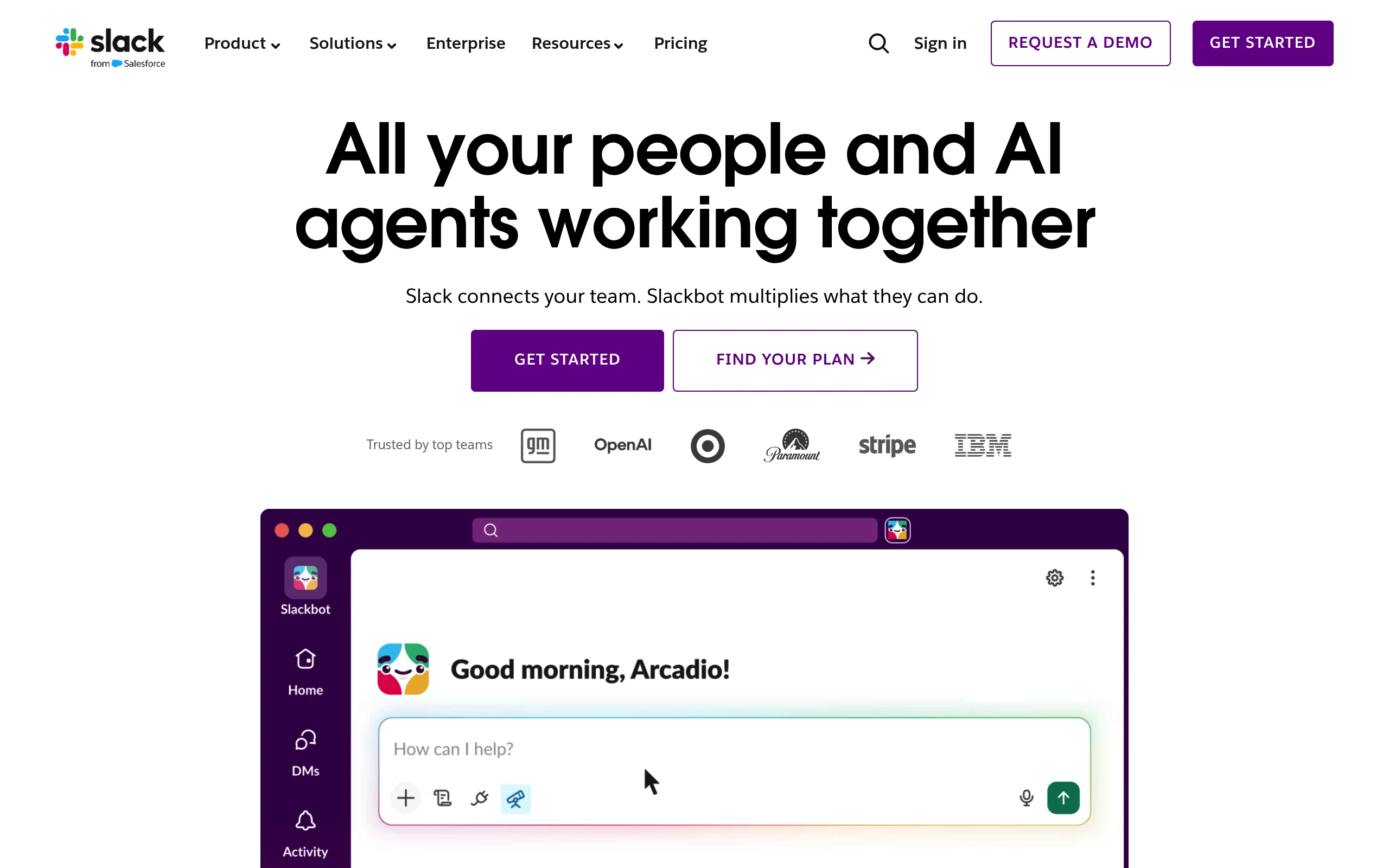
Price: Pro $7.25 per user per month billed yearly, $8.75 billed monthly | Free plan: $0, 90 days of message history, up to 10 apps, 1:1 huddles only
Slack huddles are audio and video calls that start from a channel. On the free plan huddles are one-to-one. Group huddles with screen sharing start on Pro. Slack's own page also lists AI conversation summaries and meeting summaries with transcripts on Pro.
Slack is better when most of your day is already spent in channels, because a call is one click away. It is worse for formal meetings with outside guests. Slack also works with Zoom, so you can keep both.
At $7.25 yearly, Slack Pro costs about half of Zoom Pro per seat.
Pick Slack if your team already works in it and you mostly need quick calls, not scheduled meetings with outside guests.
5. Livestorm: best for webinars
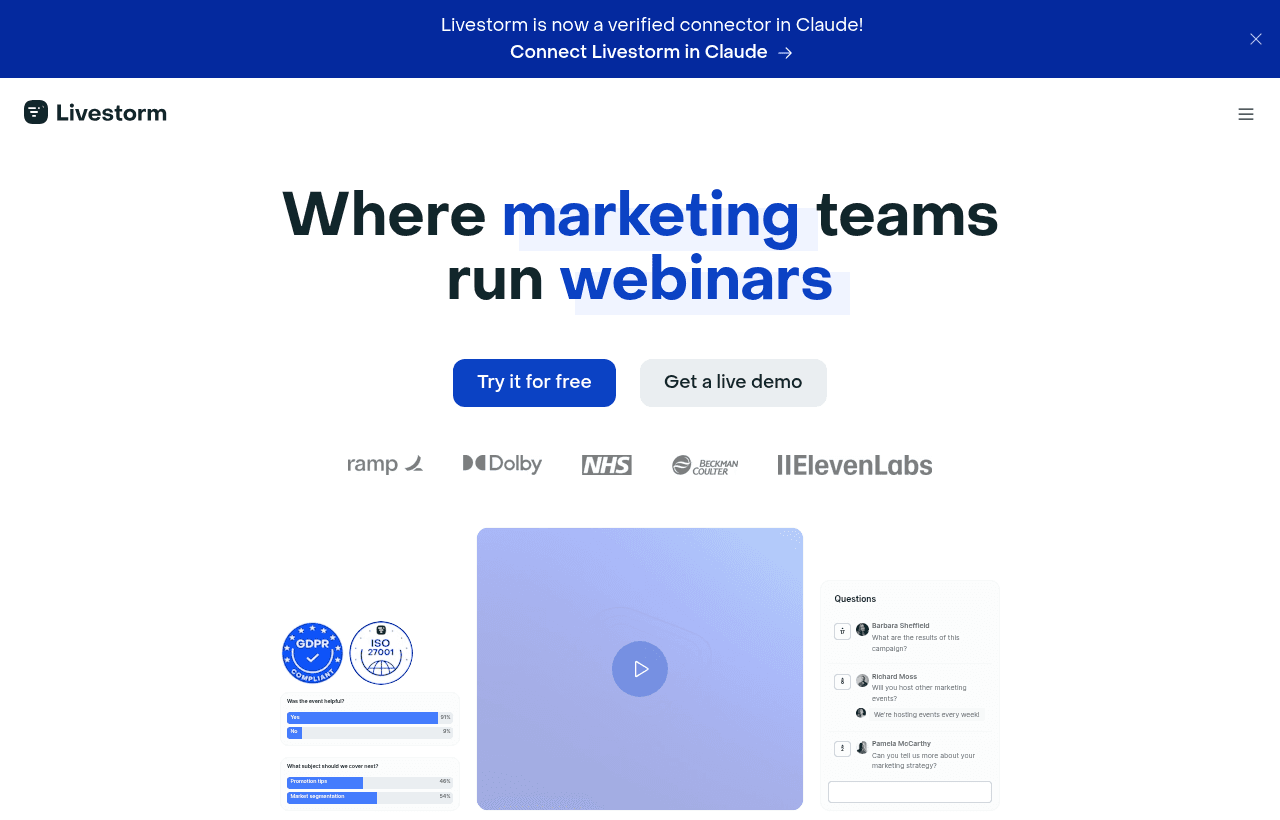
Price: Pro EUR 2.50 per attendee credit; a 400-credit plan is EUR 1,000 | Free plan: none, free trial
Livestorm is a webinar platform. Pro sessions run up to 4 hours with unlimited events, unlimited recording and unlimited team members. Each unique participant uses one credit per session, and credits last 12 months. Team members are not counted.
Compare that with Zoom Webinars for 500 attendees at $1,000 per user per year or $129 per user per month. Livestorm charges for people who attend. Zoom charges per host seat. A few big events a year can cost less this way. Weekly webinars to large lists use credits fast.
Livestorm is worse for everyday team meetings. It is a webinar tool, not a Zoom replacement for stand-ups.
Pick Livestorm if your main use of Zoom is marketing webinars and product demos for outside audiences.
6. Riverside: best for podcasts and recorded interviews
Price: Pro $24 per month billed yearly ($288 a year), $29 billed monthly | Free plan: 2 hours of multi-track recording (one-off), 720p, Riverside watermark
Riverside records each guest locally, so the file does not depend on call quality. Pro offers up to 4K video, 48 kHz audio, no watermark, unlimited transcriptions and 5 hours of separate-track recording per month.
Riverside beats Zoom on recording quality and editing. It is worse for ordinary team meetings, because it is a studio tool.
Pick Riverside if you publish what you record, such as a podcast, a customer story or a video series.
Free Zoom alternatives
- Google Meet: free with any Google account, 100 participants, 60 minutes. One-to-one calls have no limit.
- Jitsi Meet: free and open source. The public server caps meetings at 95 minutes.
- Whereby Free: 1 host, 1 room, 4 attendees, 30 minutes.
- Slack Free: 1:1 huddles only, 90 days of history, 10 apps.
- Riverside Free: 2 hours of multi-track recording in total, 720p, watermark.
For group calls longer than an hour, a paid plan or a self-hosted Jitsi server is needed.
Cheapest Zoom alternative for a small team
Take a five-person team that needs video and basic chat.
| Option | Per month | Per year |
|---|---|---|
| Zoom Pro, billed yearly | $70.79 | $849.50 |
| Zoom Pro, billed monthly | $84.95 | $1,019.40 |
| Google Business Starter, billed yearly | $35.00 | $420.00 |
| Google Business Starter, flexible | $42.00 | $504.00 |
| Slack Pro, billed yearly | $36.25 | $435.00 |
| Slack Pro, billed monthly | $43.75 | $525.00 |
| Whereby Business, 5 hosts, billed monthly | $69.95 | $839.40 |
| Jitsi Meet | $0 | $0 |
Google Business Starter saves $429.50 a year against Zoom Pro on yearly billing, and it also gives you business email and storage. Slack Pro saves $414.50 a year. If you need recording, Google Business Standard is 5 x $14 = $70 a month, or $840 a year, about the same as Zoom Pro.
How to choose
- You already use Gmail and Calendar and have fewer than 20 people: pick Google Meet.
- You need a branded room link for client calls and have 1 to 3 hosts: pick Whereby.
- You want to pay nothing and can run a server: pick Jitsi Meet.
- Your team lives in chat and calls are short: pick Slack huddles.
- You run webinars for outside audiences: pick Livestorm.
- You publish recordings: pick Riverside.
- You need 300 participants in one meeting: stay on Zoom Business.
FAQ
What is the best free alternative to Zoom?
Google Meet is the best free alternative for most teams. Any Google account can host up to 100 people for 60 minutes, and one-to-one calls have no time limit. Jitsi Meet is free and open source, but the public server limits meetings to 95 minutes.
What is cheaper than Zoom?
Google Business Starter costs $7 per user per month on an annual plan, against $14.16 for Zoom Pro on a yearly plan. Slack Pro costs $7.25 per user per month billed yearly. Jitsi Meet costs $0.
Who are Zoom's main competitors?
Zoom's main competitors are Microsoft Teams, Google Meet and Cisco Webex for general meetings. Whereby and Jitsi Meet compete on simple, low-cost video. Livestorm competes with Zoom Webinars, and Riverside competes on recorded interviews.
Is there an open-source alternative to Zoom?
Yes. Jitsi Meet is open source and can run on your own server. The public server meet.jit.si limits meetings to 95 minutes as of October 9, 2026.
What is better than Zoom for webinars?
Livestorm is built for webinars. Its Pro plan runs sessions up to 4 hours at EUR 2.50 per attendee credit. Zoom Webinars for 500 attendees cost $1,000 per user per year or $129 per user per month.
Prices checked on each vendor's pricing page in November 2026.
Still considering Zoom?
Claim the Zoom startup deal through SaaSOffers. Verified and free to access.
Claim Zoom deal