
Directus Coupon: Free Self-Hosted
Open-source headless CMS and data platform with REST and GraphQL APIs.
Premium: $79/year for unlimited deals
Already have an account? Log in
Deal Highlights
What Directus Gives a Startup
Directus is an open-source headless CMS and data platform. It wraps a team's database with an instant REST and GraphQL API and a clean admin interface, turning a plain database into a managed content and data backend. It is free to self-host, so a startup can run Directus on its own infrastructure with no licensing cost and full control over its data. For a team that wants an API and an admin panel over its data without building either from scratch, Directus is a fast way to get both.
Most products end up needing the same two things on top of a database. First, an API so the front end and other services can read and write the data. Second, an admin interface so people, developers, content editors, support staff, can view and manage that data without writing SQL. Building both by hand is a lot of repetitive work that every project redoes, and it is work that does not make the product distinctive. Directus provides both automatically on top of a database, and because it works with the team's own database rather than a proprietary store, the data stays in a normal, portable place the team fully controls. This article covers what Directus does, why each part matters to a startup, how it compares to the alternatives, and how to get the most out of the free self-hosted option.
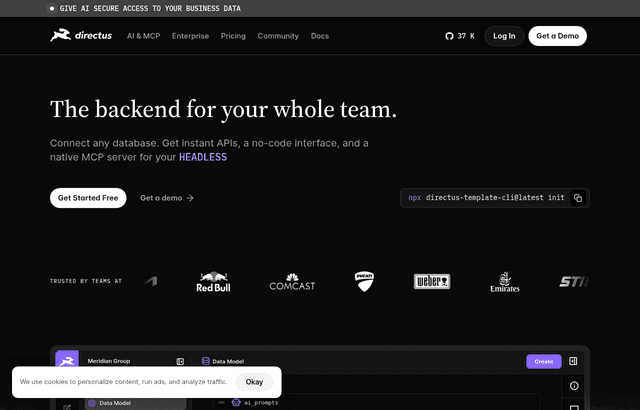
Directus, one of the tools included in this startup deal.
An Instant API Over the Database
The core capability of Directus is that it generates a full REST and GraphQL API over a database automatically. Point Directus at a database, and it exposes the tables and their relationships through a well-structured API, no endpoint code required. The front end and other services read and write data through that API immediately.
For a startup, this instant API removes a large chunk of routine backend work. Writing CRUD endpoints, the create, read, update, delete operations for every data type, is tedious, repetitive, and time-consuming, and it is the same basic work on every project. Directus does it automatically, so the team gets a complete data API without hand-writing endpoints. That is time redirected from boilerplate toward the parts of the product that actually matter.
Offering both REST and GraphQL is a practical bonus. Different front ends and different developers prefer different styles, and having both available means the team can use whichever fits each situation. A GraphQL query that fetches exactly the fields a page needs, or a simple REST call for a straightforward operation, both are there without extra effort. That flexibility suits a small team that wants to move fast and not fight its own API.
An Admin Interface for the Whole Team
Directus comes with a clean admin interface over the data, so people can view, create, and edit records without touching the database directly or writing queries. For a startup, this admin panel is enormously useful, because the need to look at and manage data comes up constantly and from many directions.
Developers use it to inspect data while building and debugging. Content editors use it to manage the content that drives the product or site. Support staff use it to look up and fix customer records. Operations people use it to check on the state of things. Without an admin interface, all of these tasks either require someone to run database queries by hand, which is slow and risky, or require the team to build custom admin screens, which is more work. Directus provides a capable admin interface out of the box, so the whole team can work with the data safely and without engineering help for every lookup.
The admin interface also has permissions, so different people can be given appropriate access to different data. This matters because not everyone should see or change everything. A content editor might manage content but not touch user records, while an admin has broader access. Directus lets the team grant access appropriately, which makes it safe to give non-developers direct access to the data they need without exposing everything.
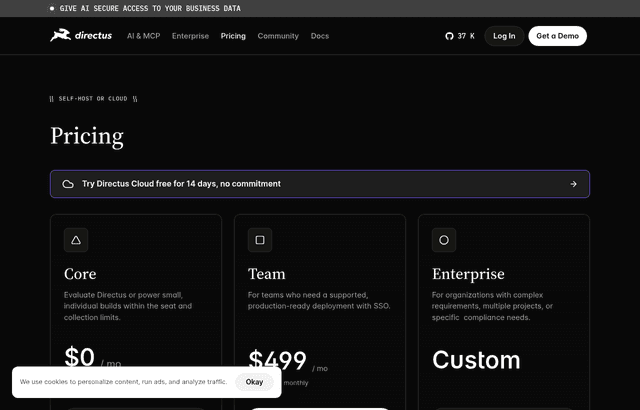
A look at Directus before the discount, so you can see what the deal saves you.
It Works With Your Own Database
A defining trait of Directus is that it works on top of a team's existing SQL database rather than forcing data into a proprietary store. It layers onto a standard database, which means the data lives in a normal, portable place that the team fully owns and can access directly whenever it wants.
For a startup, this is a meaningful advantage over platforms that lock data inside their own systems. Because the data sits in a standard database, the team is never trapped. It can query the database directly, connect other tools to it, migrate it, or move off Directus entirely, all without a painful export. The data is the team's own, in a format the whole ecosystem understands, and Directus is a layer of convenience on top rather than a cage around it.
This approach also means Directus fits into an existing project cleanly. A team that already has a database can put Directus on top of it and immediately get an API and an admin panel over data that is already there, without migrating anything. That makes Directus useful not just for greenfield projects but for adding an API and admin layer to a database a team already runs.
A Data Platform, Not Just a CMS
While Directus is often described as a headless CMS, it is really a general data platform, and that distinction matters. A traditional headless CMS is oriented around content, blog posts, pages, marketing material. Directus handles content well, but because it works over any database structure, it is equally suited to managing any kind of application data, not just editorial content.
For a startup, this generality makes Directus flexible in a way a content-only CMS is not. The same tool that manages the marketing site's content can manage application data, internal records, operational data, or whatever the product stores. Instead of one tool for content and separate solutions for other data, Directus can serve as a single API and admin layer over many kinds of data. That consolidation is efficient for a small team that would rather learn and run one flexible tool than several narrow ones.
This also means Directus grows with the product's needs. As a startup's data model expands beyond simple content into more complex application data, Directus keeps up, because it was never limited to content in the first place. The team is not going to outgrow it the moment its data becomes more than blog posts.
Open Source and Self-Hosted
Directus is open source and free to self-host, which gives a startup control and cost advantages together. Running it on the team's own infrastructure means the data and the platform live where the team chooses, under the team's control, with no per-usage fees for the software itself. For a startup mindful of both cost and control over its data, this combination is attractive.
Self-hosting matters most for teams with requirements around where their data lives, whether for compliance, privacy, or simply a preference to keep the data in their own environment. Because Directus can run on the team's own infrastructure over the team's own database, the data never has to leave a place the team controls. That is a level of control that hosted, proprietary platforms cannot offer.
Being open source also means transparency and freedom from lock-in. The team can see how Directus works, adapt it if needed, and build on it without betting the product on a closed vendor. For a startup making a real investment in a data and API layer, building on an open, self-hostable foundation is a hedge that keeps its options open as it grows.
Directus Compared to the Alternatives
There are a few ways a startup might otherwise solve the API-and-admin problem. It could build the API and admin screens by hand, which gives full control but costs a lot of repetitive engineering time on work that does not differentiate the product. Directus provides the same capabilities automatically, so unless the team has unusual needs, hand-building is usually a poor use of scarce effort.
It could use a proprietary backend-as-a-service platform, which is quick to start but often stores data in a proprietary way and can create lock-in and ongoing cost. Directus, by working over a standard database the team owns and being free to self-host, keeps the data portable and the software free, trading a bit of self-hosting responsibility for control and cost savings.
It could use a content-only headless CMS, which handles editorial content but is not built for general application data. Directus covers content and general data in one tool, which suits a startup that needs more than a content store. Compared to a pure CMS, Directus is more general; compared to building from scratch, it is far faster; compared to a proprietary backend service, it offers more control and no software cost. For many startups that want an API and admin layer over their own data, that balance lands well.
Making the Free Self-Hosted Option Count
Directus being free to self-host means a startup gets a powerful data and API layer at no software cost, in exchange for running it on its own infrastructure. Getting the most from it comes down to setting it up well and using its strengths.
Start by putting Directus over a well-structured database. Because Directus generates its API and admin interface from the database structure, a clean, well-modeled schema produces a clean, sensible API and admin experience. Investing in a good data model up front pays off directly in how good the generated API and admin panel are. This is the foundation everything else builds on.
Set up permissions thoughtfully so the team can safely use the admin interface widely. The value of the admin panel multiplies when many people can use it, content editors, support, operations, so configuring roles and access properly lets the team open up data access safely rather than keeping it locked to developers. Getting permissions right early makes Directus useful across the whole team.
Take advantage of the instant API to move fast on the front end. Since the API exists the moment the schema does, front-end and other development can proceed against it immediately without waiting on hand-built endpoints. Building the product on top of the generated API, rather than reinventing endpoints, is where a startup captures the biggest time savings Directus offers.
How Directus Scales With the Product
The data and API foundation a startup builds on self-hosted Directus scales as the product grows. As the data model expands, Directus keeps generating the API and admin interface over it, so new data types get an API and admin screens automatically rather than requiring new hand-built code each time. That automatic coverage keeps the backend growing smoothly as the product adds features.
Because the data lives in the team's own standard database, scaling the underlying storage is a normal database problem with well-understood solutions, not a fight against a proprietary platform. And because Directus is open source and self-hosted, the team controls how it runs and can adapt its deployment as load grows. A startup that builds its data layer on Directus keeps control of both the data and the platform as it scales, which is exactly the position a growing company wants to be in.
Who Should Claim This Deal
Directus fits a startup that needs an API and an admin interface over its data and would rather not build either from scratch. If the team has a database, or is about to create one, and needs to expose it through an API and let people manage the data without writing queries, Directus provides both automatically.
It is an especially strong fit for a team that values controlling its own data and infrastructure, wants to avoid proprietary lock-in, and is comfortable self-hosting in exchange for no software cost and full control. Because Directus works over a standard database and handles both content and general application data, it suits products whose data needs go beyond simple content. The free self-hosted option gives a startup a powerful, flexible data and API layer at no software cost, on infrastructure it controls. For a team that wants that control and that flexibility, this is a deal worth claiming.
Who Is This Deal For?
Early-Stage Startups
Seed and pre-seed companies looking to move fast without overspending on tools.
Growing SaaS Teams
Series A+ companies scaling their stack and optimizing software costs.
Solo Founders
Indie hackers and bootstrapped founders who need enterprise tools at startup prices.
Get Free Self-Hosted off Directus
Premium deal. Upgrade once, unlock everything.
Frequently Asked Questions
Everything you need to know about this startup deal.
Yes. Self-hosted is free and open-source. Cloud starts at $15/month.
Get the weekly deals digest
New verified startup deals every week. No spam, ever. Unsubscribe anytime.
Related Offers

Toggl Track
Used by 1,100 members
Free Plan
Simple and intuitive time tracking for teams with reporting and integrations.
View offer
Auth0
Used by 994 members
1 year of B2B Professional free
Get 1 year of the Auth0 B2B Professional plan free, with up to 100,000 monthly active users, SSO, enterprise MFA and SCIM.
View offer
Bugsnag
Used by 471 members
Free Plan
Error monitoring and stability management for web and mobile applications.
View offer
Turborepo
Used by 1,880 members
Free & Open Source
High-performance build system for JavaScript and TypeScript monorepos by Vercel.
View offer
Windmill
Used by 1,501 members
Free Plan
Open-source developer platform for building internal tools, workflows, and scripts.
View offer
Height
Used by 1,442 members
Free Plan
AI-powered project management tool with autonomous task management and workflows.
View offerDeal Summary
Looking for more startup deals?
Browse all offers