
Sanity Startup Credits: $500 in credits
Headless CMS with real-time collaboration, structured content, and a customizable editing studio.
Free · Opens in new tab
Already have an account? Log in
Deal Highlights
What Sanity Gives a Startup
Sanity is a headless content management system with real-time collaboration, structured content, and a customizable editing studio. This deal gives a startup 500 dollars in credits, real runway to build a content platform and run it in production without the cost showing up before the product does. For a company that needs a website, a marketing site, an app's content, or all three, that credit covers the phase where content infrastructure usually starts eating into a budget that should be going elsewhere.
The core idea behind Sanity is that content should be structured data the team owns, not markup trapped inside a specific website. Being headless means the content lives in Sanity and gets delivered to any front end through an API, whether that is a marketing site, a mobile app, or several products at once. For a startup, that separation is strategic. The same content can power everything the company builds, and the team is never locked into one presentation or forced to rebuild the content layer when the front end changes.
For a startup, the 500 dollars in credits is the practical part. A team can stand up a real content platform, build the editing experience their non-technical colleagues will actually use, and serve content to production without the bill arriving during the fragile early months. That runway is what lets a small team treat content as proper infrastructure from the start.
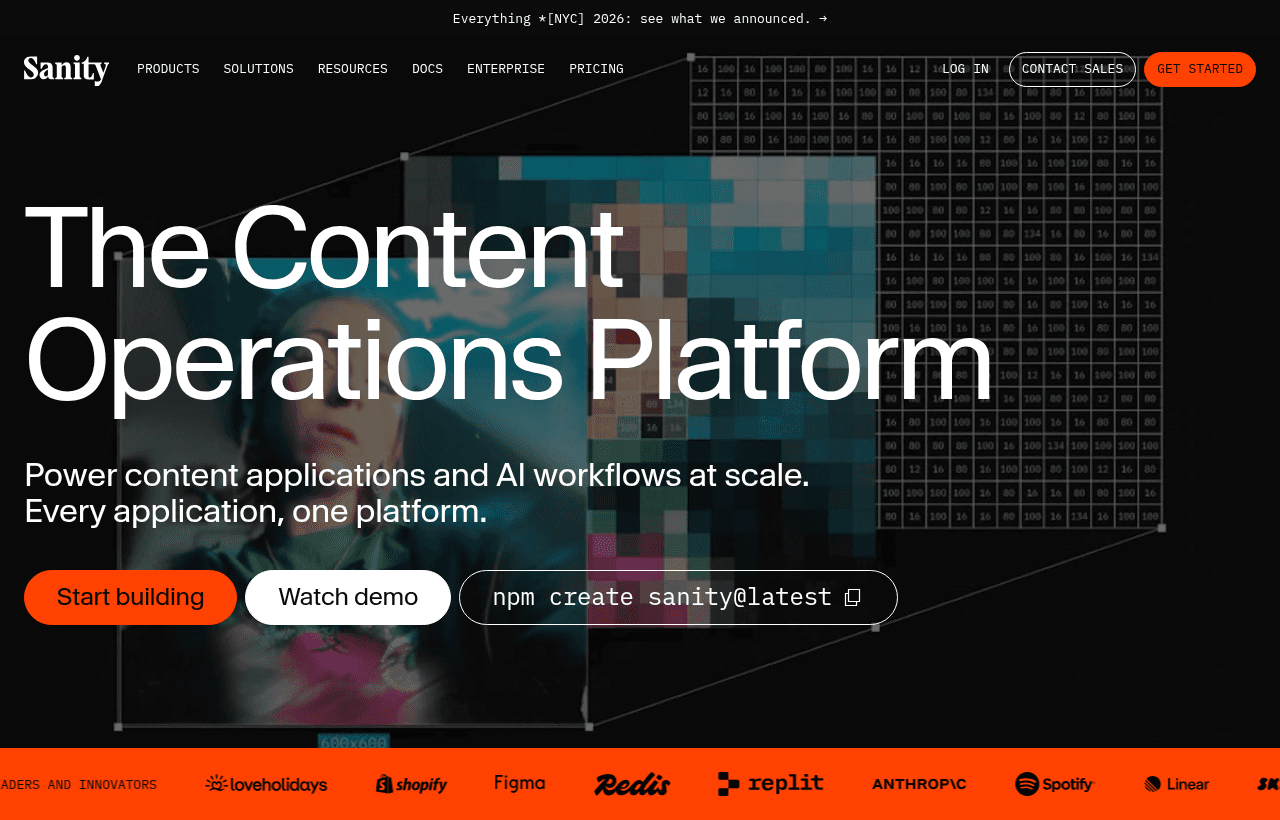
Sanity, one of the tools included in this startup deal.
Structured Content the Team Actually Owns
The defining strength of Sanity is that content is structured. Instead of pages of formatted text where meaning is tangled up with layout, content is modeled as clean, typed data: a product has fields, an article has an author and sections, a landing page has defined blocks. For a startup, that structure is what makes content reusable, reliable, and future-proof, because the meaning of the content is preserved independent of how any particular page displays it.
Structured content pays off the moment a startup wants to do more than one thing with its content. The same product information can appear on the marketing site, inside the app, and in a partner integration, all drawing from one structured source. When something changes, it changes once and updates everywhere. That single source of truth eliminates the drift and duplication that plague teams keeping the same content in several places, which is a real and growing tax as a company builds more surfaces.
Owning the content as structured data also protects the startup's future. Because the content is clean, typed, and accessible through an API, the team can redesign the website, launch a new app, or switch front-end technology without losing or rebuilding the content itself. For a young company that will inevitably change how it presents itself, keeping the content stable and portable underneath is exactly the kind of decision that avoids painful rework later.
A Customizable Studio Non-Technical People Will Use
Content is only as good as the people who can create and maintain it, and most of those people are not engineers. Sanity's editing studio is where that gap gets bridged. The studio is the interface where marketers, writers, and other team members create and edit content, and crucially it is customizable, so a startup can shape it to fit exactly the content the business works with rather than forcing the team into a generic editor.
That customization matters because a well-fitted editing experience is what lets non-technical people work independently. When the studio presents the right fields, the right structure, and clear guidance, a marketer can update the site or publish an article without filing a ticket for an engineer. For a startup, that independence is a direct multiplier on the whole team's output, because it frees engineers from being a content bottleneck and lets the people who own the message actually control it.
Because the studio can be tailored, a startup can make content editing genuinely pleasant and mistake-resistant. The editor can be set up so the right choices are easy and the wrong ones are hard, which keeps content consistent even as more people contribute. For a small team where everyone wears several hats, an editing experience that guides people to do the right thing is what keeps the content coherent without constant oversight.
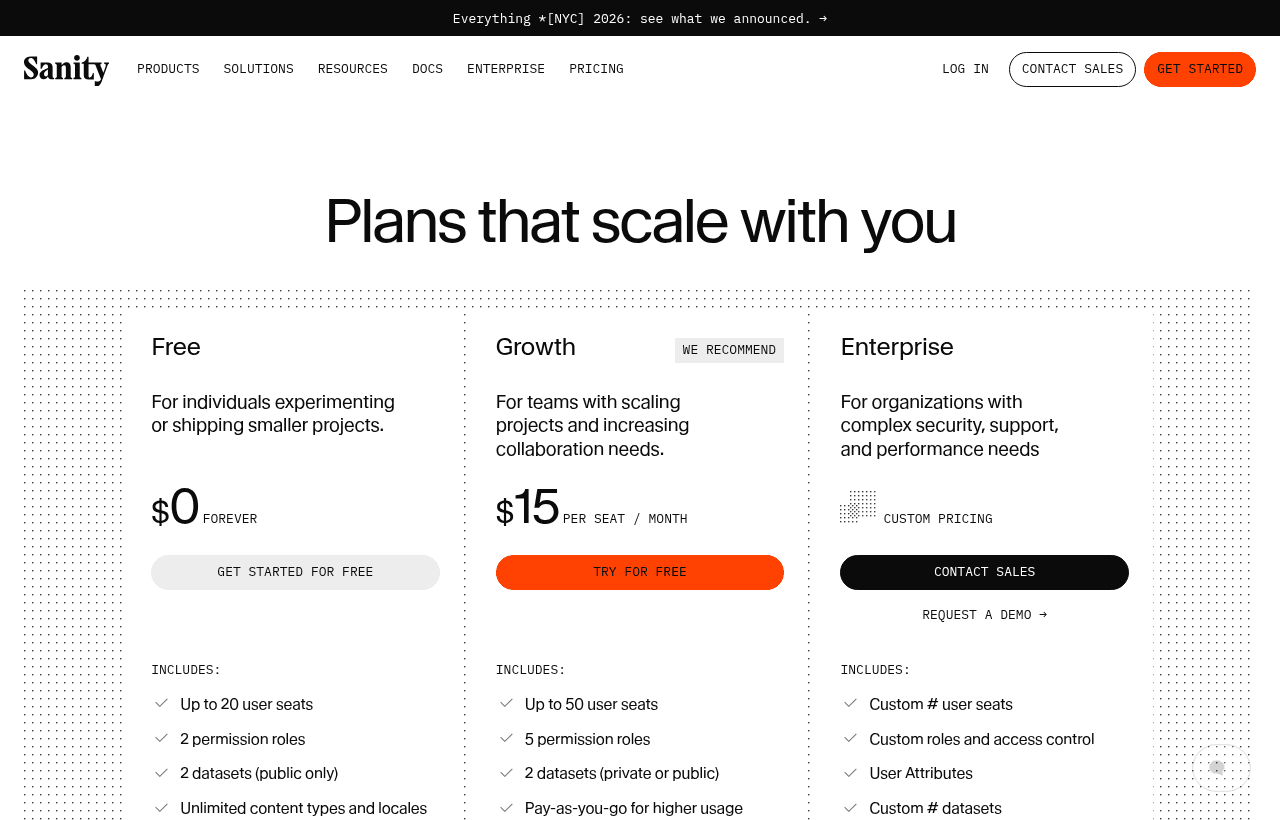
A look at Sanity before the discount, so you can see what the deal saves you.
Real-Time Collaboration Without Stepping on Each Other
Sanity supports real-time collaboration, so multiple people can work on content together without the conflicts and confusion that plague file-based or lock-based systems. For a startup where a small team is moving fast and often touching the same things, that collaboration keeps content work fluid instead of turning it into a series of who-has-the-file standoffs.
Real-time collaboration matters most during the busy moments a startup cares about: a launch, a campaign, a site refresh where several people are creating and editing content at once under time pressure. Being able to work together live, seeing changes as they happen, keeps the team coordinated and fast when it counts. There is no exporting, emailing, and merging, just people working on the same content in the same place. That fluidity removes a whole category of friction that would otherwise slow the team down exactly when speed matters.
Collaboration also supports the reality that content is a team sport in a startup. A writer drafts, a marketer refines, someone reviews, and it all needs to happen without a rigid handoff process that a small team does not have time for. Sanity's live collaboration lets that natural back-and-forth happen smoothly, so content moves from idea to published quickly. For a company where the same few people juggle many roles, keeping content work frictionless is what keeps the whole operation moving.
Delivering Content Anywhere Through the API
Because Sanity is headless, content is delivered through an API to whatever front end needs it, and that flexibility is a strategic asset for a startup. The team can build their website in whatever technology they prefer, serve the same content to a mobile app, and feed content to any new surface they create later, all from the one content platform. The content layer and the presentation layer are cleanly separated, which gives the team freedom on both sides.
For a startup, that API-first delivery means the content infrastructure does not constrain the product roadmap. When the team decides to build something new that needs content, the content is already there, accessible, and structured, ready to be pulled into the new surface. There is no need to migrate content or maintain a separate copy for each channel. That reuse compounds as the company builds more, turning the early investment in a clean content platform into leverage on every future project.
The API approach also lets a startup use modern front-end tooling and get the performance and developer experience that comes with it, while keeping content management friendly for the non-technical team. Engineers get a clean API to build against, and marketers get the studio to work in. Both sides get a good experience, which is exactly the balance a small company needs between shipping fast and empowering the whole team to contribute.
Sanity Compared to a Traditional CMS
The familiar alternative is a traditional, all-in-one CMS where content and presentation are bound together in one system that runs the website. That approach is simple to start and fine for a basic site, but it carries costs that grow with the company. The content is tied to that one system's way of doing things, reusing it elsewhere is awkward, and changing the front end often means wrestling with or migrating off the whole platform. The convenience early on becomes a constraint later.
Sanity's headless, structured approach front-loads a bit more setup in exchange for flexibility that keeps paying off. The content is clean data the team owns, usable across any number of front ends, and the editing experience is tailored to the business rather than generic. For a startup that expects to grow, add products, and evolve its presentation, that flexibility is worth the modest extra effort, because it avoids the far larger cost of being boxed in by a monolithic system down the road.
Compared to hand-rolling a content solution or hard-coding content into the site, Sanity gives a startup a real, collaborative content platform without building one from scratch. The 500 dollars in credits lets the team adopt that proper infrastructure early, when the alternative is either a rigid off-the-shelf CMS or a homegrown mess that becomes a maintenance burden. For a company that takes content seriously, starting on solid, flexible infrastructure is the decision that pays back over years.
Making the 500 Dollars in Credits Count
The credits are most valuable when a startup uses them to build content infrastructure it will actually keep, not a throwaway experiment. Start by modeling the content properly, defining the structures the business really works with, whether that is products, articles, pages, or all of them. Getting the content model right early is the single most important step, because a clean model is what makes all the reuse, flexibility, and future-proofing possible.
Then invest in the studio so the non-technical team can own their content. Customize the editing experience to fit the actual content and the actual people who will use it, so marketers and writers can work independently from day one. That investment pays back immediately by taking engineers out of the content loop and letting the whole team contribute. A studio that fits the team is what turns Sanity from an engineering tool into a company-wide content platform.
Finally, connect it to production and let it prove itself under real use. Serve the live website or app from Sanity during the credit period so the team experiences the real workflow, the collaboration, and the delivery in the context that matters. By the time the credits are used, a startup should have a working content platform, a content model it trusts, and a team that can run it, which is exactly the foundation that makes content a strength rather than a chore.
How Sanity Scales With the Company
Content needs multiply as a startup grows, and Sanity is built to absorb that growth rather than buckle under it. Early on, the platform might power a single marketing site maintained by one or two people. As the company adds products, channels, and team members, the same structured content and API delivery extend to serve all of it, so growth means building on the platform rather than outgrowing it.
The structured, headless foundation is what makes that scaling smooth. New front ends pull from the content already there. New team members work in a studio built to guide them. New content types slot into the existing model. Because the content is clean data delivered through an API, none of this requires tearing down and rebuilding the content layer, which is the expensive trap that catches teams who started on a rigid system. A startup that begins with Sanity keeps its content infrastructure intact as the company becomes far more complex.
That durability is the real return on choosing structured content early. The model, the studio, and the delivery built during the first months keep serving the company as it grows into many products and many contributors, so the early investment compounds instead of being repeated. For a startup planning to build a lot over time, that continuity is exactly what content infrastructure should provide.
Who Should Claim This Deal
This deal fits a startup that needs a real content platform, which includes almost any company with a marketing site, a content-driven app, or plans to build several surfaces that share content. If the team wants content to be structured, reusable, and owned rather than trapped in a rigid website, Sanity provides exactly that, and the 500 dollars in credits covers the early production runway.
It is a strong match for teams that want their non-technical colleagues to own content independently, since the customizable studio lets marketers and writers work without an engineer in the loop. It suits companies that expect to grow and change their presentation over time, because the headless, structured foundation keeps content stable even as front ends evolve. And it fits any startup that would rather invest in flexible content infrastructure once than fight a monolithic CMS or a homegrown solution later.
If a company's content needs are genuinely trivial and will stay that way, a simpler tool may be enough, and the flexibility of Sanity would go unused. But for any startup that takes content seriously and expects to build more than one thing with it, Sanity turns content into structured, reusable infrastructure the whole team can run, and the 500 dollars in credits is the low-risk way to build that foundation from the start.
Who Is This Deal For?
Early-Stage Startups
Seed and pre-seed companies looking to move fast without overspending on tools.
Growing SaaS Teams
Series A+ companies scaling their stack and optimizing software costs.
Solo Founders
Indie hackers and bootstrapped founders who need enterprise tools at startup prices.
Get $500 in credits off Sanity
Premium deal. Upgrade once, unlock everything.
!Eligibility Requirements
Startup needing a content platform
Frequently Asked Questions
Everything you need to know about this startup deal.
Yes, free plan with 3 users and 500K API requests/month.
Get the weekly deals digest
New verified startup deals every week. No spam, ever. Unsubscribe anytime.
Related Offers

Toggl Track
Used by 1,100 members
Free Plan
Simple and intuitive time tracking for teams with reporting and integrations.
View offer
Auth0
Used by 994 members
1 year of B2B Professional free
Get 1 year of the Auth0 B2B Professional plan free, with up to 100,000 monthly active users, SSO, enterprise MFA and SCIM.
View offer
Bugsnag
Used by 471 members
Free Plan
Error monitoring and stability management for web and mobile applications.
View offer
Turborepo
Used by 1,880 members
Free & Open Source
High-performance build system for JavaScript and TypeScript monorepos by Vercel.
View offer
Windmill
Used by 1,501 members
Free Plan
Open-source developer platform for building internal tools, workflows, and scripts.
View offer
Height
Used by 1,442 members
Free Plan
AI-powered project management tool with autonomous task management and workflows.
View offerDeal Summary
Looking for more startup deals?
Browse all offers