
7 Best Netlify Alternatives & Competitors in 2026
Looking for tools like Netlify? We compared 7 alternatives on price, free plan and limits, using each vendor's own pricing page.
Looking for a discount? See the Netlify promo code and deal: Free plan (300 credits/month).
The 7 best Netlify alternatives
- 1.Vercel: best for Next.js apps
- 2.Cloudflare: best for cheap static sites and edge code
- 3.Render: best for full-stack apps with databases
- 4.Railway: best for backends and databases billed by usage
- 5.DigitalOcean: best for static sites and containers on one bill
- 6.GitHub Pages: best free host for docs and project sites
- 7.Fly.io: best for apps that need a long running server

Vercel
#1 AlternativeGet up to $30,000 in Vercel credits. The frontend cloud built for Next.js, with a global edge network, preview deployments, and zero-config hosting.

Cloudflare
#2 AlternativeGet up to $350,000 in Cloudflare credits ($10,000 for bootstrapped startups, up to $350,000 for funded ones) plus Pro and Business plans at no cost for a year through Cloudflare for Startups, protect your startup with enterprise-grade DDoS protection, CDN, and Web Application Firewall.

Render
#3 AlternativeDeploy web services, databases, and cron jobs with zero DevOps, modern cloud hosting for startups.

Railway
#4 AlternativeDeploy backend services and databases instantly from your GitHub repo. The fastest path from code to production.

DigitalOcean
#5 AlternativeSimple, developer-friendly cloud infrastructure with predictable pricing, credits for compute, databases, and Kubernetes.

GitHub
#6 Alternative20 GitHub Enterprise seats free for 1 year, then 50% off year two, through GitHub for Startups. The code hosting platform used by 100M+ developers.

Fly.io
#7 AlternativeRun full-stack apps close to users, deploy Docker containers to edge locations worldwide for low-latency global apps.
Netlify alternatives compared
By Ilyas Lemzouri, founder of SaaSOffers. Updated November 2026.
How we checked: we list a tool only after talking with its team and trying it. Every price and limit below comes from each vendor's own pricing page, checked in November 2026.
The best Netlify alternatives are Vercel for Next.js apps, Cloudflare for the cheapest hosting with free static traffic, and Render for full-stack apps with databases. The cheapest paid plan for a team is Cloudflare, where static asset requests are free and unlimited and the paid Workers plan starts at $5 per month. The best free option is also Cloudflare for static sites, with DigitalOcean's three free static apps and GitHub Pages as close seconds. If you only need a similar service with a free plan, Vercel's Hobby plan is the nearest match to Netlify's Free plan. Hobby is limited to personal, non-commercial use.
Why teams look for Netlify alternatives
Netlify moved to credit-based plans, and the limits are easy to hit. These are the numbers from its pricing page.
- A 300 credit cap on Free. A production deploy costs 15 credits, so 20 deploys use the whole month. Bandwidth costs 20 credits per GB, so 10 GB of traffic takes 200 credits.
- Everything pauses at the limit. When one project hits its limit, all projects on the account pause until the next billing cycle. Free accounts cannot buy extra credits.
- Seats cost money on the middle tier. Personal is $9 per month and covers 1 member. Pro is $20 per month with unlimited members, so a second person means moving to a plan that costs more than double.
- Pro price rises with credits. Pro tiers run from 3,000 to 20,000 credits a month, and the pricing page says to see your dashboard for the price.
Netlify alternatives at a glance
| Tool | Starting price | Free plan | Main difference from Netlify | Best for |
|---|---|---|---|---|
| Netlify | $9 per month (Personal) or $20 per month (Pro), monthly billing | Yes, 300 credits per month | Credit based, one flat Pro price for unlimited members | Static sites and Jamstack teams |
| Vercel | $20 per month per developer seat (Pro) | Yes, Hobby at $0 | Made by the Next.js team, per seat pricing | Next.js apps |
| Cloudflare | $5 per month (Workers Paid, per account) | Yes, 100,000 Worker requests a day | Static asset requests free and unlimited | Cheap static sites and edge functions |
| Render | $25 per month (Pro) plus compute | Yes, Hobby $0 plus compute | Runs servers, workers and databases | Full-stack apps |
| Railway | $5 per month minimum (Hobby) | Trial: $5 credits for 30 days, then $1 per month | Usage billing per second | Backends and databases |
| DigitalOcean | $5 per month (paid tier) | Yes, 3 static apps | Static sites free, containers billed | Teams already on DigitalOcean |
| GitHub | $0 for public repos on GitHub Free | Yes | Plain static hosting, no previews or functions | Docs and project sites |
| Fly.io | Pay as you go, bills under $5 waived | No | Runs containers near users | Apps that need a long running server |
1. Vercel: best for Next.js apps
Price: Pro $20 per month per developer seat, with $20 of included usage credit | Free plan: Hobby, $0
Vercel is the closest replacement. It deploys from Git, builds a preview for every pull request and has a global CDN. It is also the company behind Next.js.
The difference is seats. Pro charges $20 per month for each developer seat, with unlimited viewer seats. Netlify Pro is $20 for the whole team. Vercel also meters many items separately, which makes the bill harder to predict.
Hobby is $0 and includes automatic CI/CD, a global CDN and a web application firewall, but it is limited to personal, non-commercial use.
Pick Vercel if your site is a Next.js app and you have one or two developers. See the Vercel offer.
2. Cloudflare: best for cheap static sites and edge code
Price: Workers Paid from $5 per month per account | Free plan: Workers Free with 100,000 requests a day and 10 ms CPU per invocation; Pages Free with 500 builds a month
Cloudflare Pages and Workers host static sites with no bandwidth charge. Its docs say requests to static assets are free and unlimited, which removes the credit problem Netlify has. The Pages pricing page states that all plans include unlimited sites, seats, requests and bandwidth.
It has tighter build limits on the free plan. Free Pages sites build one at a time and are capped at 20,000 files per site. Form handling that Netlify includes needs another tool.
Pick Cloudflare if you serve a lot of traffic to mostly static pages and want a bill close to zero. See the Cloudflare offer.
3. Render: best for full-stack apps with databases
Price: Hobby $0 plus compute, Pro $25 per month plus compute, Scale $499 per month | Free plan: Hobby workspace with a free web service instance (512 MB RAM, limits apply) and 5 GB bandwidth
Render runs web services, background workers, cron jobs and databases next to your static site. Netlify's functions cover small backends, but Render runs a real server. Pro includes unlimited seats and 25 GB of bandwidth.
A paid web service starts at $7 per month for 512 MB of RAM, on top of the workspace fee. The free Hobby workspace includes 5 GB of bandwidth.
Pick Render if your project has a long running API or a database and you want one dashboard. See the Render offer.
4. Railway: best for backends and databases billed by usage
Price: Hobby $5 per month minimum usage, Pro $20 per month minimum usage | Free plan: 30-day trial with $5 credits, then $1 per month, up to 1 vCPU and 0.5 GB RAM per service
Railway bills memory, CPU and egress by the second. Hobby includes $5 of usage credits and Pro includes $20, with unlimited seats on Pro. Services on the trial and $1 plan are limited to 1 vCPU and 0.5 GB of RAM each.
It is not a static site host first. It has no built-in form handling like Netlify, and its free plan is a trial that turns into a $1 monthly plan with small limits.
Pick Railway if the app is a backend with a database and you want to pay only for what it uses. See the Railway offer.
5. DigitalOcean: best for static sites and containers on one bill
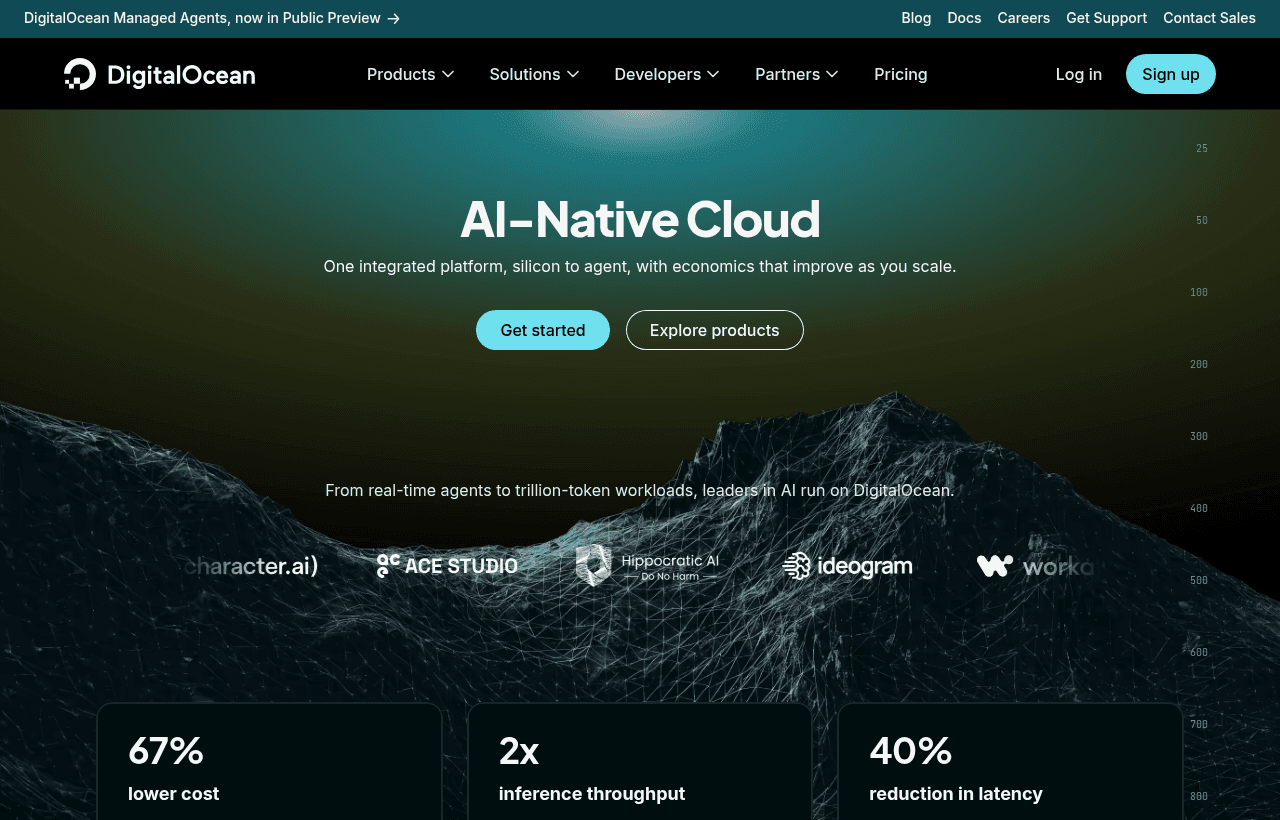
Price: Paid tier from $5 per month | Free plan: 3 static apps, 1 GiB data transfer per app
App Platform deploys from GitHub and GitLab with automatic HTTPS, custom domains, a global CDN and unlimited team members. Extra static apps beyond the free three cost $3 each. Overage bandwidth is $0.02 per GiB. The free tier covers 3 static apps with 1 GiB of data transfer each, and the paid tier starts at $5 per month. Unlimited team members matter here because Vercel charges per seat and Netlify Personal covers only 1 member.
Static sites inside a paid app have no bandwidth allowance, and the platform lists no form handling.
Pick DigitalOcean if you already run servers there and want one invoice. See the DigitalOcean offer.
6. GitHub Pages: best free host for docs and project sites
Price: $0 on GitHub Free for public repositories | Free plan: Sites up to 1 GB, 100 GB soft bandwidth per month, 10 soft builds per hour
GitHub Pages serves static files straight from a repository, with no credits to count.
GitHub states that Pages is not allowed for running an online business, e-commerce site or SaaS. There are also no functions, no forms and no deploy previews. Private repositories need a paid GitHub plan. Sites can be up to 1 GB, with 100 GB of soft bandwidth per month and 10 soft builds per hour. The service costs $0 on GitHub Free for public repositories.
Pick GitHub Pages if you are publishing documentation, a portfolio or an open source project site. See the GitHub offer.
7. Fly.io: best for apps that need a long running server
Price: Pay as you go; a personal organization bill under $5 per month is waived | Free plan: None, only a $1 trial credit that lasts 7 days
Fly.io runs your app on its own machines. You choose the machine size and pay for what runs, plus volumes and data transfer.
It has no free tier for new organizations, and it is not a static site host. Setup is more work than connecting a repo to Netlify. A personal organization bill under $5 per month is waived, and new organizations get only a $1 trial credit that lasts 7 days.
Pick Fly.io if your app needs a persistent process, a WebSocket server or a database near users. See the Fly.io offer.
Free Netlify alternatives
- Cloudflare: Workers Free allows 100,000 requests a day. Static asset requests are free and unlimited. Pages Free allows 500 builds a month and 20,000 files per site.
- Vercel: Hobby is $0 and includes automatic CI/CD, a global CDN and a web application firewall. Hobby is limited to personal, non-commercial use.
- DigitalOcean: 3 static apps with 1 GiB of data transfer each.
- GitHub Pages: free for public repositories, 1 GB site size, 100 GB soft bandwidth a month.
- Render: Hobby workspace at $0 with 5 GB bandwidth. Free web services run on 512 MB of RAM with limits.
- Railway: a 30-day trial with $5 credits, then the $1 per month plan.
Netlify's own Free plan stays $0 with a hard limit of 300 credits a month.
Cheapest Netlify alternative for a small team
Take a team of 5 developers shipping one production site. Here are the platform fees only, on monthly billing.
| Platform | Monthly | Yearly (12 x monthly) |
|---|---|---|
| Netlify Pro | From $20 (3,000 credit tier, unlimited members) | From $240 |
| Vercel Pro | 5 x $20 = $100 | $1,200 |
| Render Pro | $25 plus compute | $300 plus compute |
| Railway Pro | $20 minimum usage | $240 |
| Cloudflare Workers Paid | $5 per account | $60 |
Cloudflare is cheapest by $15 a month against Netlify. Vercel costs 5 times Netlify here because it charges per developer. Render and Railway look close to Netlify, but their bills grow with the servers you run.
How to choose
- Need Next.js features on day one and have fewer than 3 developers: pick Vercel.
- Serve heavy traffic to mostly static pages: pick Cloudflare.
- Need an API server or database next to your site: pick Render or Railway.
- Publishing docs for an open source project: pick GitHub Pages.
- Team of 5 or more developers on a tight budget: pick Netlify Pro, Cloudflare or Railway Pro. Avoid per seat plans.
FAQ
What is the best free alternative to Netlify?
Cloudflare is the best free alternative for static sites. Its Workers Free plan gives 100,000 requests a day, and requests to static assets are free and unlimited. Vercel's Hobby plan is the closest match if you want previews and Git deploys.
What is cheaper than Netlify?
Cloudflare's Workers Paid plan costs $5 per month per account, against $20 for the entry Netlify Pro tier. DigitalOcean's three free static apps and GitHub Pages cost nothing. Vercel Pro is $20 per developer, so it costs more for teams.
Who are Netlify's main competitors?
Vercel, Cloudflare Pages, Render, Railway, DigitalOcean App Platform, GitHub Pages and Fly.io all compete with Netlify. Vercel is the closest for front end teams. Render and Railway compete when you also need a backend.
Is there an open-source alternative to Netlify?
The platforms above are hosted services, not open source. GitHub Pages is free for public repositories if you want to publish an open source project site. Netlify itself runs its own Open Source plan for approved non-commercial projects with 10,000 credits a month.
What is better than Netlify for Next.js?
Vercel, because the same company builds Next.js. Its Pro plan costs $20 per developer seat per month, and Hobby is $0.
Prices checked on each vendor's pricing page in November 2026.
Still considering Netlify?
Claim the Netlify startup deal through SaaSOffers. Verified and free to access.
Claim Netlify deal