
Replit Promo Code: 6 months free Hacker
Cloud IDE and deployment platform, write, run, and ship code from your browser with AI assistance.
Free · Opens in new tab
Already have an account? Log in
Deal Highlights
What Replit Gives a Startup
Replit is a cloud IDE and deployment platform where a team writes, runs, and ships code from the browser, with AI assistance built in. The deal is six months free on the Hacker plan, available to developers and startup teams, which gives real access to the paid tier long enough to build and ship actual projects. For an early team, that means a full development and deployment environment that lives in the browser, with no local setup to maintain and nothing to configure before the first line of code runs.
The idea behind Replit is that the whole loop of software development, writing code, running it, and deploying it, can happen in one place in the cloud. There is no local toolchain to install, no environment to configure, and no gap between the editor and the deployment. The team opens a browser, writes code, runs it, and ships it. The six months free on the Hacker plan lets a startup work this way for a meaningful stretch, long enough to judge whether a cloud-based, all-in-one workflow fits how the team builds.
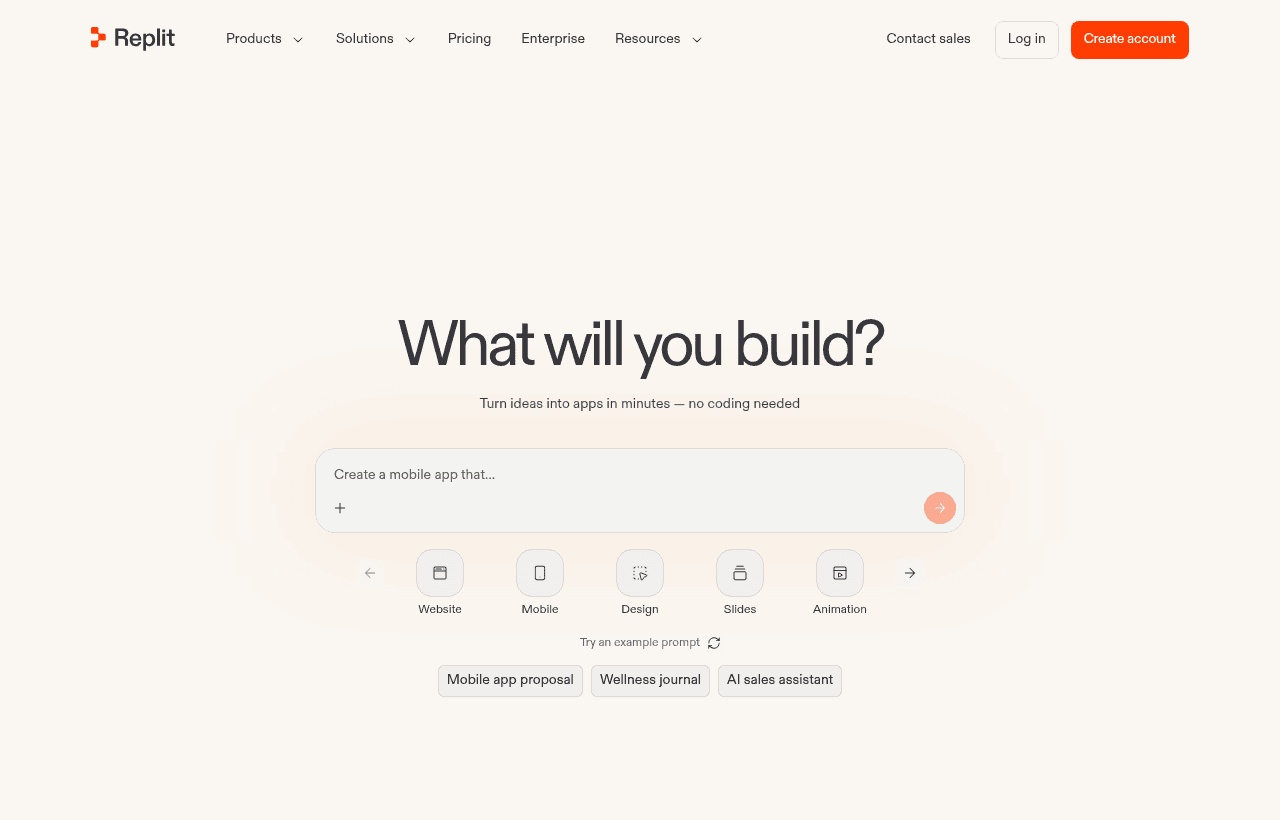
Replit, one of the tools included in this startup deal.
A Full IDE That Lives in the Browser
The foundation of Replit is a complete development environment that runs in the browser, and for a startup that removes a surprising amount of friction. Setting up a local development environment is one of those tasks that is easy to forget the cost of: installing the language runtime, the dependencies, the tools, and getting everyone's machine into a consistent state. Replit sidesteps all of it by putting the environment in the cloud, ready the moment a project opens.
For a team, this consistency is valuable. Everyone works in the same environment because the environment is hosted, not assembled separately on each laptop. There is no more debugging why code runs on one person's machine but not another's, because there is one machine, in the cloud, that everyone shares access to. New contributors get productive immediately, because there is nothing to set up before they can run the code. For a small team where onboarding speed and low friction matter, that is a real advantage.
The browser-based model also means the team can work from anywhere, on any machine, without carrying a configured development setup around. A project is a URL, and opening it gives a full environment. For a startup with people working in different places and on different devices, this portability keeps everyone able to jump into the code without the usual setup barrier. The environment follows the project, not the machine.
Running Code Instantly
Beyond editing, Replit runs code directly in the cloud, which closes the gap between writing something and seeing it work. There is no build-and-deploy dance just to test an idea, no local server to spin up, no environment mismatch between where code is written and where it runs. The team writes code and runs it in the same place, immediately, which tightens the feedback loop that development depends on.
For a startup, a tight feedback loop is worth a lot. The faster an engineer can go from an idea to seeing it run, the faster the team iterates, and iteration speed is a large part of how a small team builds quickly. When running the code is instant and requires no setup, experimentation becomes cheap, and cheap experimentation means the team tries more things and learns faster. That compounding is exactly what an early team wants from its tooling.
The cloud execution also handles the resources. The code runs on Replit's infrastructure rather than the developer's machine, so the environment is consistent and the local hardware does not have to carry the load. For a team working across different and sometimes modest machines, having the compute live in the cloud means everyone gets the same capable environment regardless of what they are working on. The project runs the same way for everyone, which keeps the team aligned.
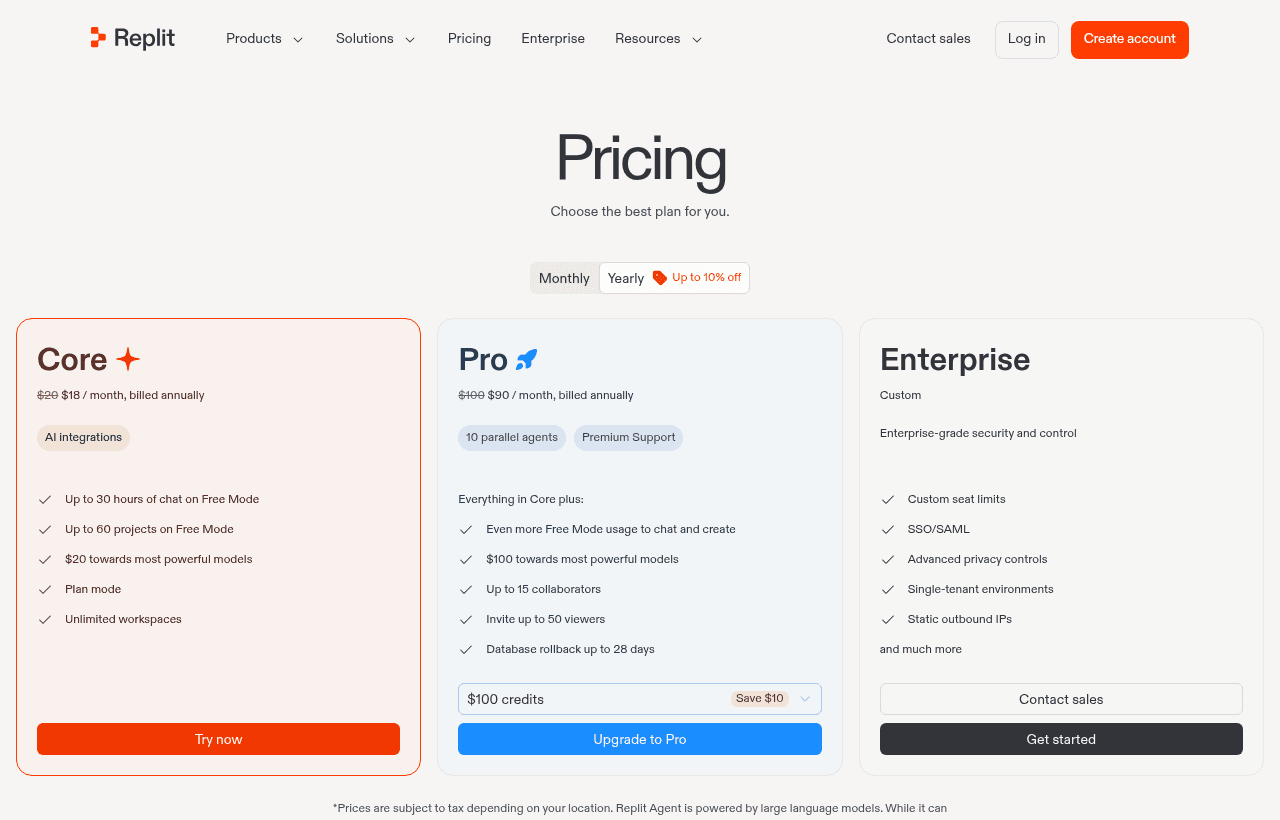
A look at Replit before the discount, so you can see what the deal saves you.
Shipping From the Same Place You Build
Replit is not only an editor and a runtime, it is also a deployment platform, which means the team ships from the same place it builds. This is the part that turns Replit from a coding tool into an end-to-end workflow. Instead of writing code in one environment and then moving to a separate system to deploy it, the team deploys directly from where the code already lives. The path from written to live is short.
For a startup, collapsing build and deploy into one platform removes a common source of friction and delay. Deployment is often where projects stall, because getting code from the editor to a live environment involves configuration and moving between tools. When deployment is built into the same platform as development, shipping becomes routine, and routine shipping is how a startup gets its product and its updates in front of users quickly. The team can go from an idea to something live without leaving the environment.
This end-to-end quality is particularly useful for the fast, iterative work an early team does: prototypes, internal tools, small services, and quick experiments that need to be live to be useful. Being able to build and ship these from one place, in the browser, means the team can turn ideas into running things fast. For a small team that needs to move quickly and cannot afford heavy process around every deployment, having the whole loop in one platform is exactly the kind of simplicity that keeps momentum.
AI Assistance Built Into the Workflow
Replit includes AI assistance as part of the environment, which means help with writing code is available right where the code is being written. Rather than switching to a separate tool to get AI support, the assistance is integrated into the editor, so it fits naturally into the flow of building. For a startup, this can meaningfully speed up development, especially for a small team where every engineer is stretched across many things.
The value of built-in AI assistance is in the everyday work of coding: generating boilerplate, suggesting implementations, helping debug, and getting unstuck faster. Each of these saves small amounts of time that add up, and for a team trying to build a lot with few people, that accumulated time matters. Having the assistance integrated rather than bolted on means the team actually uses it, because it is right there in the workflow rather than a context switch away.
For a small team, AI assistance also lowers the barrier on unfamiliar territory. When an engineer has to work in a language or with a library they know less well, having AI help in the editor can make that stretch less costly. This broadens what a small team can take on, because the tooling helps cover gaps in individual experience. For a startup whose engineers routinely have to do a bit of everything, that support built directly into the environment is a practical multiplier on what the team can build.
The Six Months Free on Hacker and What They Buy
The six months free on the Hacker plan is the substance of this deal, and its value is in both access and duration. The Hacker plan is a paid tier, so the offer gives real access to Replit's fuller capabilities rather than just the free baseline. And six months is a meaningful stretch, long enough to build actual projects, ship them, and genuinely judge whether the platform fits the team's way of working, rather than a brief trial that only allows a superficial look.
For a startup, that combination is well matched to how a team evaluates tooling. A development environment is something a team lives in daily, and the only way to know whether it fits is to use it for real work over real time. Six months lets the team adopt Replit for actual projects, build habits around it, and see how it holds up across the ordinary ups and downs of development. By the end, the team has a grounded answer rather than a first impression.
The requirement, being a developer or a startup team, is broad and matches the deal to exactly the people who would use it: individuals and teams building software. For a startup that fits, the six months free is a low-risk way to run its development on a paid-tier cloud environment and find out whether the all-in-one, browser-based model is how it wants to work, before committing any budget. That is a generous window to make a real decision.
Replit Compared to a Traditional Local Setup
The alternative to Replit is the traditional approach: each developer configures a local environment, code runs on local machines, and deployment happens through a separate pipeline to a separate host. This setup is familiar and gives full control over the local toolchain, and for teams with complex or specialized needs it remains the right choice. But it carries costs, in setup, in consistency, and in the number of separate systems the team has to manage, that an early team feels directly.
The friction of the traditional model shows up in the seams. Local environments drift apart between machines, causing the classic problem of code that works for one person and not another. Setup takes time, especially for new contributors. And the gap between the local editor and the deployment target means an extra system to configure and move code through. Each of these is manageable, but together they add overhead that a small team pays for in time and occasional confusion.
Replit's counterargument is to put the whole loop in the cloud and remove those seams. One hosted environment means no drift and no setup, and deployment from the same platform means no gap between building and shipping. The team trades some low-level control for a large gain in simplicity and speed, which for a startup doing fast, iterative work is often the better deal. The six months free lets the team test that trade against its real work before deciding whether the cloud model or the traditional one suits it better.
Making the Six Months Free Count
Six months is generous, and the way to get value from it is to use Replit for real projects rather than treating it as a sandbox to visit occasionally. The point of the offer is to let the team live in the platform long enough to know it, so the best approach is to move actual development into Replit and work there day to day for a meaningful part of the six months.
A strong plan is to build and ship something real on the platform: a prototype, an internal tool, a small service, or a piece of the product, taking it all the way from writing code to running it to deploying it live. Going through the full loop end to end is what reveals how the platform fits the team's workflow, where it helps, and where it has friction. Using the AI assistance as part of that work shows how much it actually speeds things up on real tasks.
Because it is a team-capable plan, getting more than one person working in Replit during the trial surfaces the collaboration and consistency benefits that only appear with multiple people in the same environment. By the end of the six months, the team should know whether the cloud, browser-based, all-in-one model is how it wants to build, backed by having shipped real work through it rather than by a demo. That is exactly what a six-month window is long enough to establish.
Who Should Claim This Deal
This deal fits developers and startup teams that want a fast, low-friction way to build and ship software without wrestling with local setup and separate deployment systems. If the team values getting productive immediately, keeping everyone in a consistent environment, and shipping from the same place it writes code, Replit's cloud, browser-based model plus six months free on the Hacker plan fits that directly. The requirement, being a developer or startup team, is broad enough to cover most who would benefit.
It is especially valuable for small teams and fast-moving projects: prototypes, internal tools, and iterative product work where the ability to build and ship quickly matters more than fine-grained control over a local toolchain. The instant environments, cloud execution, integrated deployment, and built-in AI assistance all serve the kind of rapid, hands-on building an early team does most.
Teams with heavily specialized local toolchains, or with workflows deeply tied to a particular local or self-hosted setup, may find the cloud model less suited to every part of their work. But for a startup that wants to remove setup friction, keep its environment consistent, and ship fast with AI help along the way, the six months free is a low-risk, generous window to find out. Claim it, build and ship something real on the platform, and let the experience decide whether Replit is where the team wants to work.
Who Is This Deal For?
Early-Stage Startups
Seed and pre-seed companies looking to move fast without overspending on tools.
Growing SaaS Teams
Series A+ companies scaling their stack and optimizing software costs.
Solo Founders
Indie hackers and bootstrapped founders who need enterprise tools at startup prices.
Get 6 months free Hacker off Replit
Premium deal. Upgrade once, unlock everything.
!Eligibility Requirements
Developer or startup team
Frequently Asked Questions
Everything you need to know about this startup deal.
Yes, free plan available. Paid plans start at $7/month.
Get the weekly deals digest
New verified startup deals every week. No spam, ever. Unsubscribe anytime.
Related Offers

Toggl Track
Used by 1,100 members
Free Plan
Simple and intuitive time tracking for teams with reporting and integrations.
View offer
Auth0
Used by 994 members
1 year of B2B Professional free
Get 1 year of the Auth0 B2B Professional plan free, with up to 100,000 monthly active users, SSO, enterprise MFA and SCIM.
View offer
Bugsnag
Used by 471 members
Free Plan
Error monitoring and stability management for web and mobile applications.
View offer
Turborepo
Used by 1,880 members
Free & Open Source
High-performance build system for JavaScript and TypeScript monorepos by Vercel.
View offer
Windmill
Used by 1,501 members
Free Plan
Open-source developer platform for building internal tools, workflows, and scripts.
View offer
Height
Used by 1,442 members
Free Plan
AI-powered project management tool with autonomous task management and workflows.
View offerDeal Summary
Looking for more startup deals?
Browse all offers