
6 Best Supabase Alternatives & Competitors in 2026
Looking for tools like Supabase? We compared 6 alternatives on price, free plan and limits, using each vendor's own pricing page.
Looking for a discount? See the Supabase promo code and deal: Generous free plan.
The 6 best Supabase alternatives
- 1.Firebase: best for mobile apps that need offline support
- 2.Appwrite: best open-source backend with one dashboard
- 3.Nhost: best for GraphQL on Postgres
- 4.Convex: best for realtime TypeScript apps
- 5.Neon: best serverless Postgres that scales to zero
- 6.PlanetScale: best for a production database on a small budget

Appwrite
#1 AlternativeOpen-source backend-as-a-service for web, mobile, and Flutter developers.

Convex
#2 AlternativeReactive backend-as-a-service with real-time sync, serverless functions, and file storage.

Neon
#3 AlternativeServerless PostgreSQL with autoscaling, branching, and a generous free tier. The modern database for startups.

PlanetScale
#4 AlternativeServerless MySQL with branching, deploy requests, and unlimited scale. The database that never goes down.
Supabase alternatives compared
By Ilyas Lemzouri, founder of SaaSOffers. Updated November 2026.
How we checked: we list a tool only after talking with its team and trying it. Every price and limit below comes from each vendor's own pricing page, checked in November 2026.
The best Supabase alternatives are Firebase for mobile apps that need offline sync, Appwrite for an open-source backend with one dashboard for auth, storage and functions, and Convex for TypeScript teams that want a reactive database. The lowest fixed starting price is PlanetScale Postgres at $5 a month for a single node, though it is only a database. The best free alternatives are Firebase (Spark plan, no card needed) and Neon (100 projects on the Free plan).
Why teams look for Supabase alternatives
Supabase is a good default. People still leave it for reasons that show on its pricing page.
- Free projects pause. The Free plan is $0 a month, but projects pause after 1 week of inactivity and you can only run 2 active projects.
- A small database cap. Free includes a 500 MB database, 5 GB of egress and 1 GB of file storage. Pro raises the disk to 8 GB per project, then charges $0.125 per GB above that.
- The jump to Team. Pro is $25 a month and Team is $599 a month. Dashboard single sign-on and SOC2 sit behind that jump.
- Compute adds up per project. Paid plans include $10 a month in compute credits, enough for one Micro instance. Every additional project starts at $10 a month, and larger instances climb quickly: Small is $15, Medium is $60.
- Postgres only. If you want a document database, GraphQL out of the box, or a database that is billed only while it runs, you need a different tool.
Supabase alternatives at a glance
| Tool | Starting price | Free plan | Main difference from Supabase | Best for |
|---|---|---|---|---|
| Supabase | $25 a month (Pro, billed monthly) | Yes, 500 MB database, 2 active projects | Postgres plus auth, storage, realtime and edge functions | Relational apps |
| Firebase | Pay as you go (Blaze plan) | Yes, Spark plan | Firestore document database, offline sync | Mobile apps |
| Appwrite | Free; dedicated databases from $10 a month each | Yes | Open-source platform with auth, databases, storage, functions and hosting | Teams wanting one dashboard |
| Nhost | $25 a month (Pro, billed monthly) | Yes, 1 project | Hasura GraphQL on Postgres | GraphQL apps |
| Convex | $25 per developer a month (Professional) | Yes, pay as you go | Reactive TypeScript backend, not SQL | Realtime TypeScript apps |
| Neon | Usage based, no monthly minimum | Yes, 100 projects | Serverless Postgres with branching and scale to zero | Many small Postgres databases |
| PlanetScale | $5 a month (single node Postgres) | None listed | Database only, with Metal and sharding options | Production database on a budget |
1. Firebase: best for mobile apps that need offline support
Price: Pay as you go on the Blaze plan | Free plan: Spark plan, no payment method needed
Firebase is the closest rival by product shape. It bundles authentication, Firestore, storage, hosting, functions and messaging. Firestore's free quota is 1 GiB stored, 50,000 reads a day and 20,000 writes a day.
It does better on mobile tooling, push messaging and analytics, and its SDKs handle offline persistence on Android, Apple and web. It does worse on pricing predictability. Firestore bills per read and write, so a chatty query can cost more than a flat Supabase Pro plan. It is a document database, not SQL, so joins and reporting are harder.
Pick Firebase if you ship a mobile app, want offline sync and are comfortable modeling data as documents.
2. Appwrite: best open-source backend with one dashboard
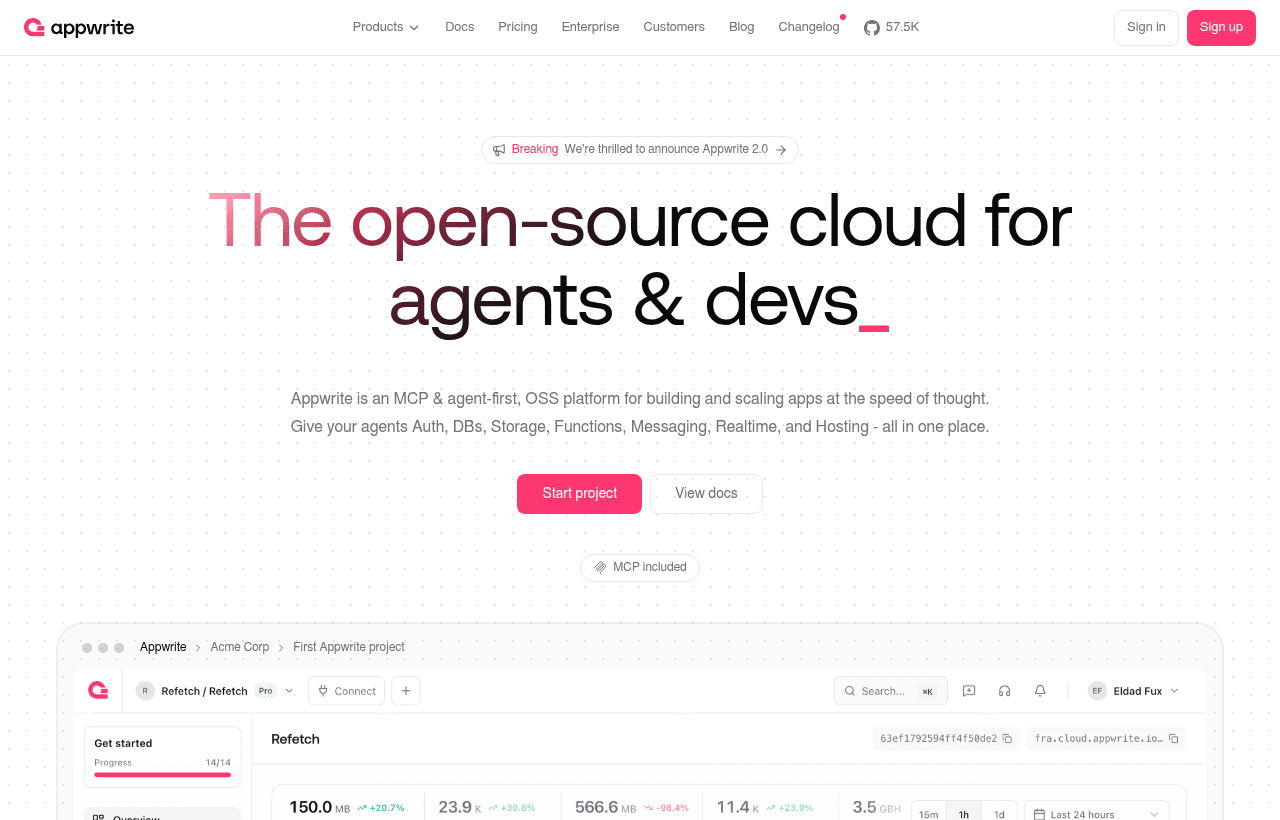
Price: Dedicated databases from $10 a month, with $10 of compute credits for database usage each month | Free plan: Yes, Appwrite says Free organizations are 100% free
Appwrite is the nearest open-source rival in scope. It covers auth, databases, storage, functions and hosting in one project. Its database layer supports several types: TablesDB by default, plus DocumentsDB, VectorsDB, PostgreSQL and MySQL.
It does better on breadth of services and on choosing a database type per project. Dedicated compute tiers run from Starter at $10 a month (1 core, 1 GB) up. It does worse where you want plain Postgres with row level security at the center, which is Supabase's strongest point. On the Free plan, a project that hits a limit freezes and the console goes read-only until the next billing cycle.
Pick Appwrite if you want one open-source platform and do not need Postgres specifically.
3. Nhost: best for GraphQL on Postgres
Price: Pro from $25 a month, billed monthly | Free plan: Starter, $0, 1 project, paused after 1 week of inactivity
Nhost is the closest match to Supabase's idea, with Postgres, auth, storage and functions, plus a Hasura GraphQL engine on top. Starter gives a 1 GB database, 1 GB storage and 5 GB egress. Pro adds a 10 GB database, 50 GB storage, 50 GB egress and $15 of compute credits.
It does better when your frontend already speaks GraphQL, since permissions and subscriptions come built in. It does worse on price scaling: Team is $599 a month, the same as Supabase, and point in time recovery starts at $100 a month.
Pick Nhost if your team writes GraphQL.
4. Convex: best for realtime TypeScript apps
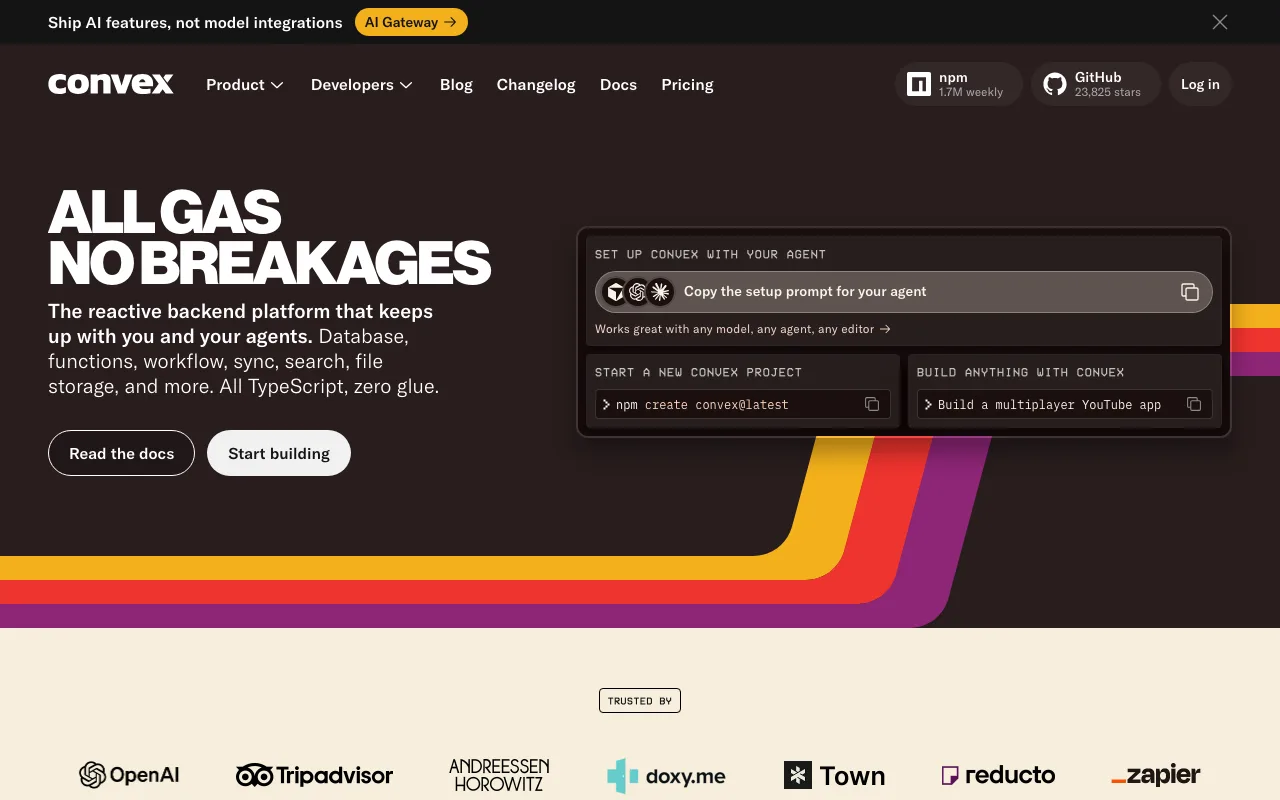
Price: Professional is $25 per developer a month | Free plan: Free and Starter, $0 with pay as you go
Convex is a different model. You write queries and mutations as TypeScript functions, and the database is reactive, so clients update when data changes. Auth, file storage, text search, vector search and crons are included on every plan.
It does better on developer experience for full stack TypeScript and removes the need for a separate realtime layer. It does worse on cost for larger teams, because Professional is billed per developer: 5 developers is $125 a month, where Supabase Pro is $25 for the organization. The free tier includes 1M function calls, 0.5 GB of database storage and 1 GB of file storage.
Pick Convex if your whole team writes TypeScript and you value live queries over SQL.
5. Neon: best serverless Postgres that scales to zero
Price: Pay as you go, $0.106 per compute unit hour on Launch, no monthly minimum | Free plan: 100 projects, 100 CU-hours each, 1 GB storage per project
Neon is Postgres, and it now includes managed auth, object storage, functions and a Data API. Compute scales to zero after 5 minutes of inactivity, and you pay nothing while it is suspended. Neon's own page puts a small Launch database at about $15 a month.
It does better on branching, 100 projects on the Free plan and billing only for what runs. Free auth covers up to 60,000 MAU per project and Launch covers up to 1M MAU. It does worse on maturity of the surrounding stack. Realtime is in beta.
Pick Neon if Postgres is all you need and you want to pay only when queries run.
6. PlanetScale: best for a production database on a small budget
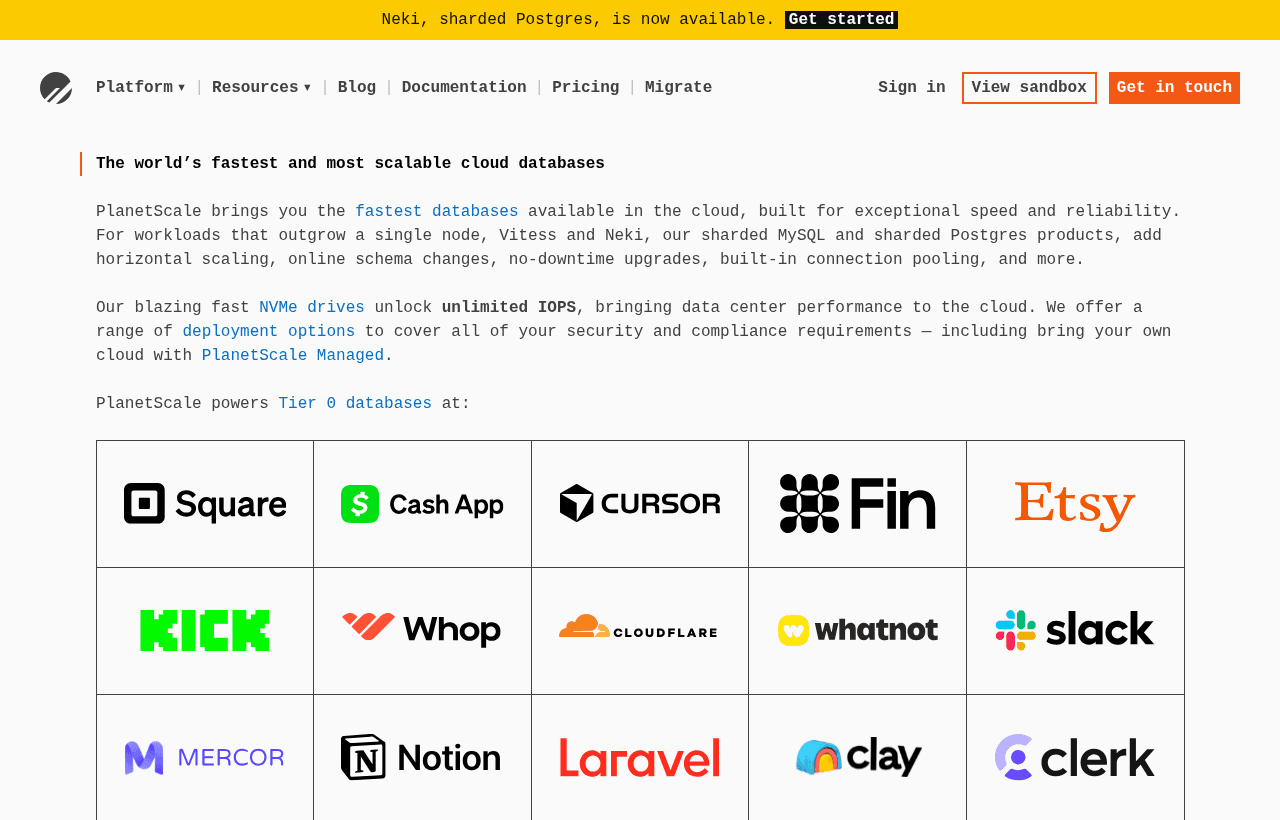
Price: Single node Postgres from $5 a month; Metal from $50 a month | Free plan: None listed on the pricing page
PlanetScale runs MySQL compatible Vitess, Postgres, and Neki, its sharded Postgres. It has the lowest fixed starting price here.
It does better at high availability and scale, with a 1 primary plus 2 replica option across 3 availability zones. It does worse at everything outside the database. There is no built-in auth, file storage or realtime, so you assemble those yourself.
Pick PlanetScale if you already have auth and storage covered and want a stable, low cost database.
Free Supabase alternatives
- Firebase Spark: no payment method needed. 50,000 auth MAU, 1 GiB Firestore storage, 50,000 reads and 20,000 writes a day.
- Neon Free: 100 projects, 100 CU-hours per project, 1 GB storage per project (20 GB per account), 5 GB egress per project, up to 60,000 auth MAU per project.
- Nhost Starter: 1 project, 1 GB database, 1 GB storage, 5 GB egress, unlimited users.
- Convex Free and Starter: 1M function calls, 0.5 GB database storage and 1 GB file storage, then pay as you go.
- Appwrite Free: a free organization that freezes projects at a limit.
- Supabase Free: 500 MB database, 50,000 MAU, 2 active projects.
Cheapest Supabase alternative for a small team
Take a 5-person team with one production project and a database under 8 GB.
| Option | Monthly | Yearly | Note |
|---|---|---|---|
| Supabase Pro | $25 | $300 | Flat per organization, $10 compute credit included |
| Nhost Pro | From $25 | From $300 | $15 compute credits included |
| Convex Professional | $125 (5 x $25) | $1,500 | Per developer pricing |
| Neon Launch | About $15 (Neon's estimate for a small database) | About $180 | Usage based, varies with traffic |
| PlanetScale single node | From $5 | From $60 | Database only |
Supabase stays cheap for a team because seats are not priced per developer. Neon and PlanetScale come out lower on paper. With PlanetScale you add auth and storage separately, which can close the gap. For a team of 5, Convex is the most expensive of these.
How to choose
- Need relational SQL, auth and storage in one place with a team under 10: stay on Supabase or pick Nhost.
- Building a mobile app with offline sync: pick Firebase.
- Want an open-source backend with more services than a database: pick Appwrite.
- Only need Postgres and want to pay when queries run: pick Neon.
- Full stack TypeScript with live queries and 6 or fewer developers (the Free & Starter limit): pick Convex.
- Want the lowest price for a production database: pick PlanetScale.
FAQ
What is the best free alternative to Supabase?
Firebase Spark is the best free alternative if you need auth, storage and a database together with no card. Neon's Free plan is better for Postgres, with 100 projects and 100 CU-hours per project. Neon's 100 free projects avoid the 2 active project limit on Supabase Free.
What is cheaper than Supabase?
PlanetScale starts at $5 a month for a single node Postgres database. Neon has no monthly minimum and estimates about $15 a month for a small database. PlanetScale is database only, so auth and storage are extra. Neon includes auth and 5 GB object storage per project. Supabase Pro is $25 a month for the organization.
Who are Supabase's main competitors?
The main competitors are Firebase, Appwrite, Nhost, Convex, Neon and PlanetScale. Firebase and Appwrite match the full backend scope. Neon and PlanetScale compete on databases.
Is there an open-source alternative to Supabase?
Yes. Appwrite and Nhost are open-source backends, and Convex offers self-hosting. Appwrite is the broadest, covering auth, databases, storage, functions and hosting in one project.
What is better than Supabase for mobile apps?
Firebase is the usual pick for mobile because of its offline persistence on Android, Apple and web, along with push messaging and analytics. You trade SQL for Firestore's document model.
Prices checked on each vendor's pricing page in November 2026.
Still considering Supabase?
Claim the Supabase startup deal through SaaSOffers. Verified and free to access.
Claim Supabase deal