
PlanetScale Startup Credits: $500 in credits
Serverless MySQL with branching, deploy requests, and unlimited scale. The database that never goes down.
Free · Opens in new tab
Already have an account? Log in
Deal Highlights
Changing a database schema in production is one of the scariest things an engineering team does. A migration that locks a large table can take your app down, and a bad change is hard to reverse. PlanetScale was built to remove that fear: it brings a Git-like branching workflow to your database and applies schema changes without locking tables, so altering your production schema becomes a reviewed, non-blocking, reversible operation rather than a held breath. For a team that ships often, that safety is the core of what it sells.
PlanetScale has also changed in ways worth being upfront about, so this covers what it does, what it now costs, and where it fits against the serverless database field.
What Is PlanetScale?
PlanetScale is a serverless database platform. Its foundation is Vitess, the MySQL sharding system originally built at YouTube to scale MySQL horizontally to enormous size, and in 2025 it added PlanetScale for Postgres, extending the platform to that ecosystem. It was acquired by Supabase in 2024 but continues to operate as a distinct product.
Two capabilities define it. The first is database branching: you create a branch of your database, make schema changes there, and merge them into production through a workflow that mirrors how you use Git for code, with review and safety built in. The second is non-blocking schema changes: PlanetScale applies migrations using an approach that avoids locking tables, so even large schema changes on a busy production database do not take your application down.
Underneath, the Vitess foundation gives it genuine horizontal-scaling ability that most databases lack, along with more recent additions like vector indexing for AI workloads. But for most teams, the branching and safe-migration workflow is the day-to-day reason to choose it, not the extreme scale.
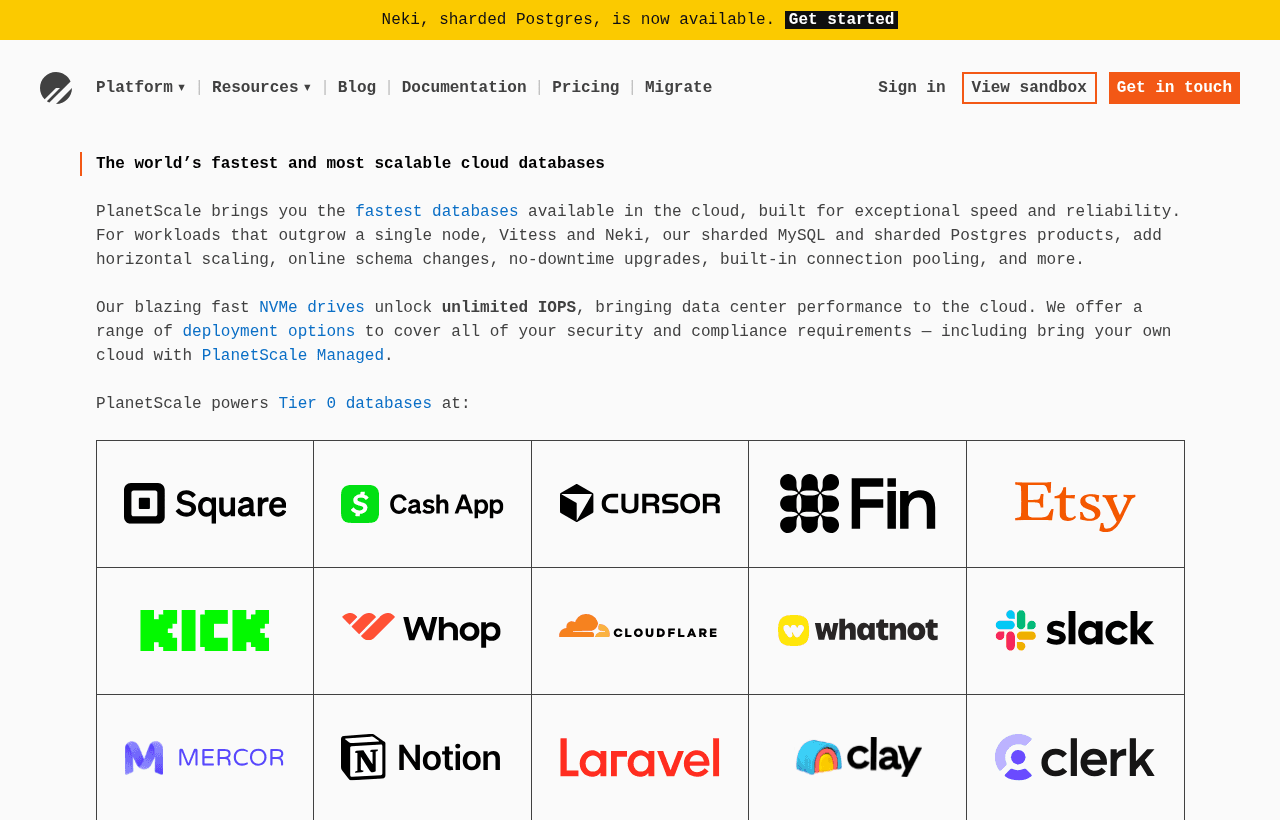
PlanetScale, one of the tools included in this startup deal.
What's Included in This Deal
- A serverless database, MySQL on Vitess or Postgres
- Database branching for a Git-like schema workflow
- Non-blocking schema changes that avoid table locks
- Horizontal scaling through the Vitess foundation
- Credits to build and run on the platform
The credits matter more than usual here because, as covered below, PlanetScale no longer has a free tier, so the credits are how you evaluate and run early without paying out of pocket during the stage that is most cash-constrained.
PlanetScale Pricing: Know This Before You Start
There is one fact you must know before choosing PlanetScale, because it changed the calculus for startups: PlanetScale removed its free tier in 2024 and has not brought it back. It was once known for a generous free plan, and its removal triggered a wave of migrations to competitors. If you were expecting to run for free, that option is gone.
| Plan | Roughly | Notes |
|---|---|---|
| Single-node Postgres (PS-5) | from around $5/month | The cheapest entry, not highly available |
| Production HA (3-node) Postgres | from around $15/month | Highly available cluster |
| Vitess MySQL (PS-10) | from around $39/month | The MySQL/Vitess production tier |
On top of the cluster price, PlanetScale meters storage beyond an included amount, egress beyond an included amount, and backups. So the real bill is the cluster SKU plus usage, and a data-heavy or high-egress application pays more than the headline cluster price. Confirm current figures on PlanetScale's pricing page, since this area moves, but budget for cluster plus metered usage rather than the entry number alone.
The honest framing: PlanetScale is now a paid product from day one, positioned on the value of its branching and safe-migration workflow and its scaling foundation, not on being free. Whether it is worth paying for over a free-tier competitor depends on whether that workflow and scale matter to you, which is exactly the question the next sections address.
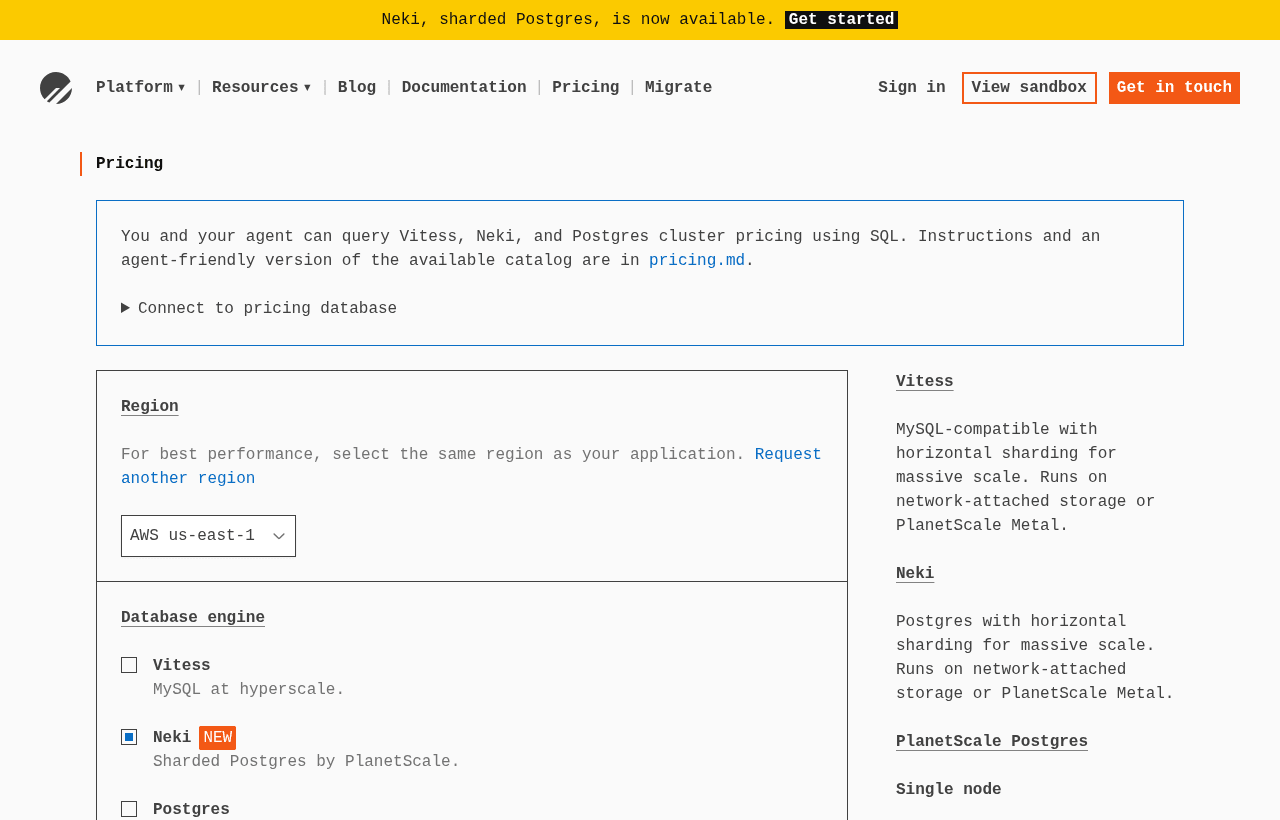
A look at PlanetScale before the discount, so you can see what the deal saves you.
The Branching Workflow, and Why It Is the Selling Point
This is what PlanetScale does that most databases do not, and it is the strongest reason to choose it, so it is worth understanding concretely.
In a normal database, schema changes are risky and manual. You write a migration, run it against production, and hope it does not lock a table or break something, with no clean way to review the change in isolation or undo it. Teams develop elaborate caution around migrations precisely because the database is the one piece of infrastructure where a mistake is hardest to reverse.
PlanetScale's branching turns this into a workflow that resembles how you already work with code. You branch the database, make and test your schema change on the branch without touching production, open the equivalent of a pull request so the change is reviewed, and merge it through a deploy process that applies it non-blockingly. If something is wrong, the workflow gives you safety rather than a live production incident. Schema changes become a normal, reviewed, low-drama part of shipping, rather than the scariest thing the team does.
For a startup that ships frequently and evolves its schema often, this is genuinely valuable. It removes a recurring source of risk and lets a small team change the database with the same confidence they change code. That safety is what you are paying for, and for teams that feel the pain of database migrations, it justifies the cost in a way raw scale never would at their size.
PlanetScale vs Neon vs Supabase vs Turso
| Option | Foundation | Strength | Note |
|---|---|---|---|
| PlanetScale | Vitess MySQL, plus Postgres | Branching, non-blocking migrations, horizontal scale | No free tier |
| Neon | Serverless Postgres | Scale-to-zero, instant branching, low cost | Strong free tier |
| Supabase | Postgres plus backend services | Database plus auth, storage, realtime, functions | Full backend platform |
| Turso | Distributed SQLite | Edge distribution, very low latency reads | Different data model |
The decision turns on what you value and what you are willing to pay.
PlanetScale wins on the migration workflow and proven horizontal scale. If safe, reviewed, non-blocking schema changes matter to you, or you genuinely need Vitess-level horizontal scaling, it is differentiated. The cost is that you pay from day one.
Neon wins on cost and Postgres with modern serverless features. Its scale-to-zero and branching, with a real free tier, made it the natural destination for teams leaving PlanetScale over the free-tier removal. For a startup that wants Postgres and low early cost, Neon is a strong default.
Supabase wins when you want more than a database. It bundles auth, storage, realtime, and functions with Postgres, which reduces integration work if you need those. It is a backend platform, not just a database.
Turso wins for edge-distributed, low-latency reads with its distributed SQLite model, a different shape suited to specific use cases.
The honest guidance: choose PlanetScale for its migration safety and scaling if those are real needs and you accept paying from the start; choose a free-tier competitor like Neon if early cost and Postgres are your priorities; and choose Supabase if you want a full backend rather than a standalone database.
The Database Is the Decision You Least Want to Get Wrong
It is worth stepping back, because the database is a different kind of choice from most tools, and that shapes how to think about PlanetScale specifically.
Most software you adopt is replaceable with modest effort. The database is not. Your data lives in it, your application is built around its behavior, and migrating to a different database is one of the more painful and risky projects an engineering team undertakes, precisely because everything depends on it and the data must move without loss. This means the database choice carries more weight than a typical tool decision, and it rewards thinking a few years ahead rather than only about today.
That cuts two ways for PlanetScale. In its favor, choosing a database with a proven horizontal-scaling path and a safe migration workflow is a hedge against exactly the future pain that makes database changes dreaded: you are less likely to hit a scaling wall that forces a migration, and schema evolution stays low-risk as the product grows. Against it, the removal of the free tier and the acquisition by a competitor are the kind of platform-direction signals worth weighing when you are making a multi-year commitment, because you want confidence the platform will remain a good home for your data.
The practical way to reduce this risk regardless of choice is to stay on standard, portable foundations. PlanetScale runs standard MySQL and, now, Postgres underneath, which means your schema and queries are not tied to a proprietary data model, and a future move, while never trivial, is not a rewrite. Keeping clean, version-controlled migrations and regular backups preserves that portability. The goal is to get the durable benefits of the platform, the workflow and the scale, without betting your data on a door you cannot later walk back through.
Who Should Use PlanetScale?
Use it if safe, non-blocking schema changes and a branching workflow matter to your team, which is its clearest value and worth paying for if you ship and migrate often.
Use it if you genuinely need horizontal scaling, where the Vitess foundation offers proven scale most databases cannot match.
Look elsewhere if low early cost is a priority and you were counting on a free tier, where Neon and other competitors offer that and PlanetScale no longer does.
Look elsewhere if you want a full backend platform, where Supabase bundles the services around the database that PlanetScale, as a database, does not.
Real Startup Use Cases
A fast-shipping startup adopted PlanetScale specifically for the branching workflow, so schema changes went through review on a branch and merged non-blockingly, turning migrations from a feared event into routine work. For a team changing its schema weekly, removing that risk was worth the cost.
A company anticipating scale chose PlanetScale for the Vitess foundation, wanting a database that could scale horizontally as it grew rather than facing a painful migration later. The proven scaling path was the reason, even though most of its early workload did not yet need it.
A team that had used PlanetScale on the old free tier reevaluated after the free tier was removed and moved to a free-tier Postgres competitor, because at its stage low cost mattered more than the branching workflow. That was a reasonable call, and it is exactly the trade the pricing change forces.
How to Claim the Credits
- Follow the link on this page to PlanetScale and create an account.
- Apply the credits and confirm the balance, since there is no free tier to fall back on.
- Choose MySQL on Vitess or Postgres based on your stack and needs.
- Set up the branching workflow early, and make your first schema change through a branch to feel the safety it provides.
- Watch metered usage, storage, egress, backups, on top of the cluster price so the bill is predictable.
- Evaluate honestly whether the workflow and scale justify paying from day one for your stage.
Tips to Get Value
- Use branching from the start. It is the reason to choose PlanetScale. Making schema changes through branches and review is where the safety and the value live.
- Budget for cluster plus usage. The headline cluster price is not the whole bill. Storage, egress, and backups are metered on top, so model your real data profile.
- Right-size the cluster. A single-node tier is cheaper but not highly available; a production HA cluster costs more. Match the tier to whether the workload needs high availability.
- Lean on non-blocking migrations. The ability to alter large tables without locking is a genuine advantage. Use it deliberately rather than falling back to risky manual migrations.
- Weigh the no-free-tier reality. If early cost dominates your decision, be honest that a free-tier competitor may fit better. Choose PlanetScale for its workflow and scale, not by default.
- Keep your schema and data portable. Standard MySQL or Postgres underneath means you are not deeply locked in. Maintaining clean migrations and backups keeps a future move straightforward.
Who Is This Deal For?
Early-Stage Startups
Seed and pre-seed companies looking to move fast without overspending on tools.
Growing SaaS Teams
Series A+ companies scaling their stack and optimizing software costs.
Solo Founders
Indie hackers and bootstrapped founders who need enterprise tools at startup prices.
Get $500 in credits off PlanetScale
Premium deal. Upgrade once, unlock everything.
!Eligibility Requirements
Early-stage startup building on MySQL
Frequently Asked Questions
Everything you need to know about this startup deal.
PlanetScale is MySQL-compatible via the Vitess protocol. Most MySQL client libraries and ORMs (Prisma, Laravel, Rails) work without modification. Some advanced MySQL features (foreign key constraints enforced at database level) are handled differently in Vitess.
Get the weekly deals digest
New verified startup deals every week. No spam, ever. Unsubscribe anytime.
Related Offers

Toggl Track
Used by 1,100 members
Free Plan
Simple and intuitive time tracking for teams with reporting and integrations.
View offer
Auth0
Used by 994 members
1 year of B2B Professional free
Get 1 year of the Auth0 B2B Professional plan free, with up to 100,000 monthly active users, SSO, enterprise MFA and SCIM.
View offer
Bugsnag
Used by 471 members
Free Plan
Error monitoring and stability management for web and mobile applications.
View offer
Turborepo
Used by 1,880 members
Free & Open Source
High-performance build system for JavaScript and TypeScript monorepos by Vercel.
View offer
Windmill
Used by 1,501 members
Free Plan
Open-source developer platform for building internal tools, workflows, and scripts.
View offer
Height
Used by 1,442 members
Free Plan
AI-powered project management tool with autonomous task management and workflows.
View offerDeal Summary
Looking for more startup deals?
Browse all offers